-
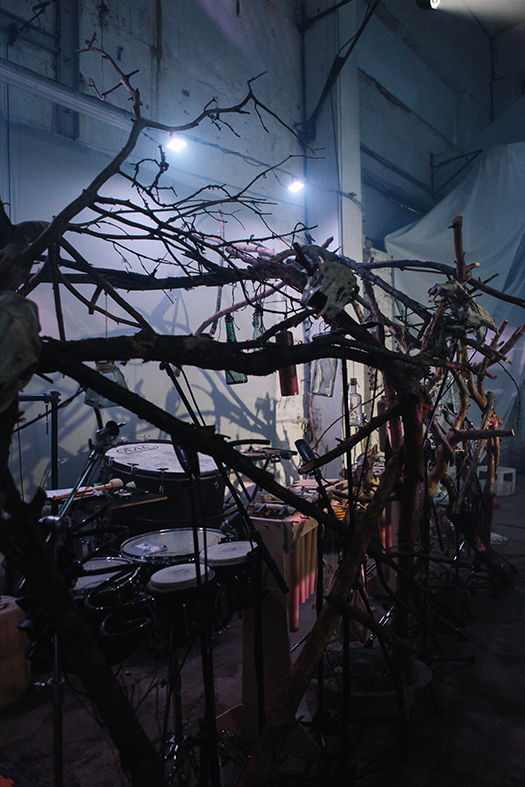
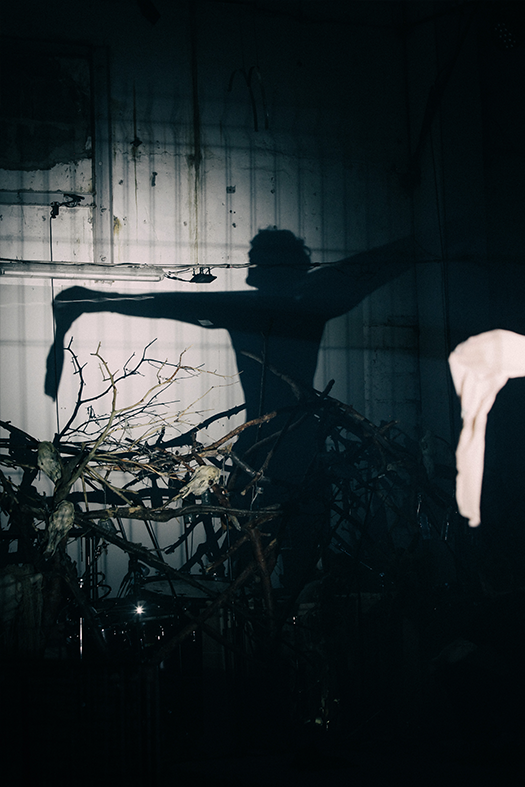
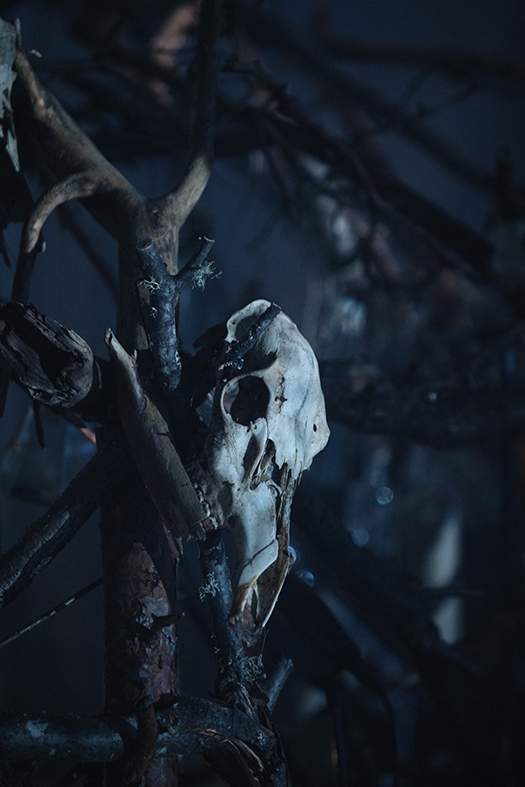
THE CULT OF ELDERS, 2025
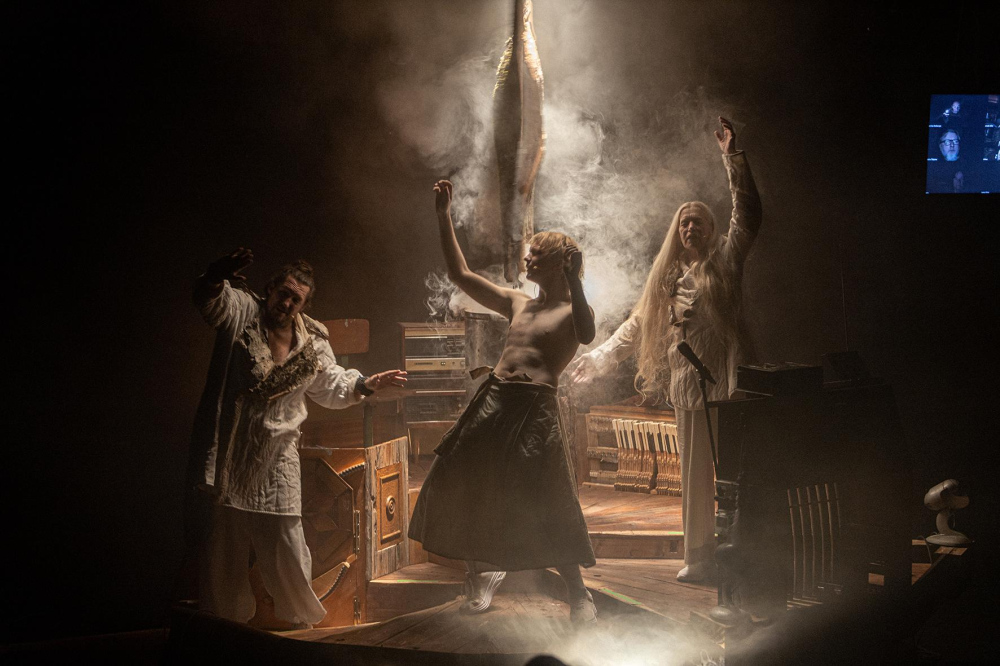
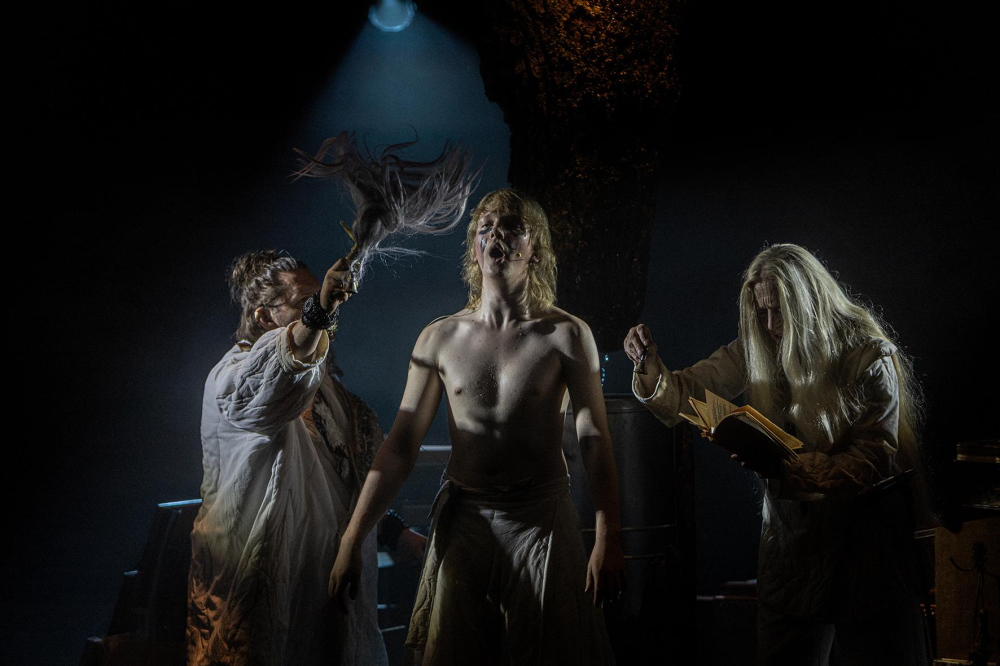
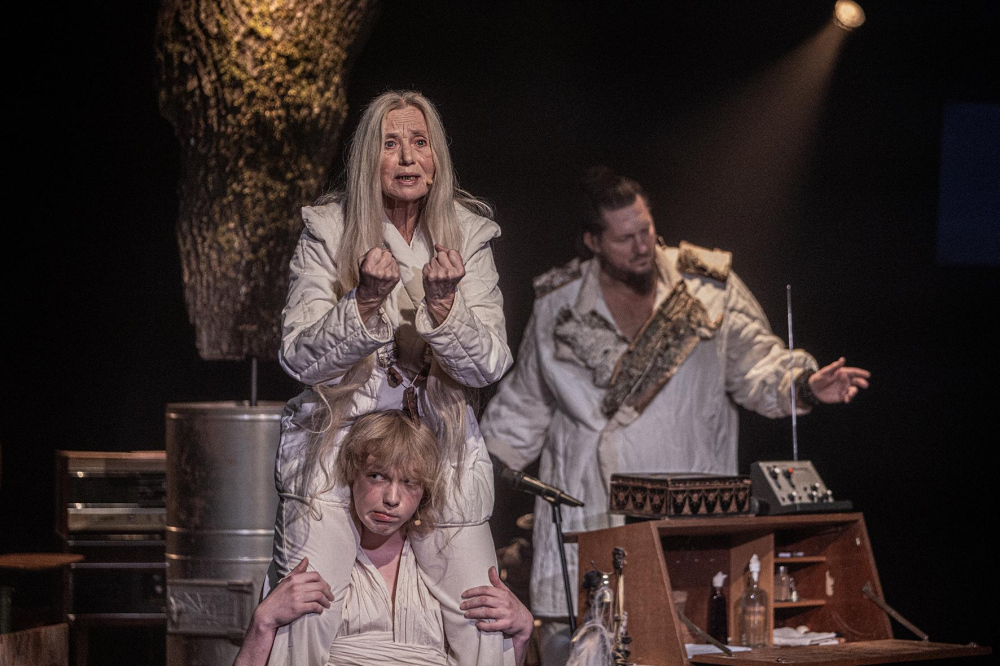
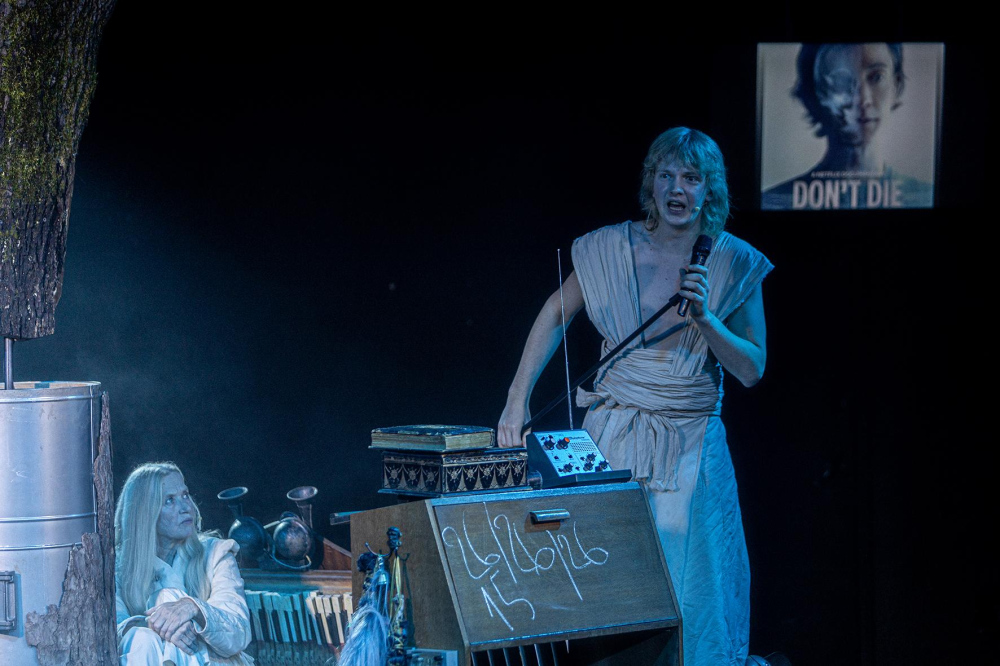
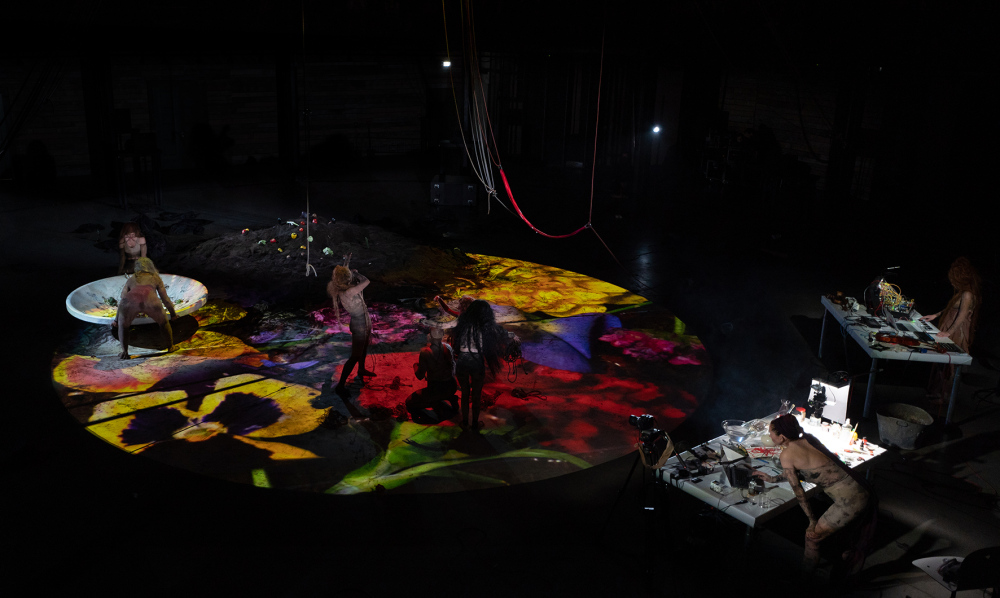
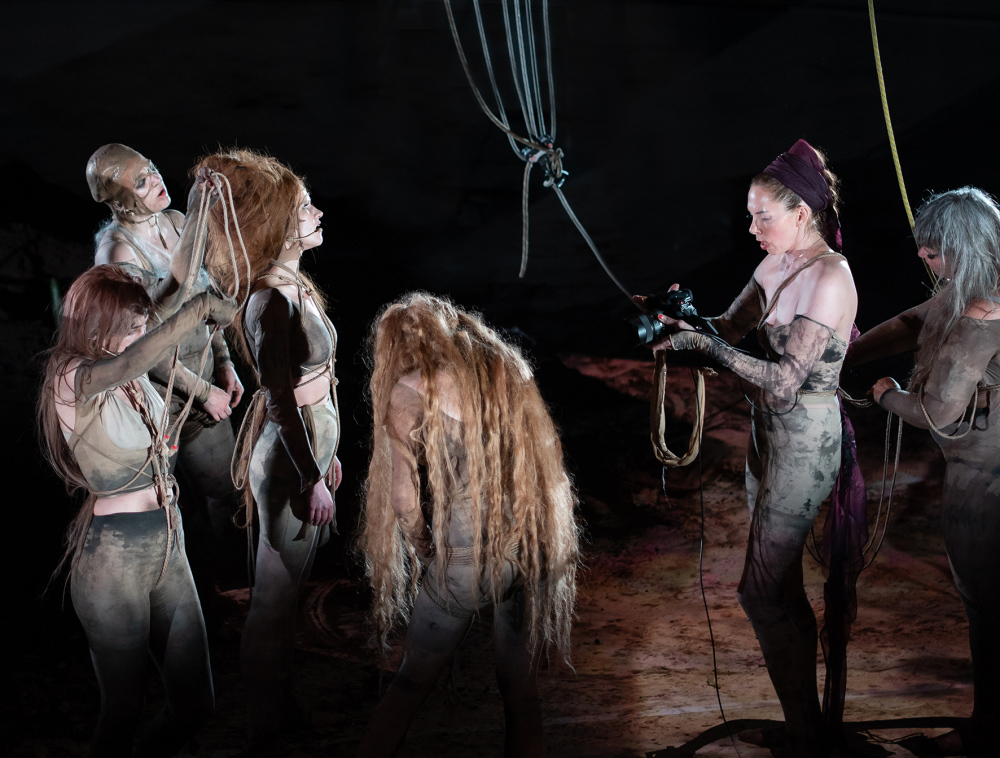
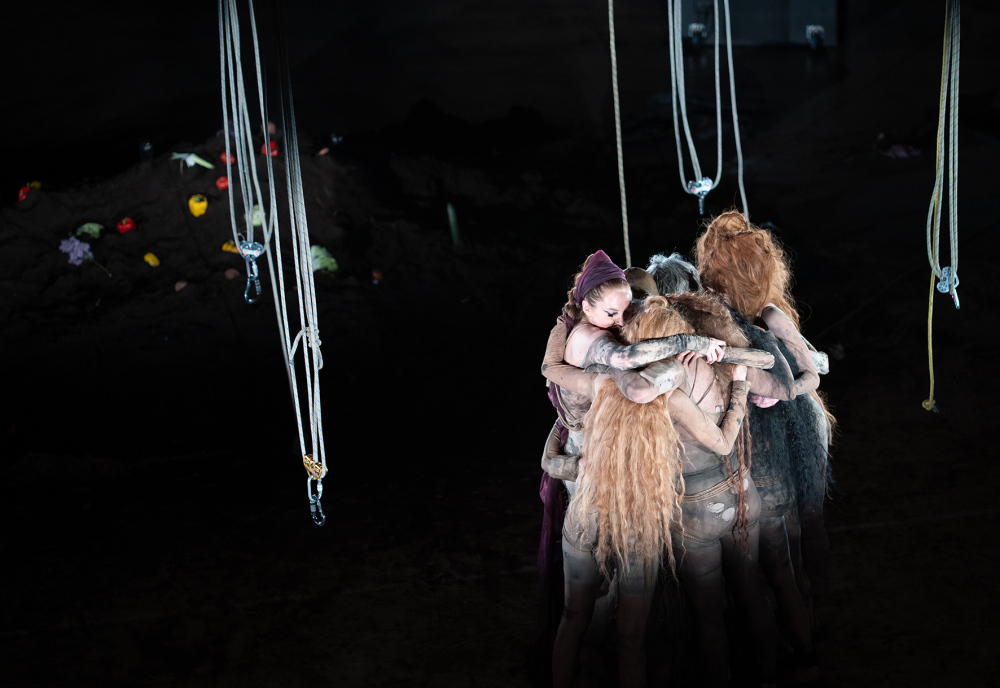
A ceremony for accepting ageing and mortality
Dirty Deal Teatro, Riga, Latvia
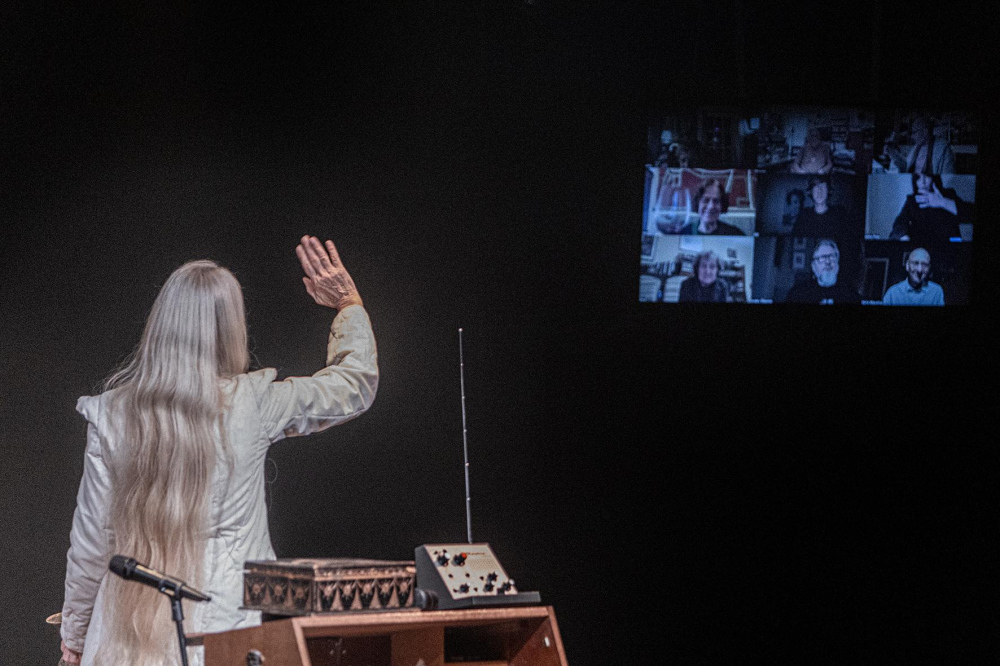
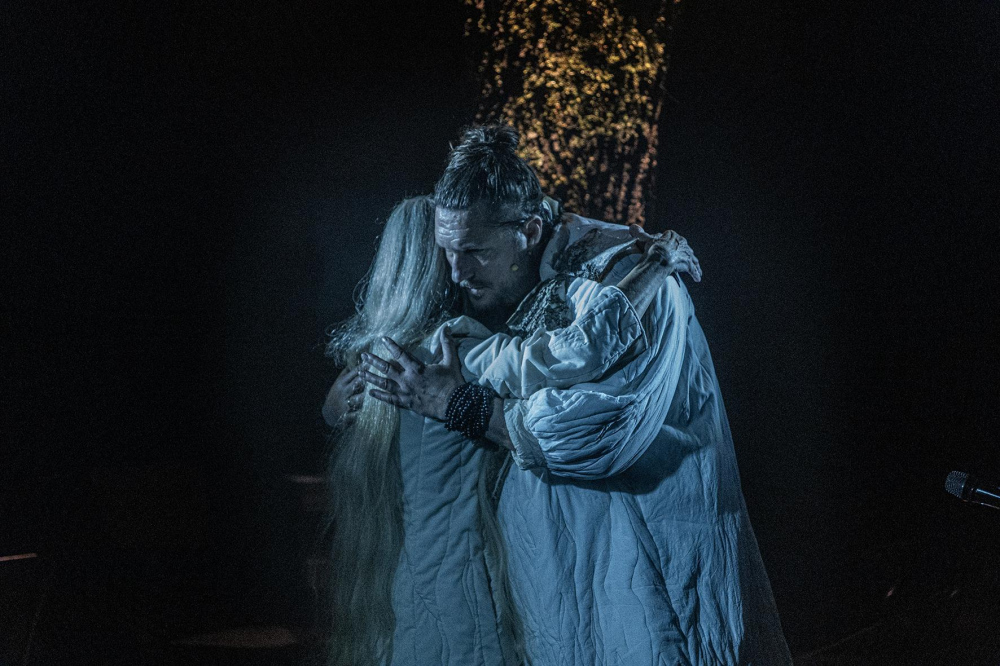
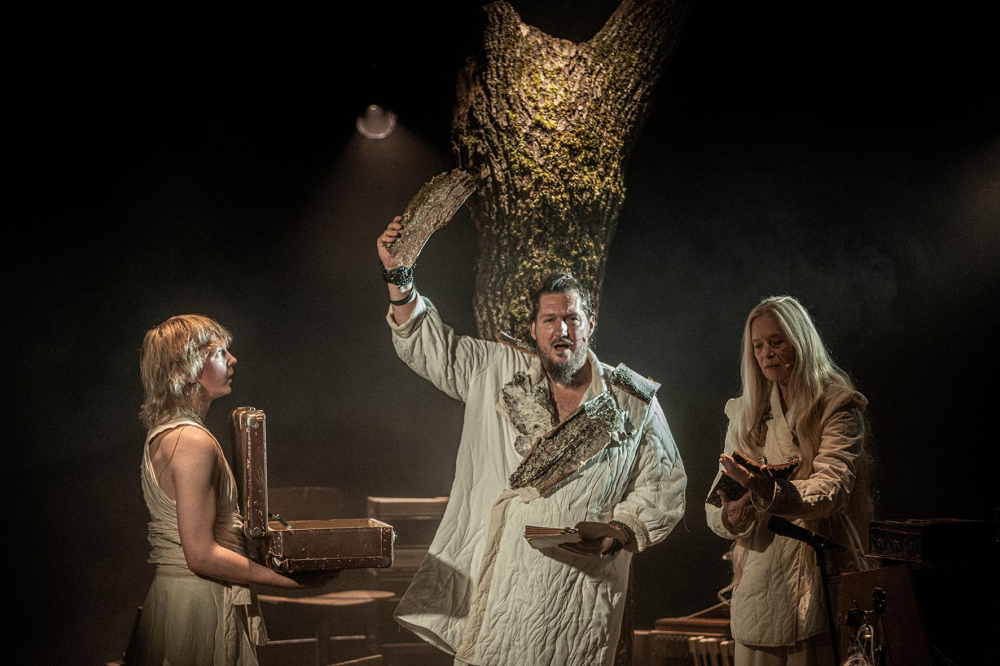
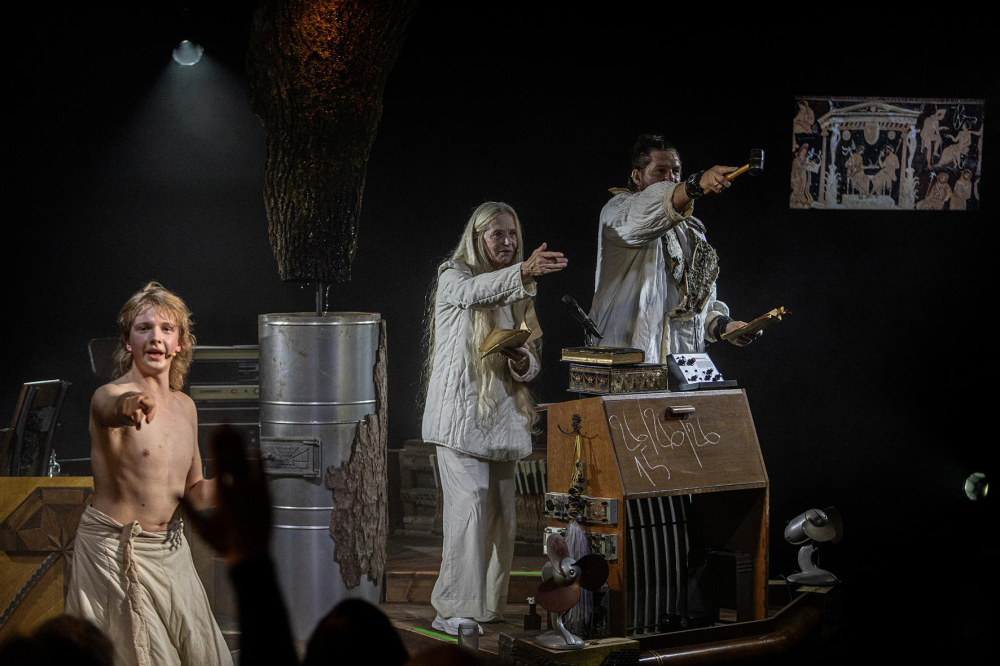
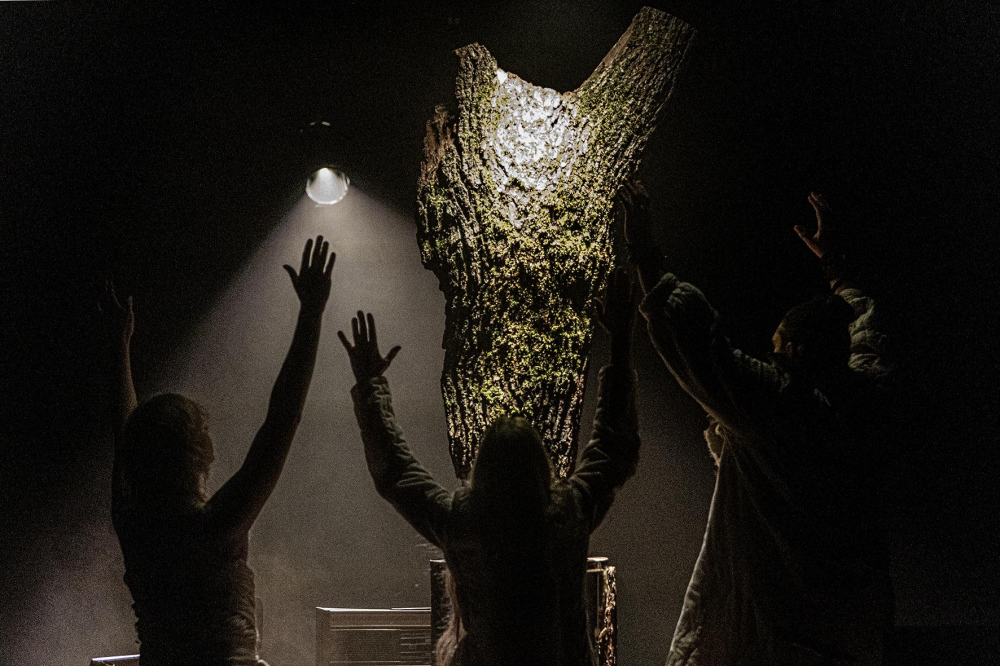
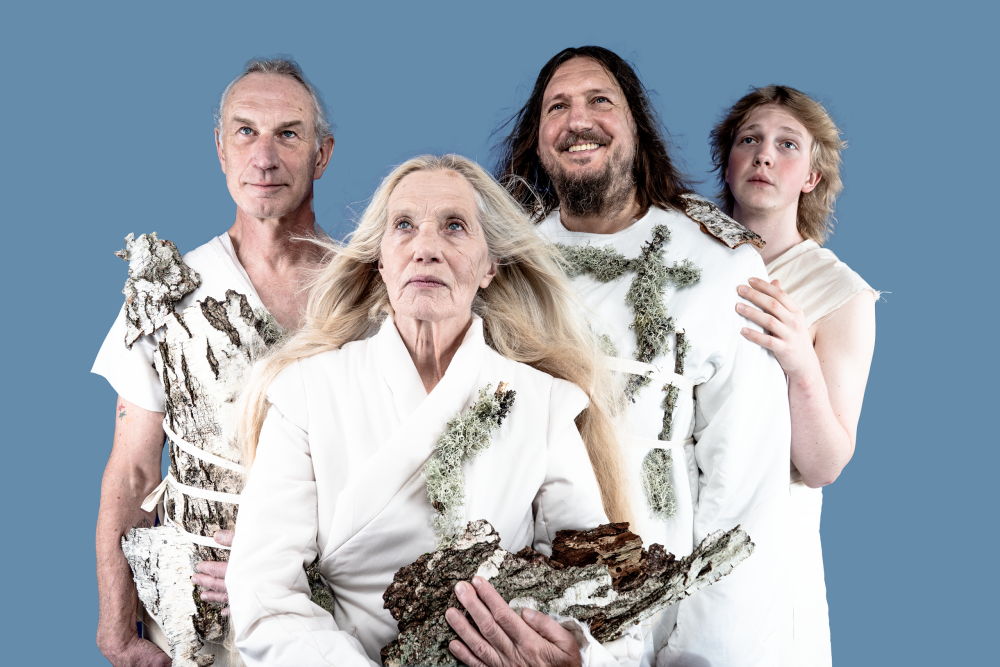
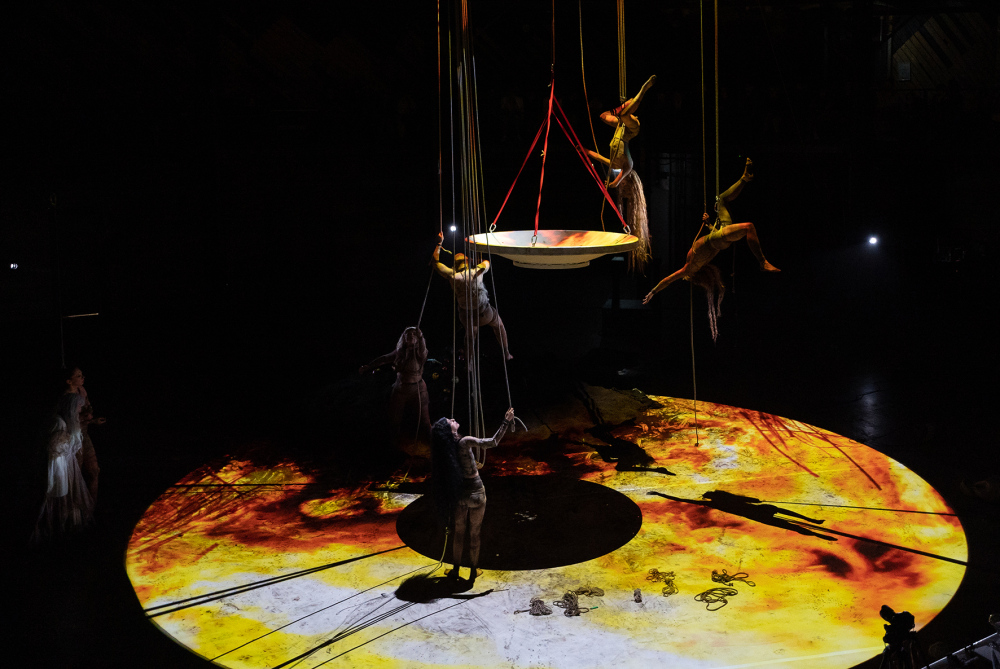
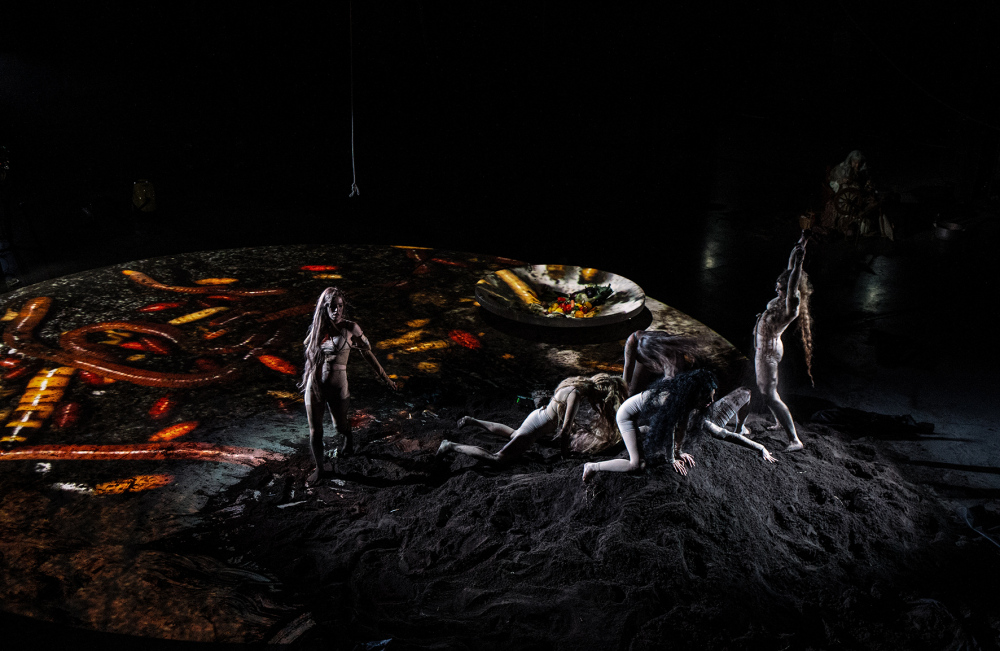
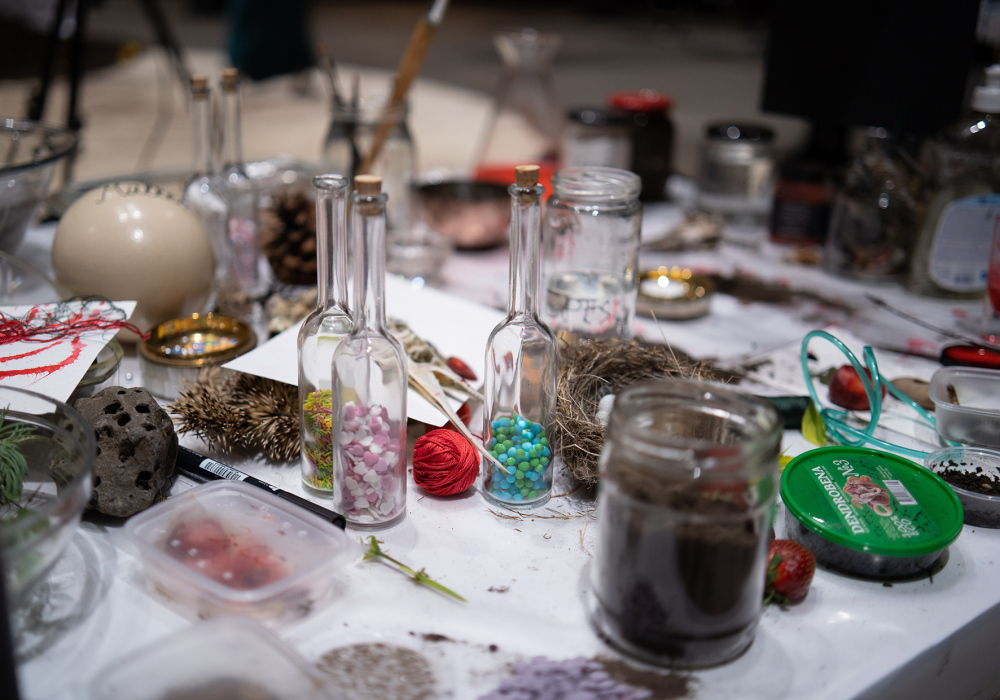
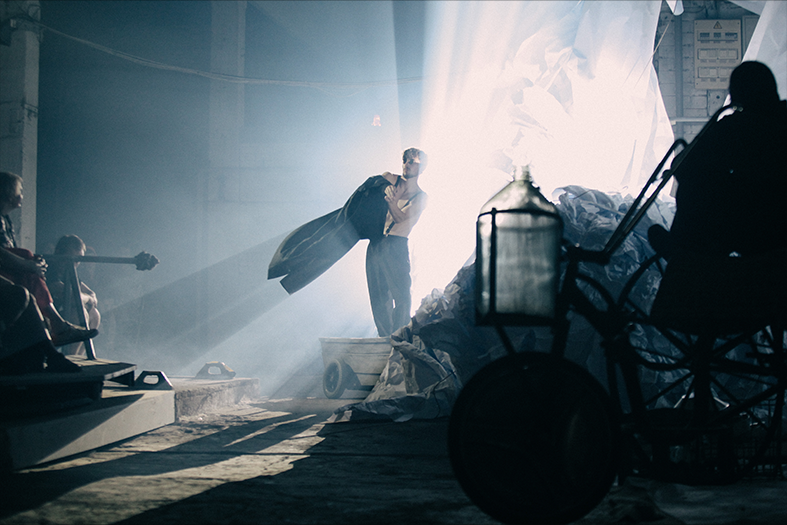
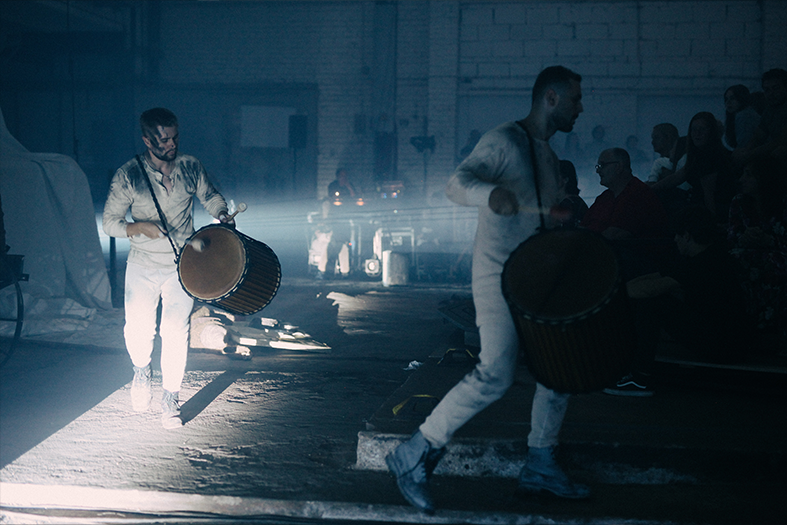
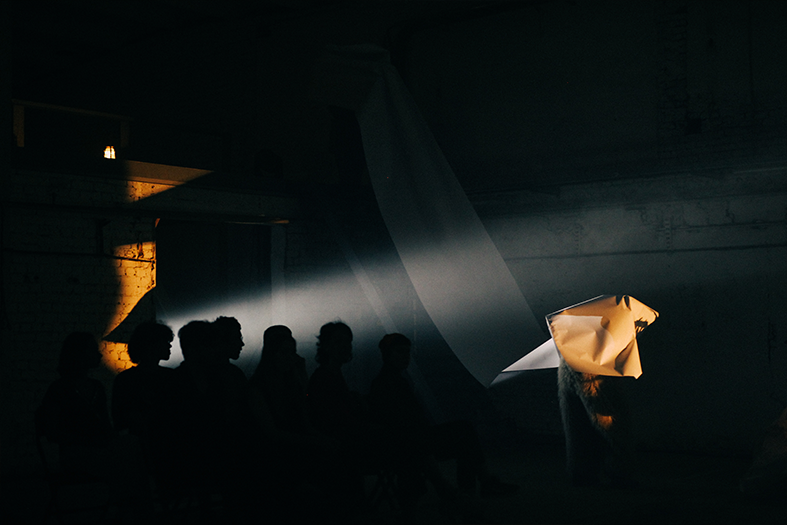
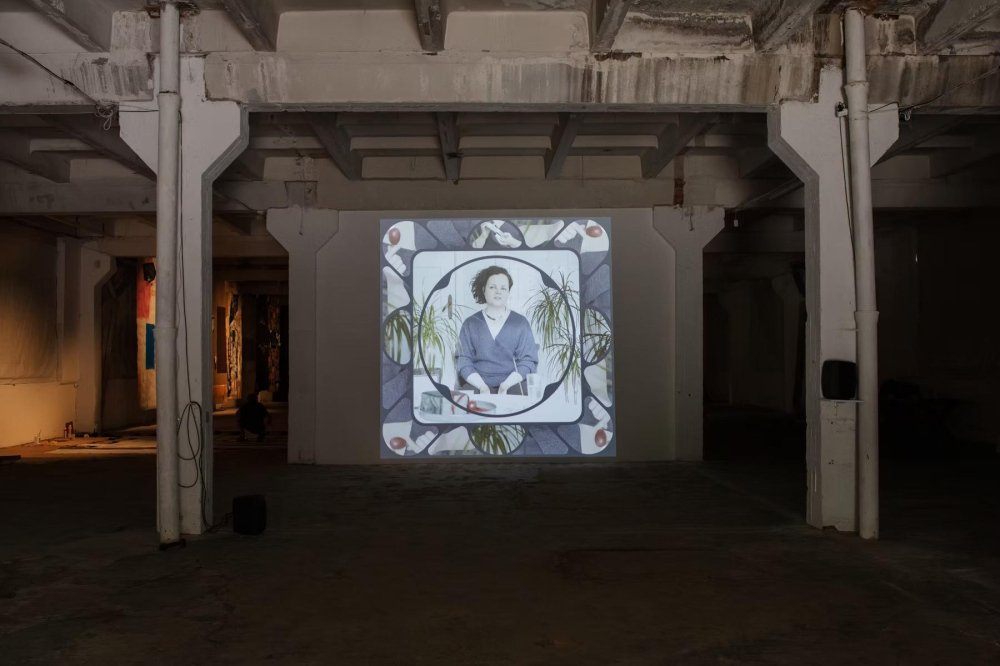
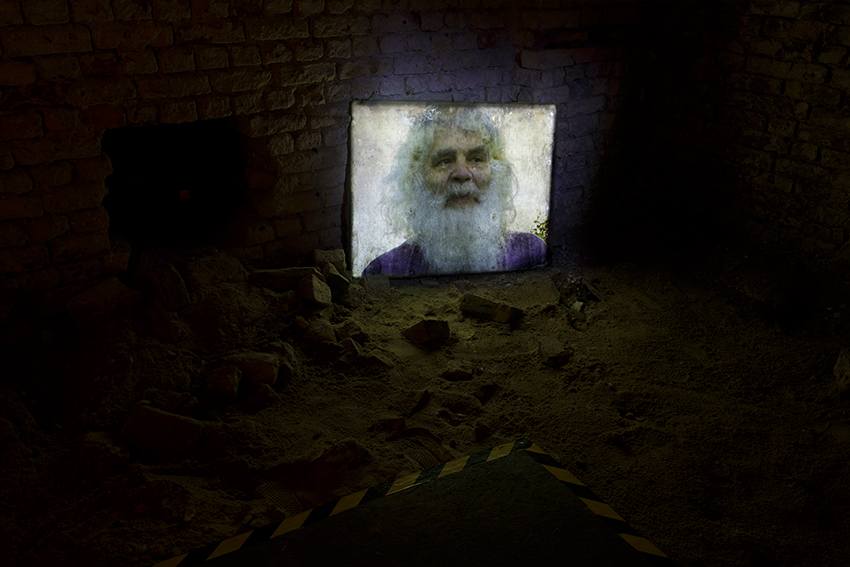
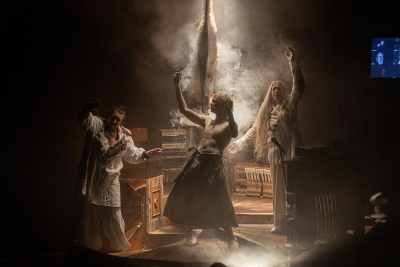
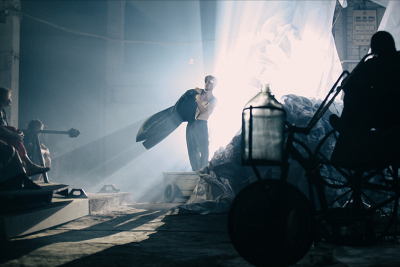
Created by Katrīna Neiburga and Iveta PoleThe Cult of Elders brings together performance, music and ritual to explore ageing and our relationship with mortality. Conceived as a gathering of an imaginary cult, it invites audiences to consider growing older as a passage towards another state of consciousness, awakening and peace.
The boundary between observing and participating remains open: simply entering the space makes the visitor part of the gathering.
No one knows when the Cult of the Elders was born or when it will disappear.
It is bound neither to a specific year nor to a specific place.
Every gathering is a continuation of time itself and of what the Sacred Bark once began.
Some claim the movement emerged only recently, others insist its roots lie in ancient times.
Most sources remain silent.Testimonies of several members of the Cult of the Elders:
“My name is Katrīna Neiburga, I am 47 years old, and in 23 years I will be 70. I want to look forward to that moment with joy.”
“My name is Iveta Pole, I am 44 years old. In Buddhism, old age is considered suffering, but I don’t want to suffer. I want to welcome my wrinkles with peace, unafraid of becoming old and unnecessary in a world that worships youth.”
“My name is Edgars Mākens, I am 48 years old. Midlife has already arrived; old age has become something very concrete. I am searching for a way to make peace with it.”
-
BEYOND BEYOND, 2025
An immersive performance installation by MØR Collective
Concept co-created by Katrīna Neiburga, Anika Barkan and Mika Forsling
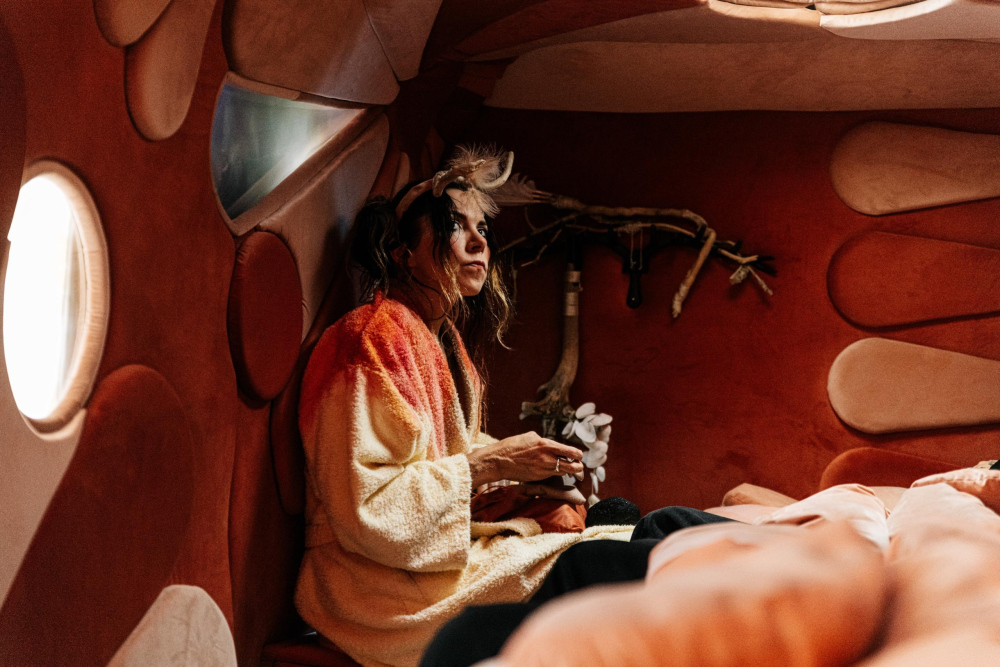
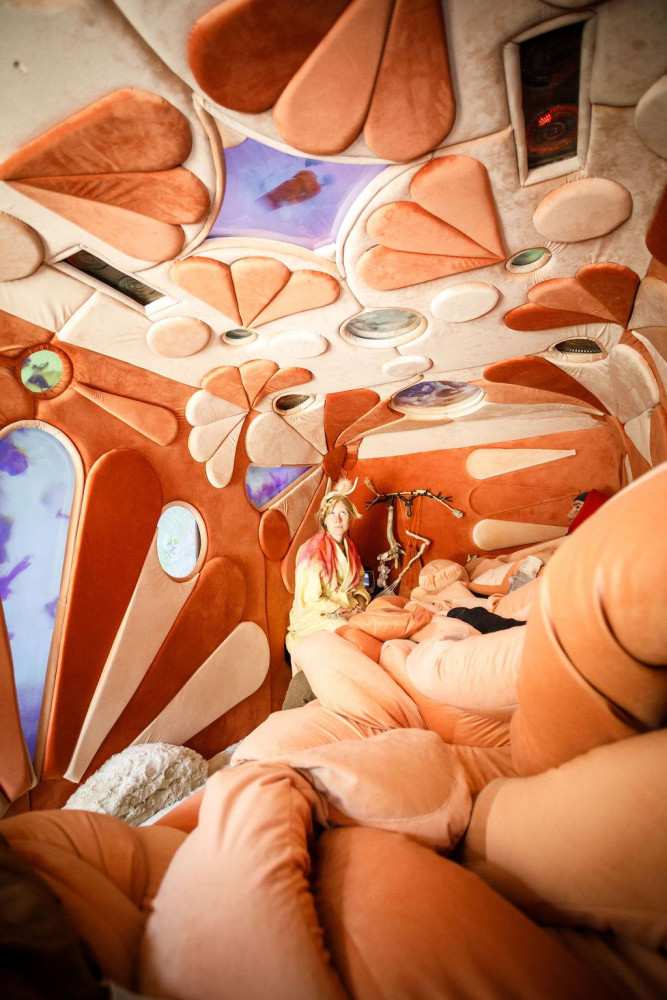
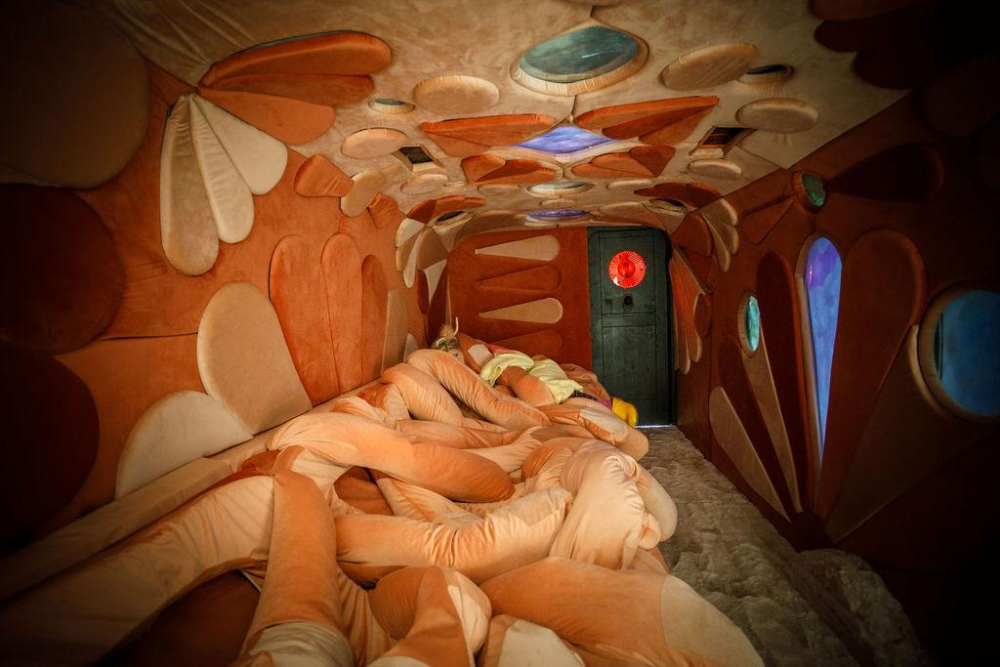
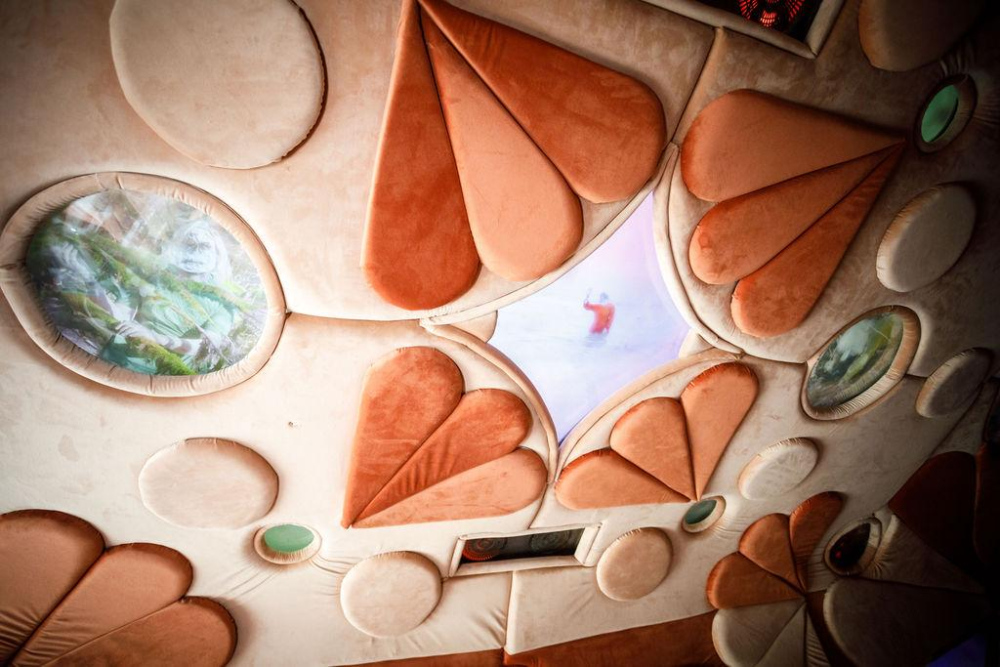
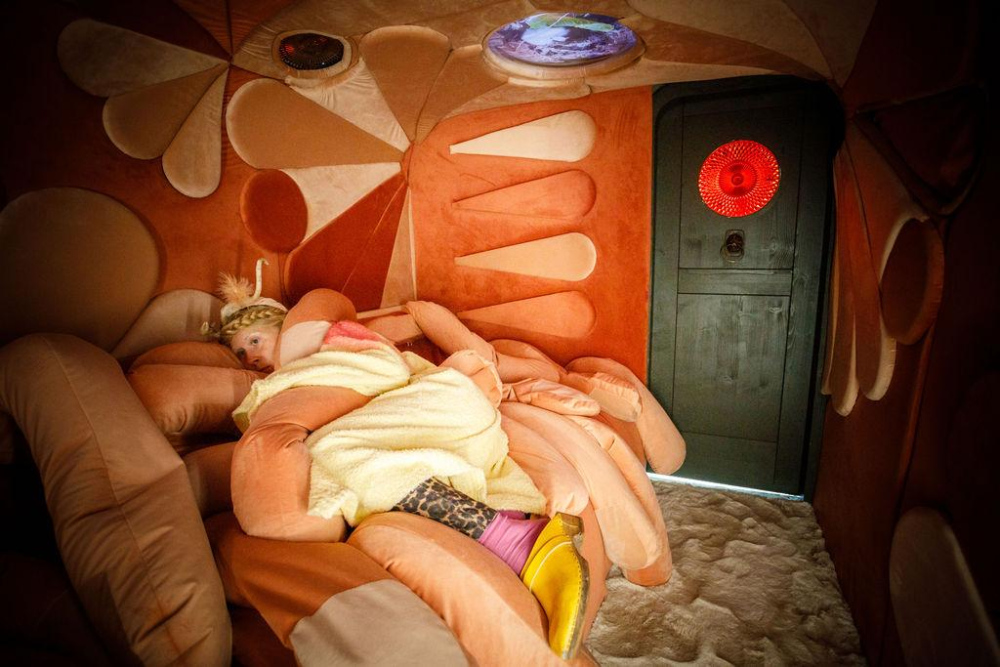
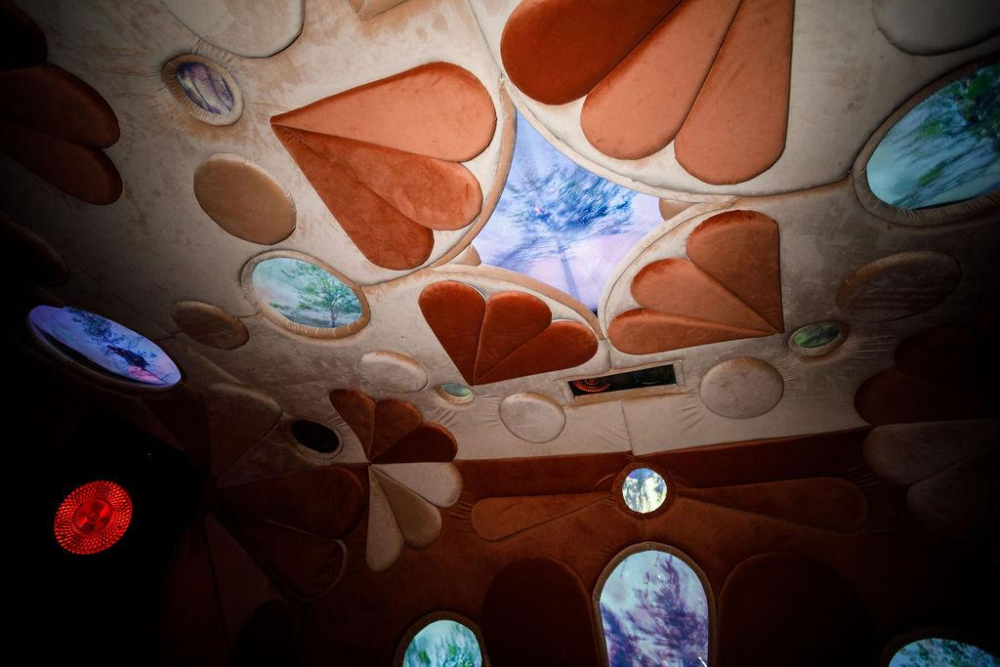
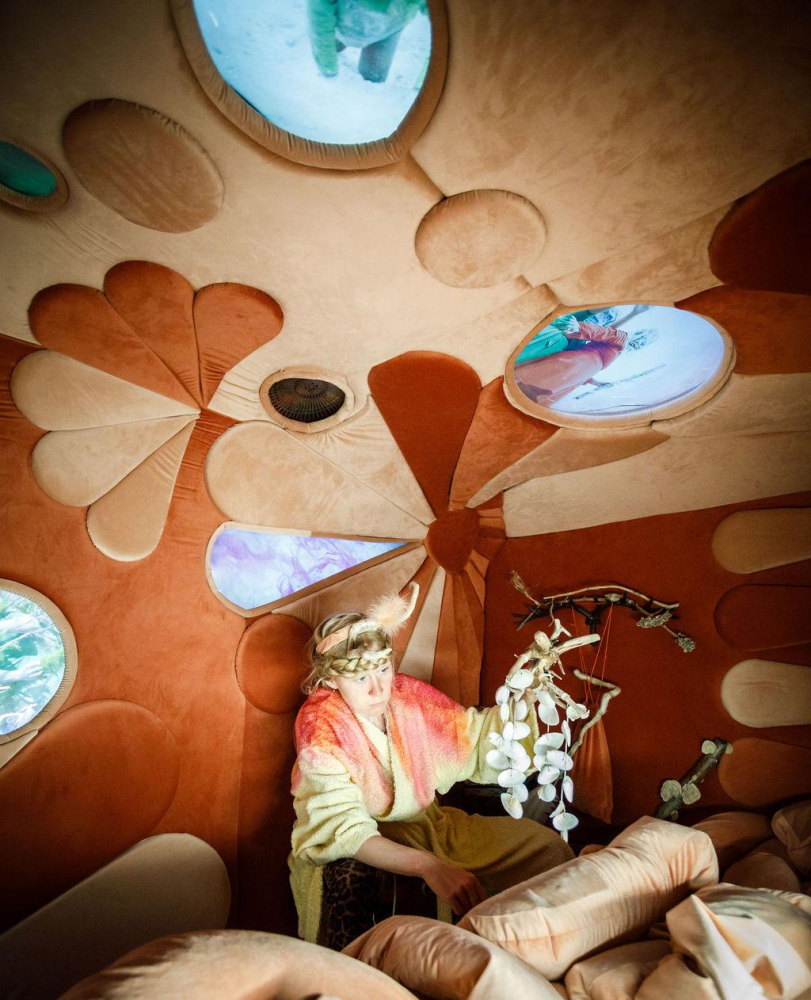
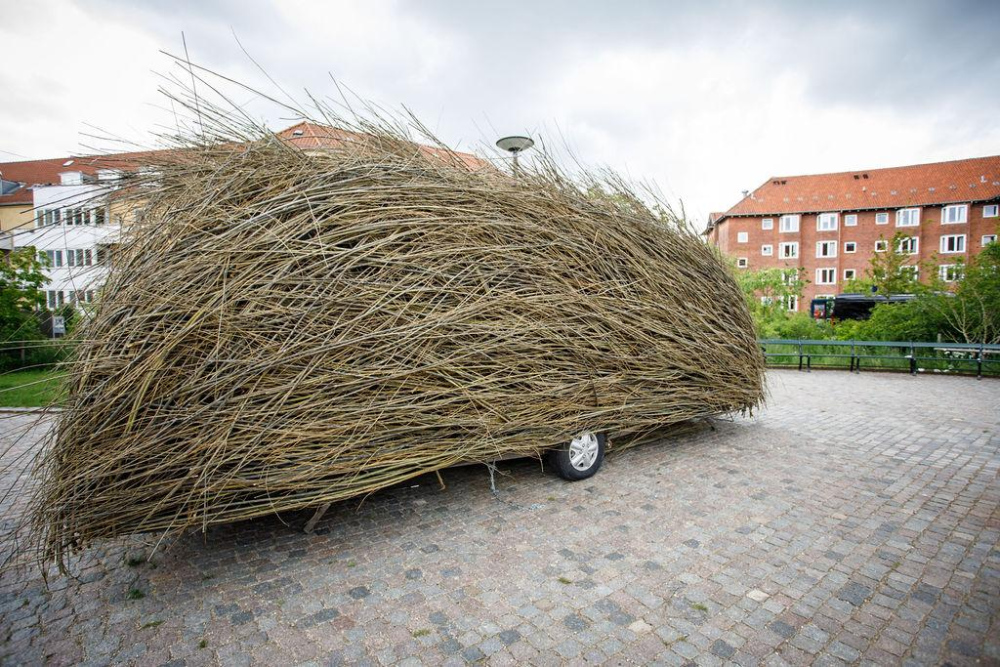
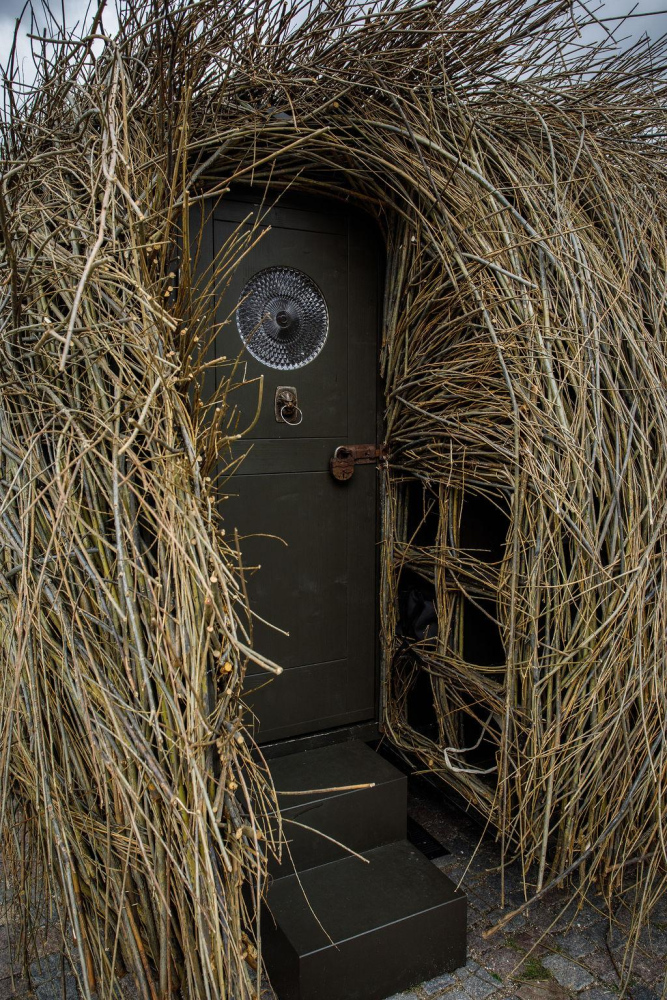
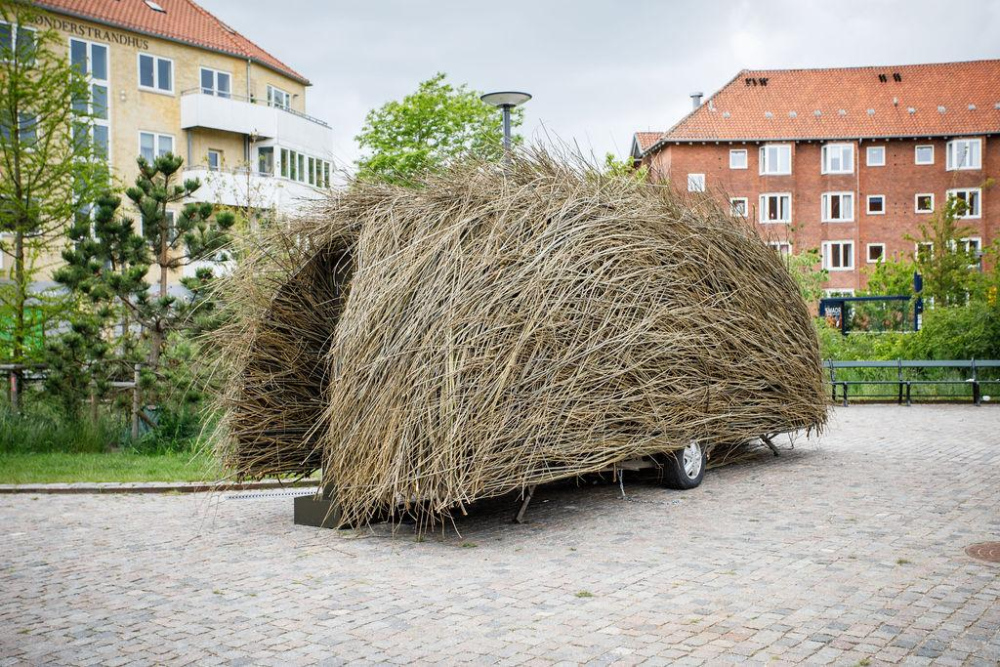
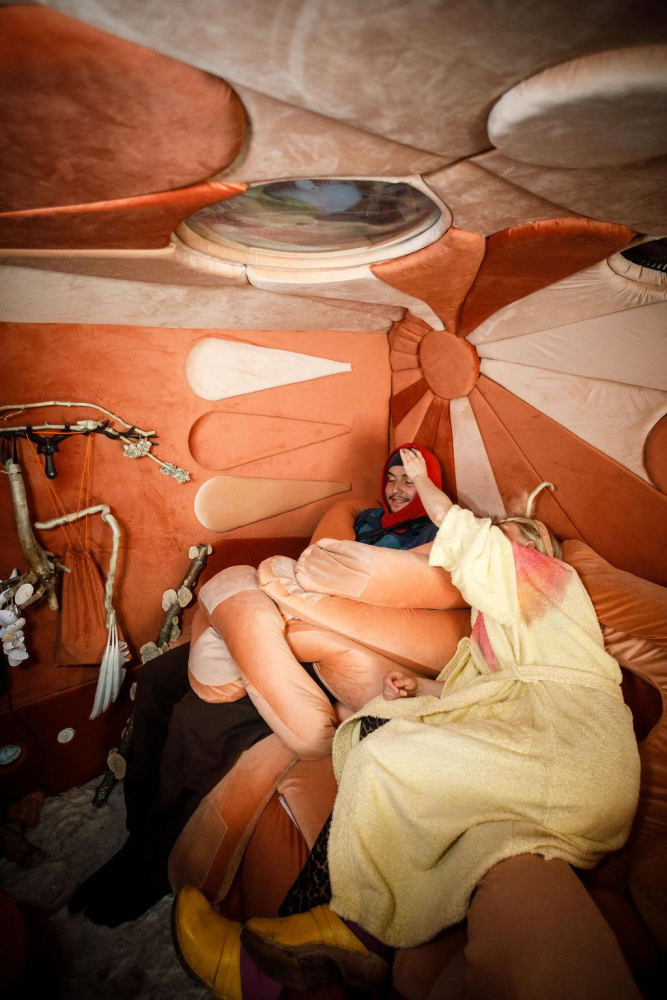
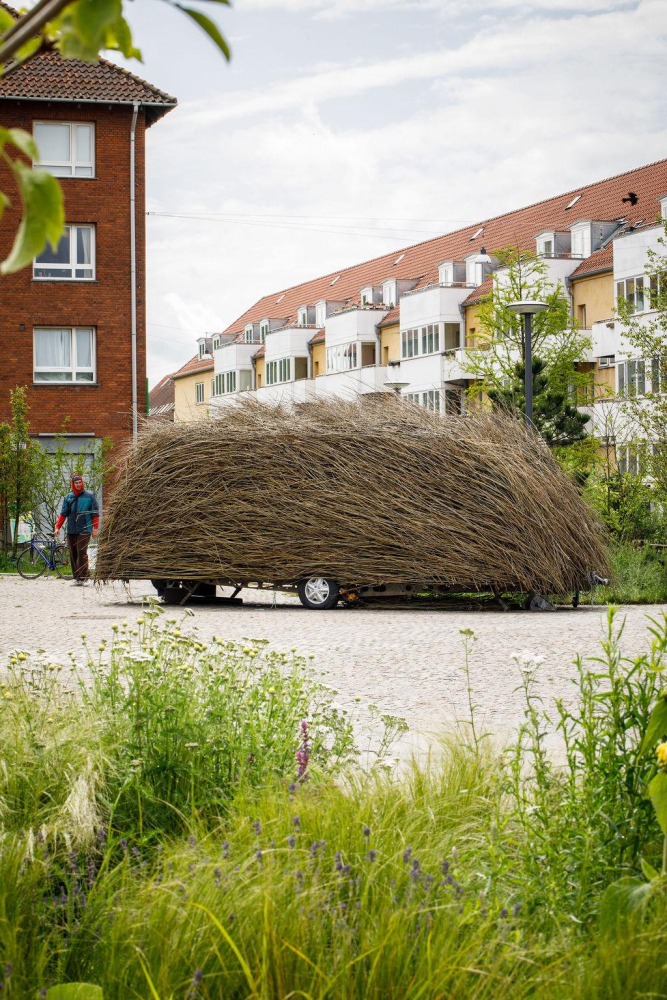
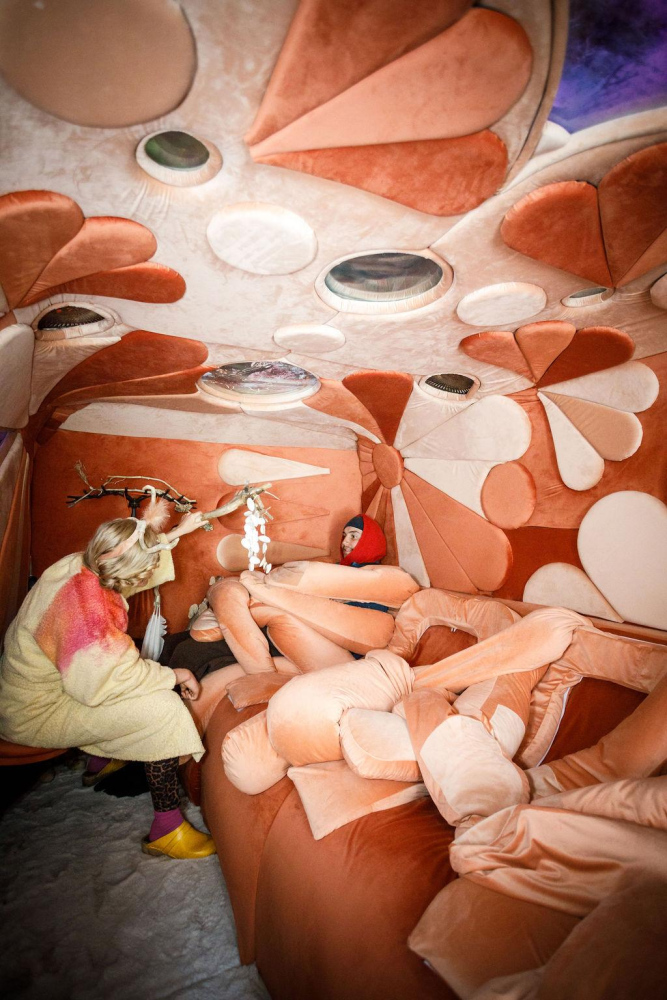
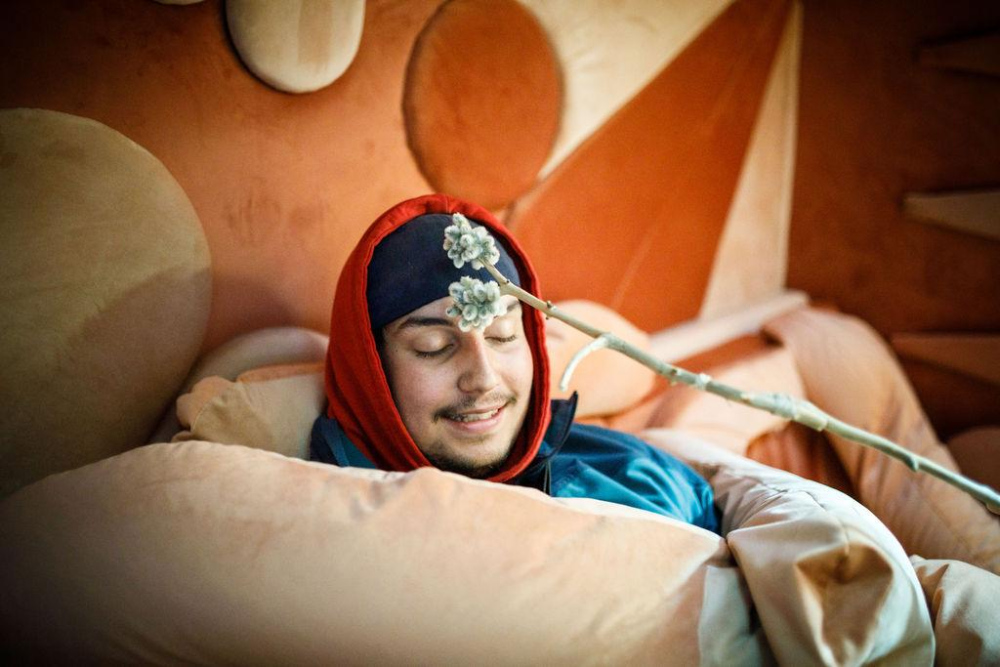
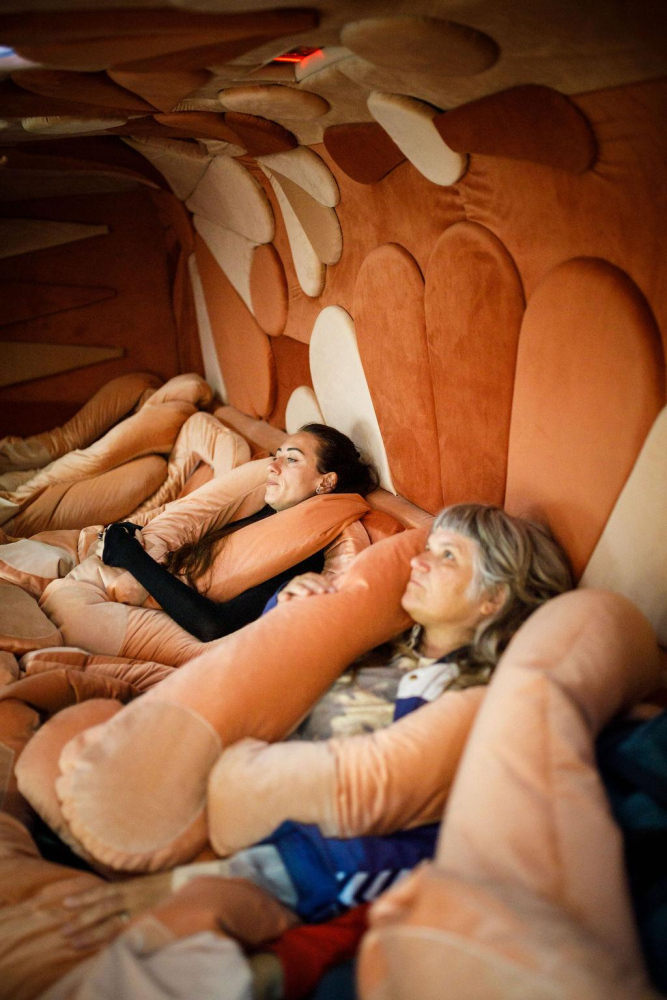
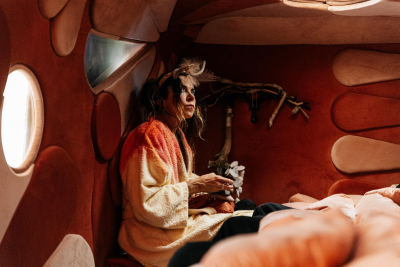
Video and scenography by Katrīna NeiburgaBeyond Beyond invites visitors into a transformed caravan, where soft velvet surfaces, moving images, sound and live performance create an intimate space between waking and dreaming.
Inspired by lullabies and rituals, the work explores the threshold of the unknown through tenderness, rhythm and brutality. The caravan becomes an enchanting cave, its vaulted interior suggesting a small cathedral: a place to pause, release control and surrender to the strange logic of dreams.
Developed through a collaborative process, the installation brings together the visual, musical and performative practices of MØR Collective.
Credits
Concept: Katrīna Neiburga, Anika Barkan and Mika Forsling
Video and scenography: Katrīna Neiburga
Direction and performance: Anika Barkan
Composition and performance: Mika Forsling
Dance: Ghazal Ramzani
Audience host and performer: Laura Hagen Aagaard
Design and construction: Livest SIACo-produced by Sydhavn Teater
Premiere: 4 June 2025, Sydhavnen, Copenhagen, Denmark -
SOLOGAMY, 2024
Solo exhibition
Latvian National Museum of Art, Cupola Hall, Riga, Latvia
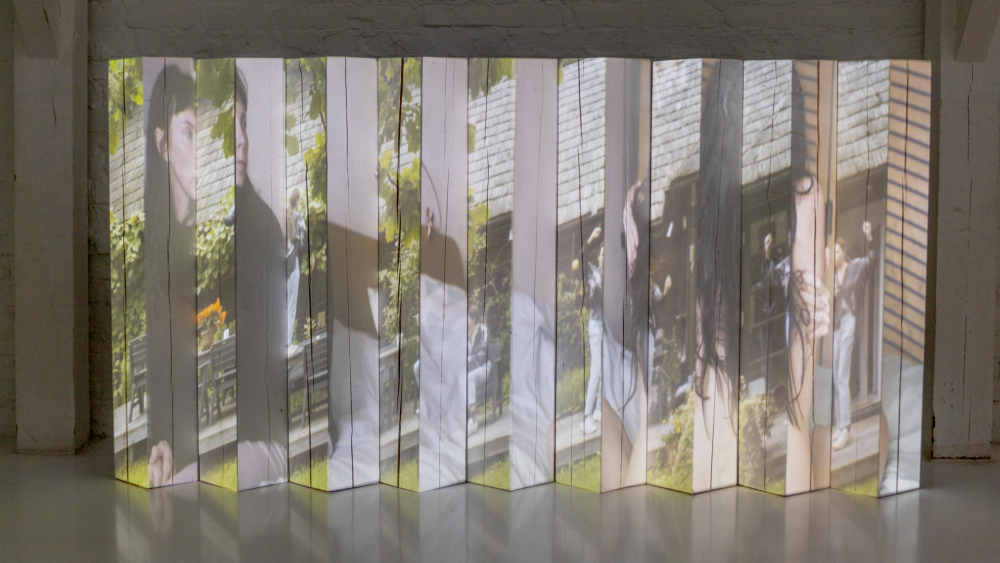
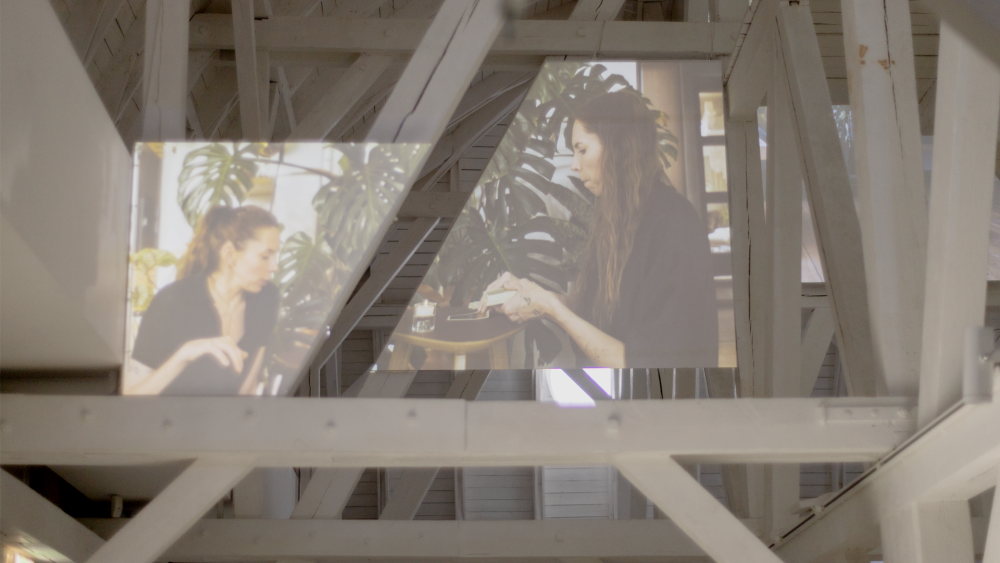
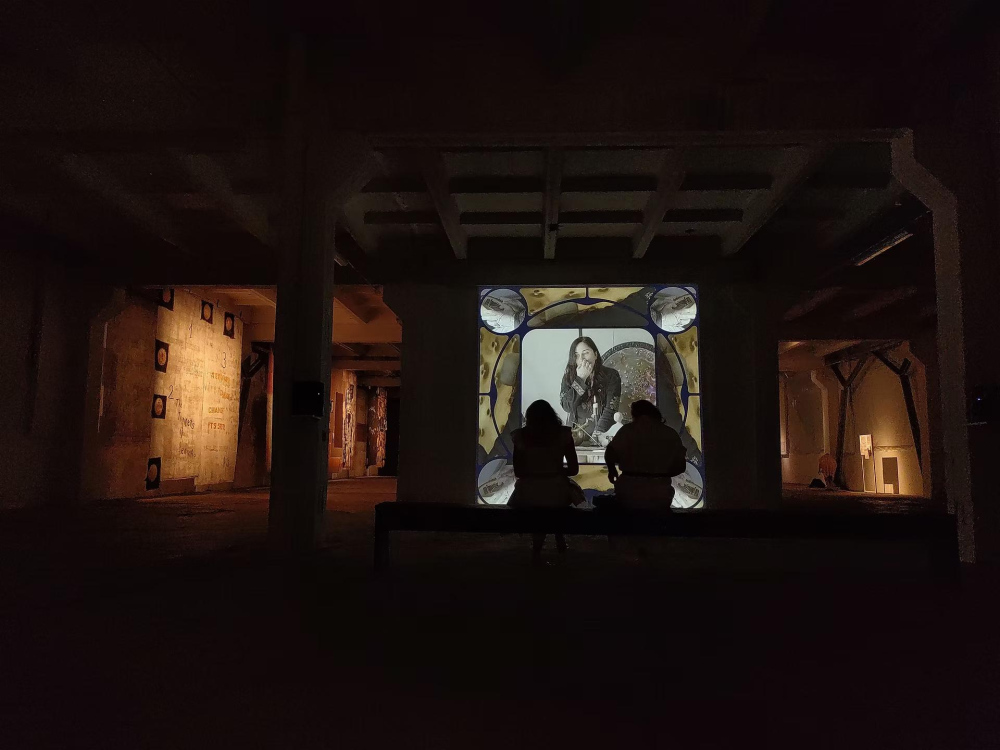
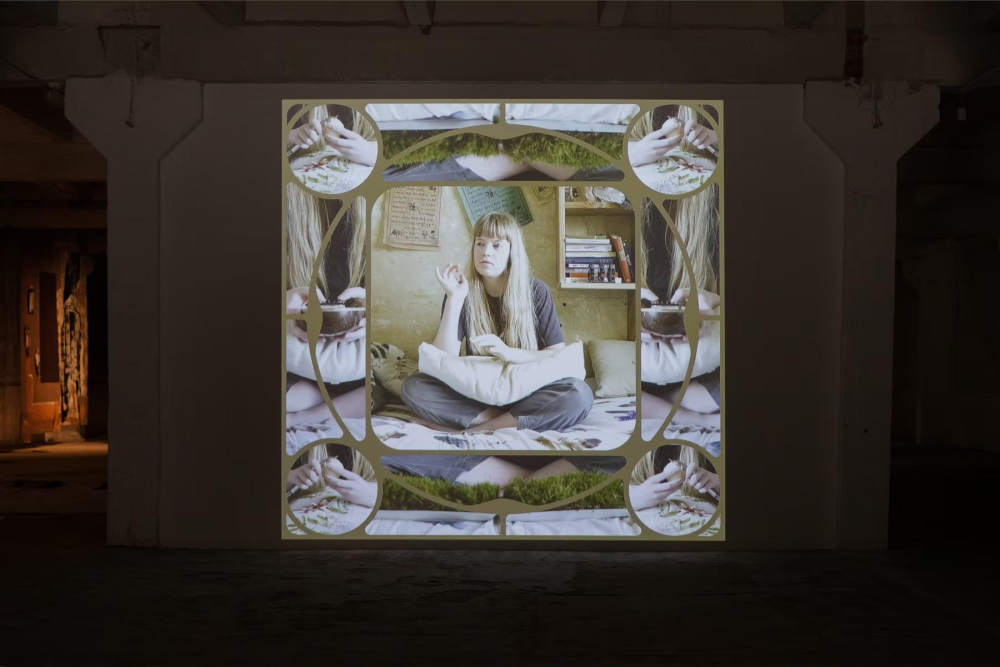
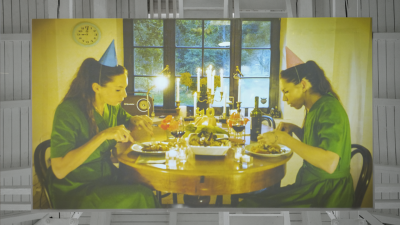
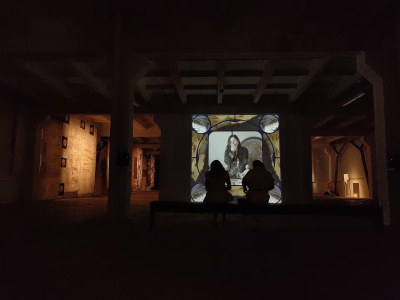
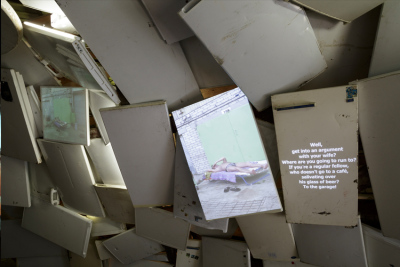
8 June to 1 September 2024Sologamy explores the intimate and contradictory relationship we have with ourselves. Taking the idea of marriage to oneself as its starting point, the exhibition brings together video, sound and objects to examine solitude, desire, self-criticism and acceptance.
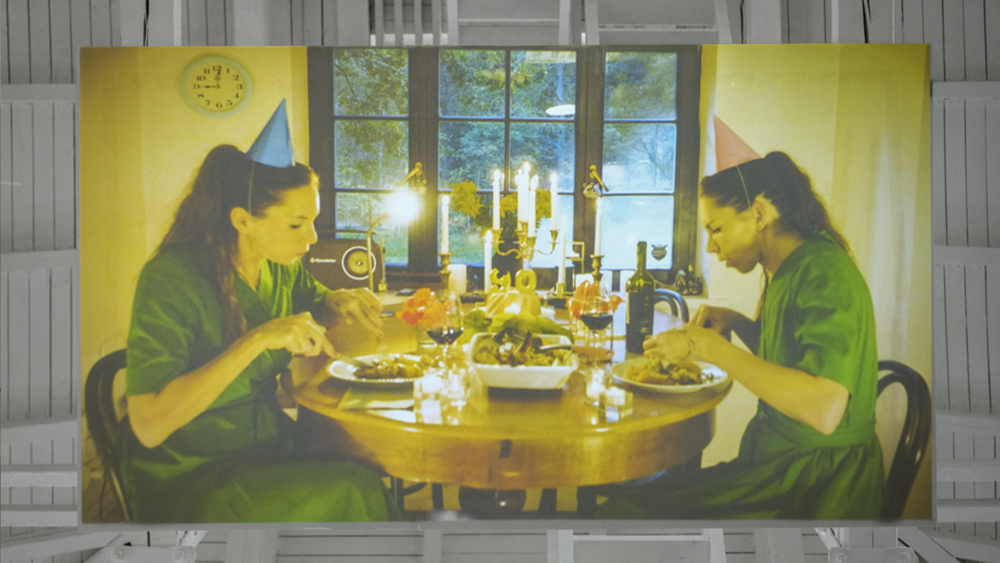
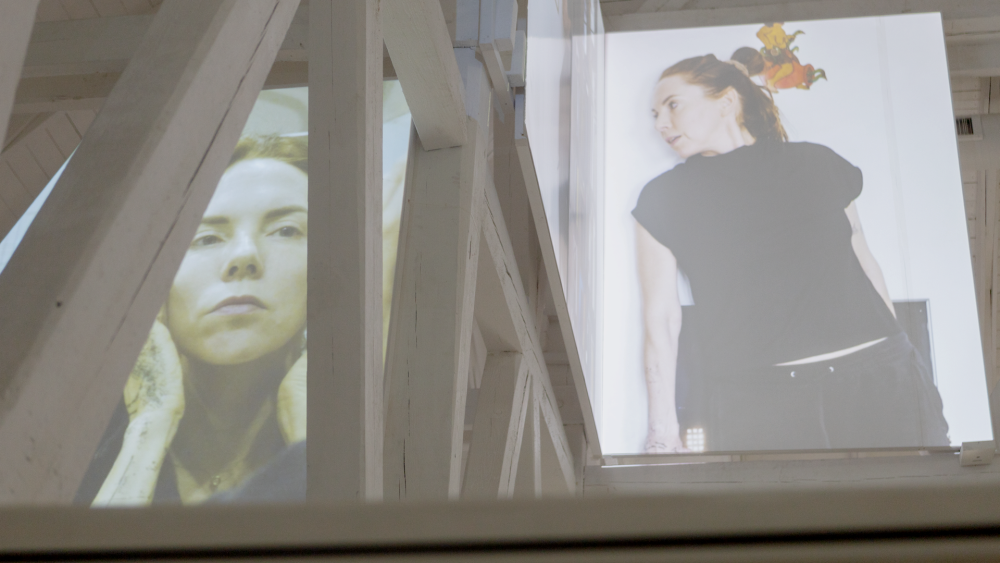
Neiburga becomes both observer and protagonist. In staged everyday encounters, different versions of herself argue, offer comfort, express love and resist one another. Conversations, domestic rituals and moments of absurd humour reveal a self that is never entirely alone or in agreement with itself.
Developed through two and a half years of research and self-observation, the work asks how we look at ourselves, and whether that gaze can become more generous. Its emotional register moves between tenderness, embarrassment, comedy and pain.
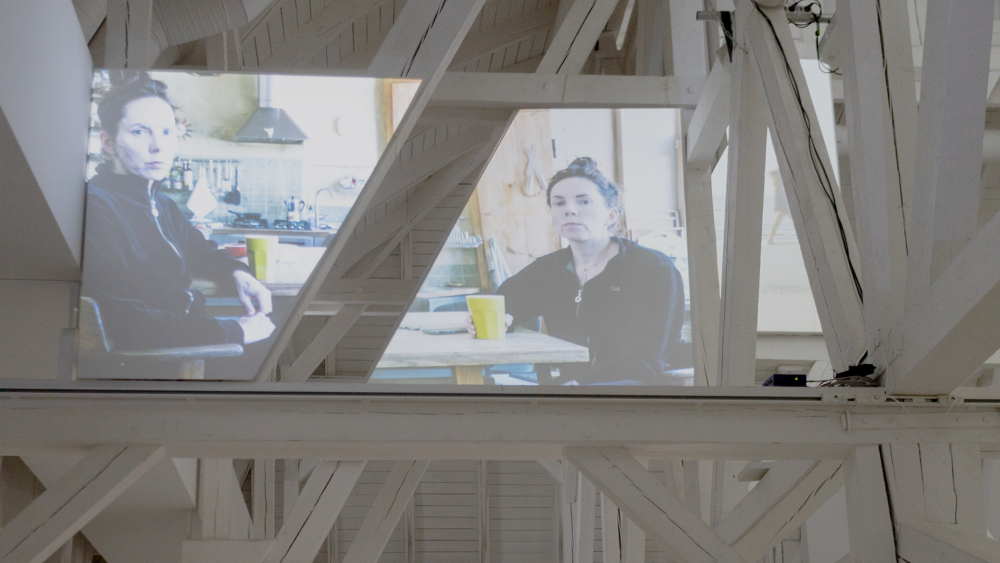
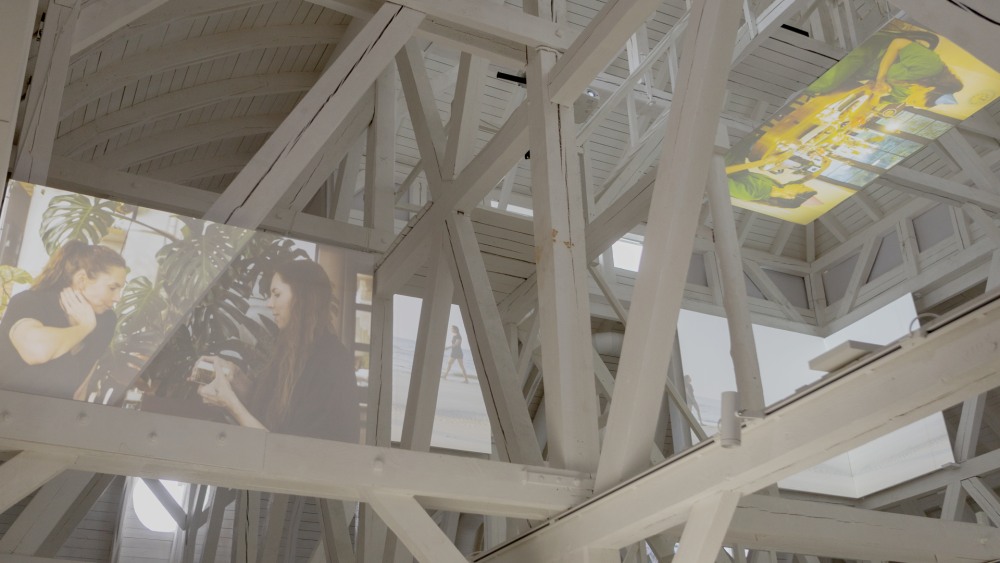
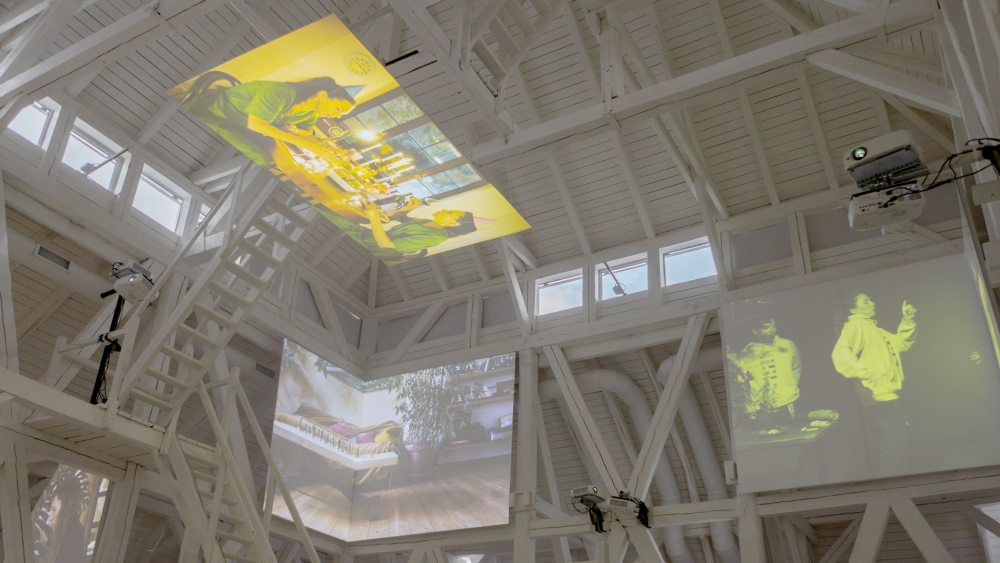
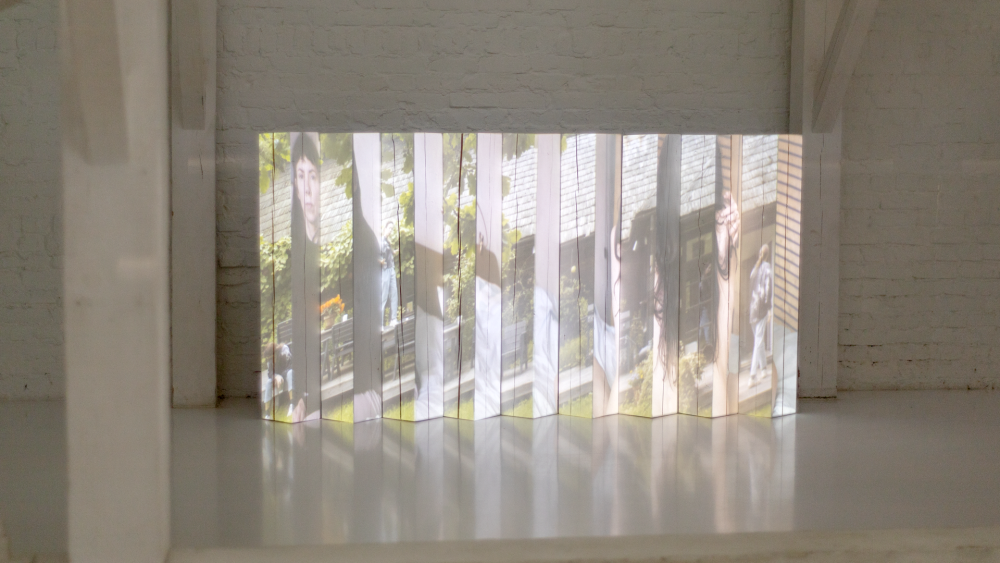
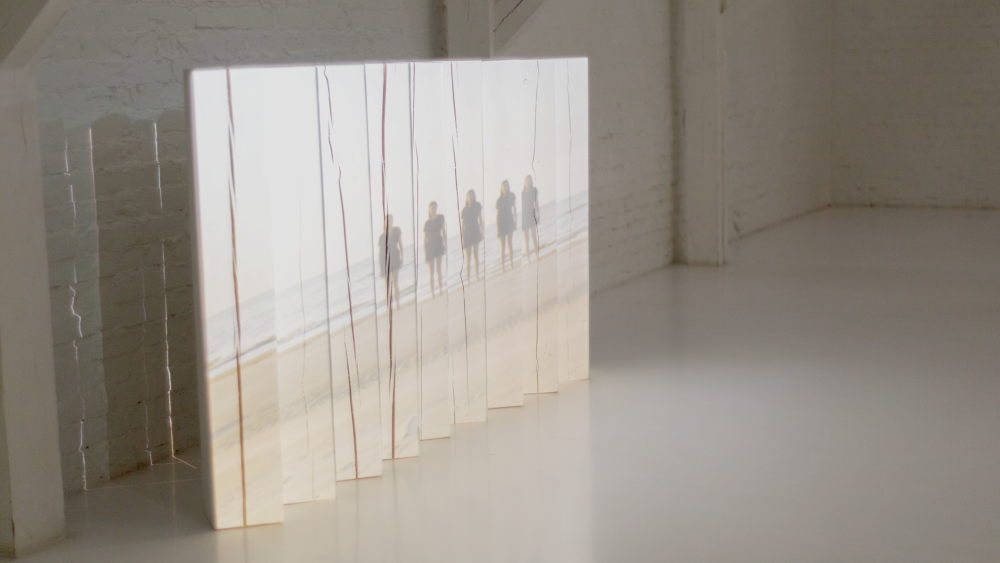
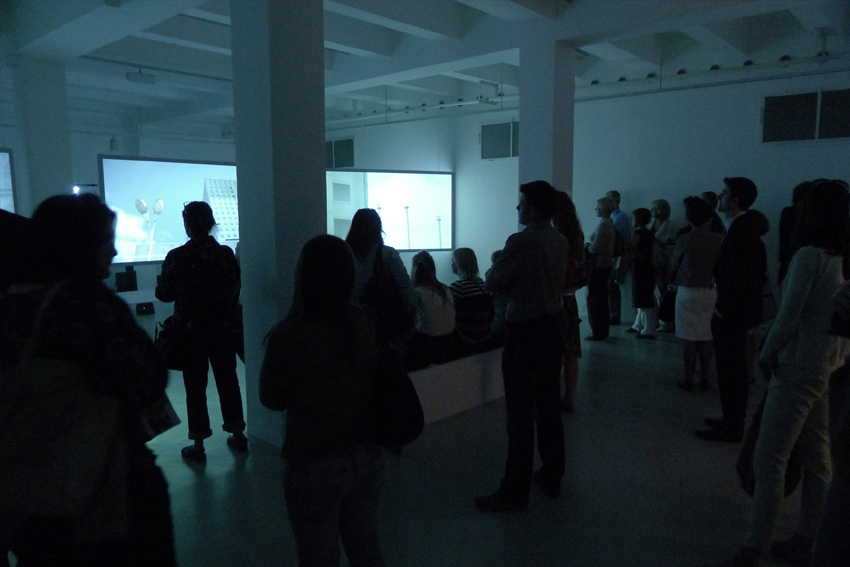
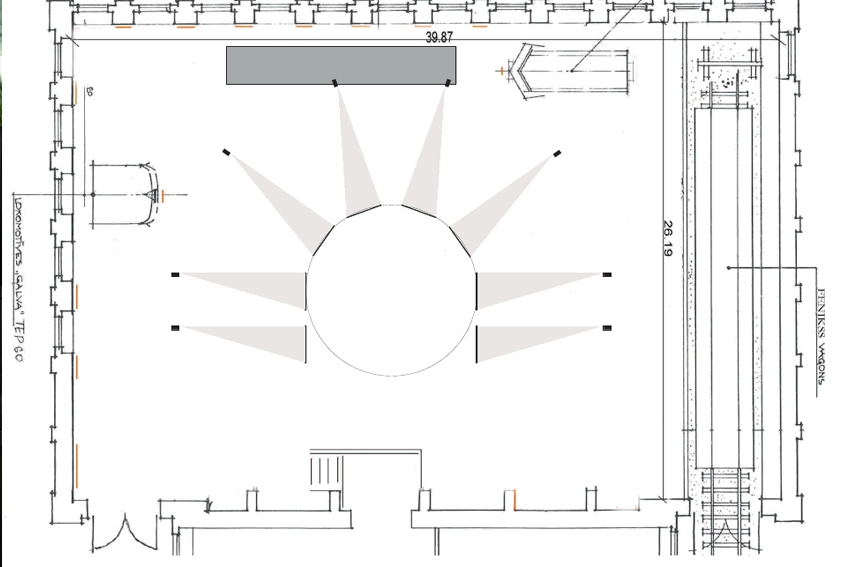
Video projections distributed among the white beams of the museum’s Cupola Hall form fragments of a shared inner world. Objects extend these encounters into physical space, while a bilingual Handbook on Sologamy brings together texts, poetry and illustrations by 24 contributors reflecting on relationships with oneself.
Credits
Artist: Katrīna Neiburga
Curator: Auguste Petre
Exhibition design: Aleksejs Beļeckis in collaboration with Līva Kreislere
Artefacts of Sologamy: Anna Ansone and Nils Jumītis
Sound: Antons Grauds
Visual identity and handbook design: Estere Betija Grāvere
Technical implementation: SIA Rafters
Photography: Antons Georgs Grauds and Georgs Kreislers -
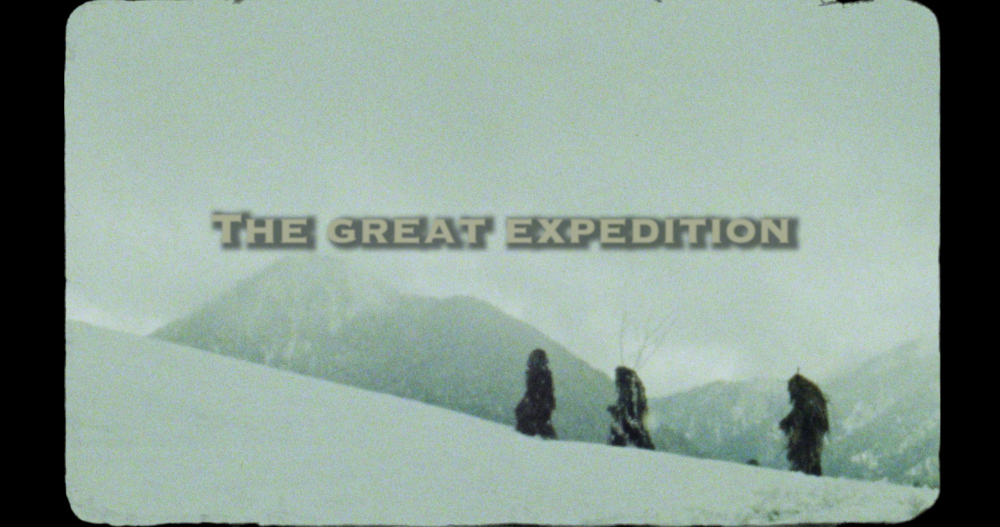
THE GREAT EXPEDITION, 2024
-
MALLEUS MALEFICARUM, 2023
A collectively devised performance initiated and directed by Iveta Pole
Co-creation, performance and video by Katrīna Neiburga
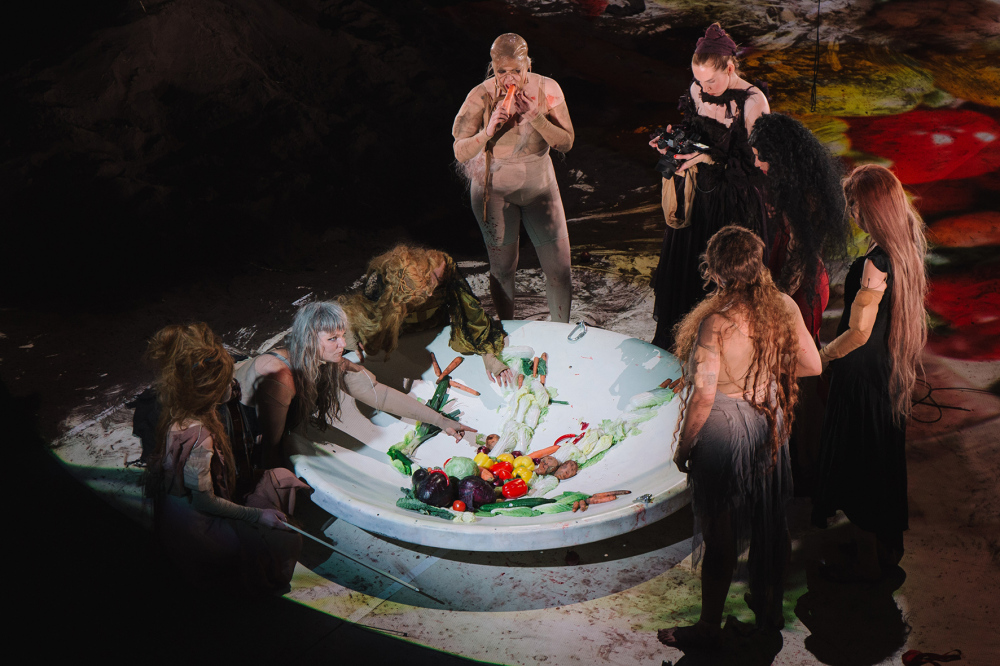
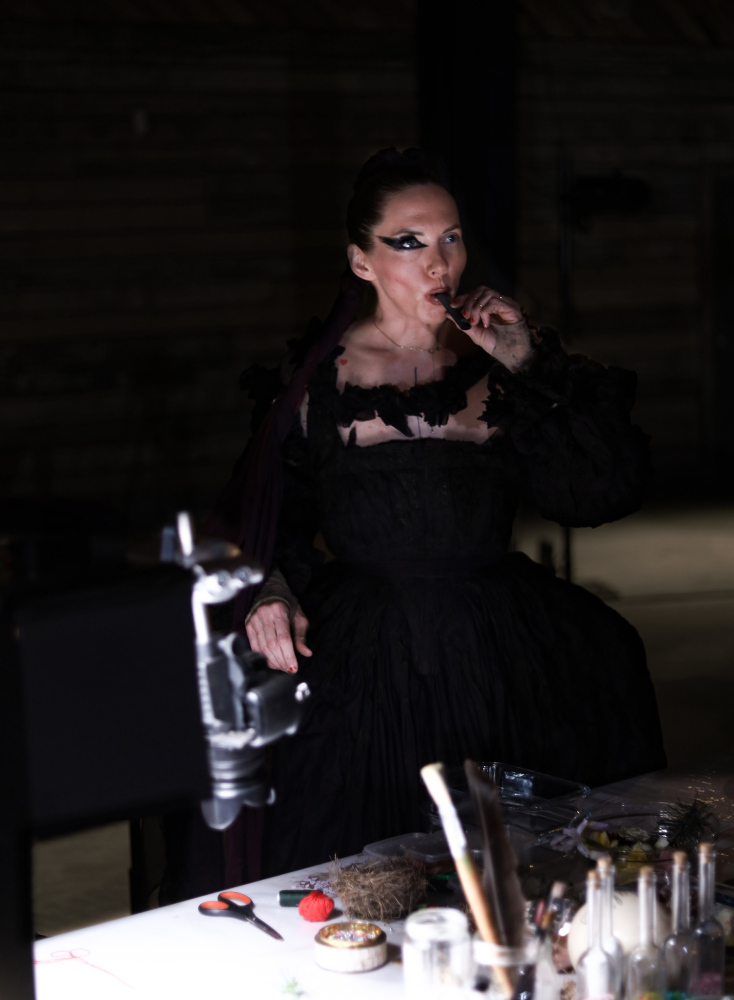
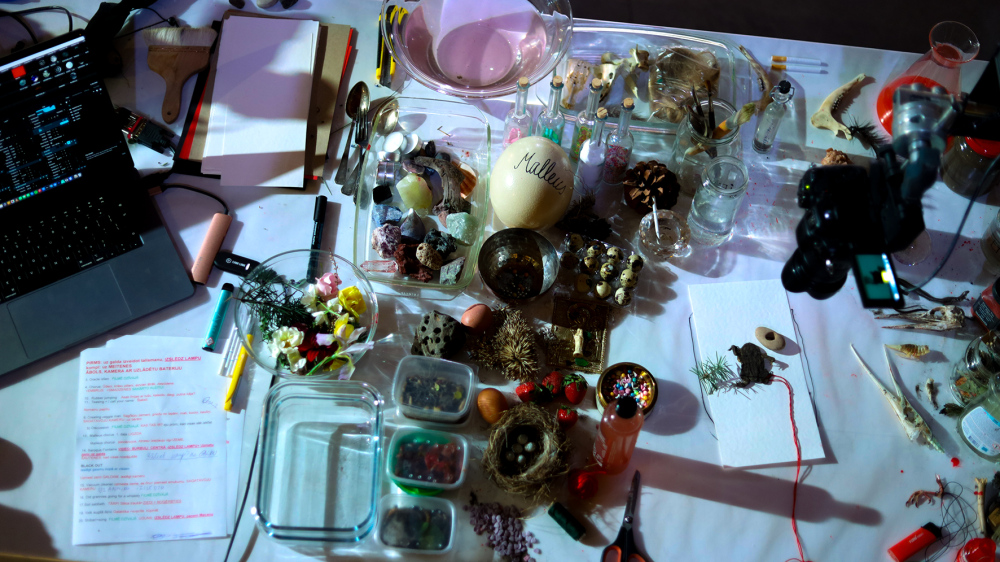
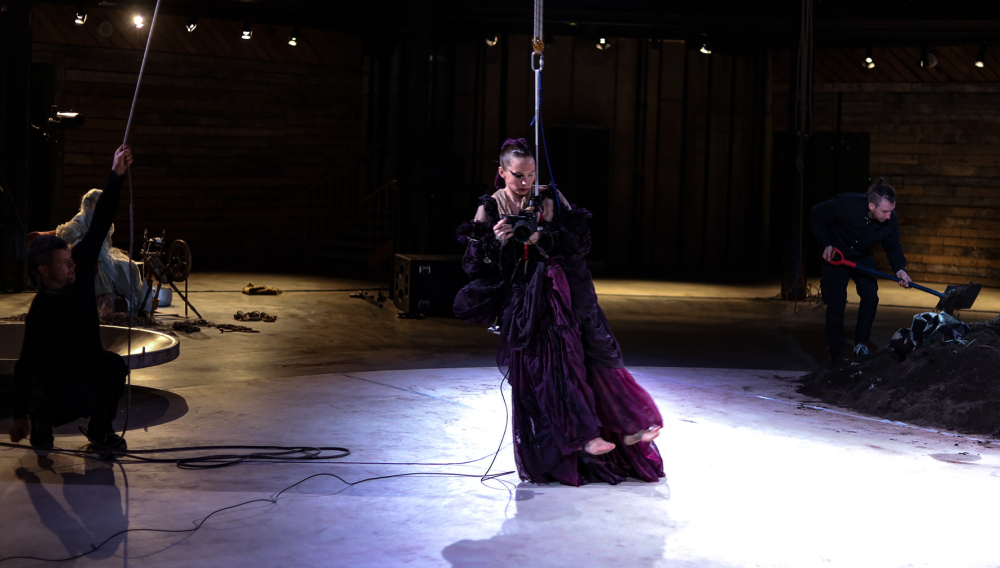
Premiere: 3 June 2023, Riga Circus, LatviaMalleus Maleficarum. The New Pact takes the historical witch-hunting treatise, known as the Hammer of Witches, as a starting point for an exploration of misogyny, female identity and power.
Created by an international group of women artists, the performance examines how the figure of the witch has been constructed through fear, control and the male gaze. Its ecofeminist inquiry opens towards an imagined future beyond patriarchy, asking what forms of knowledge, relationships and collective life might become possible.
Katrīna Neiburga contributed to the collective creation as a performer and video artist.
Credits
Initiator and director: Iveta Pole
Co-creators and performers: Iveta Pole, Katrīna Neiburga, Agnese Krivade, Jette Loona Hermanis, Anika Barkan, Lea Blau, Maarja Nuut, Martina Georgina and Irēna Grauda
Video: Katrīna Neiburga
Costumes: Kristiāns Aglonietis and Anna Ansone
Lighting: Karolin Tamm
Producers: INITIUM, Ieva Niedre, Minna Triin Kohv, Karīna Zeļonka and Sõltumatu Tantsu LavaAwards
Latvian Theatre Awards, Spēlmaņu nakts, 2023
Best Large-Scale Production
Lighting or Video Artist of the Year: Katrīna Neiburga, for the production’s video -
CHILL (VĒSĀ), 2022
An experimental opera
Idea, concept and scenography by Katrīna Neiburga
Music by Anna Fišere, credited at the premiere as Anna Ķirse
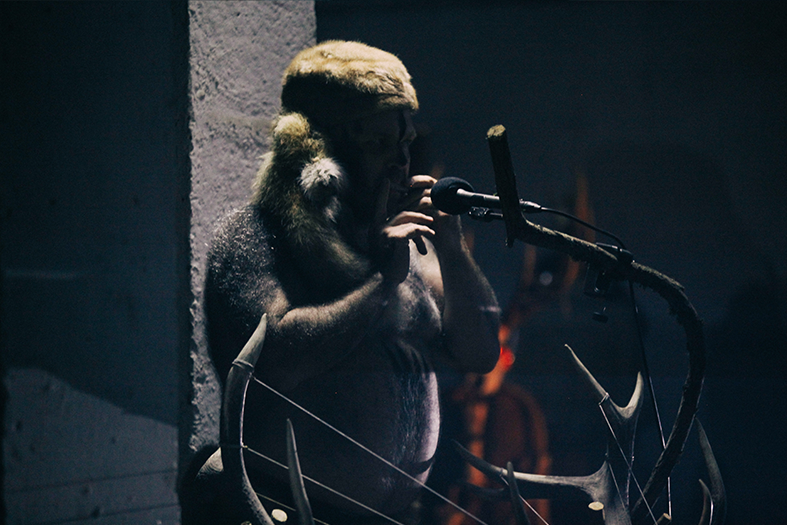
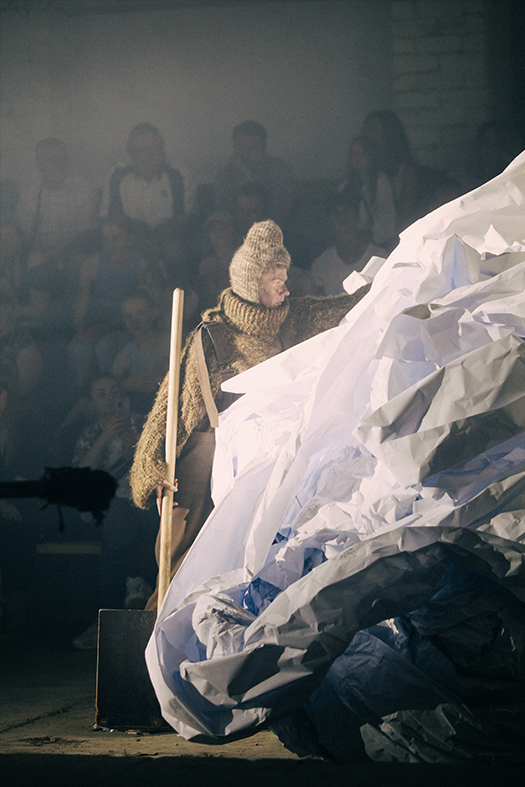
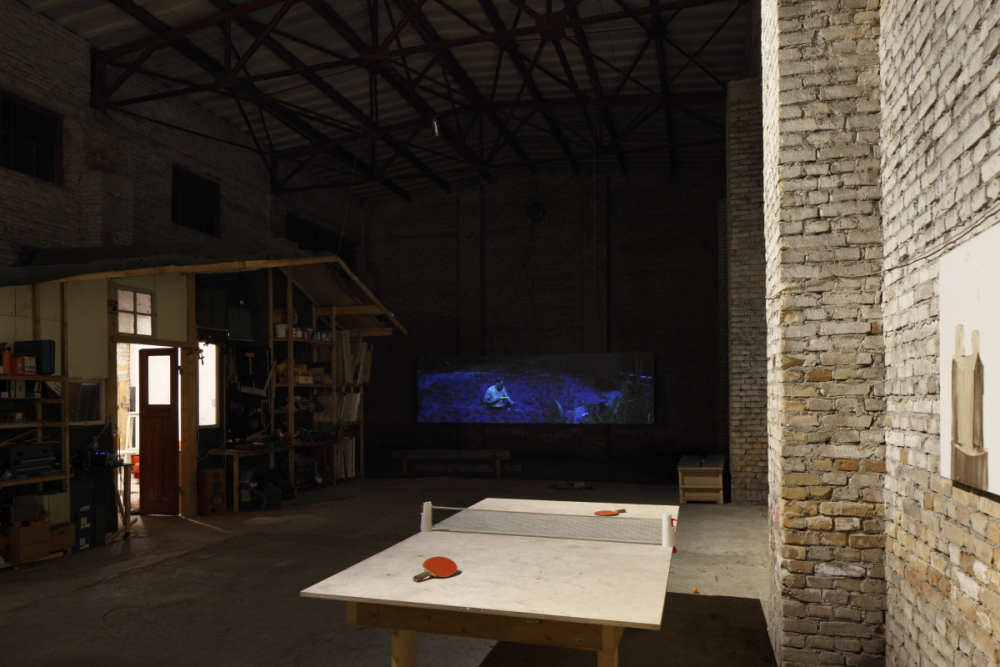
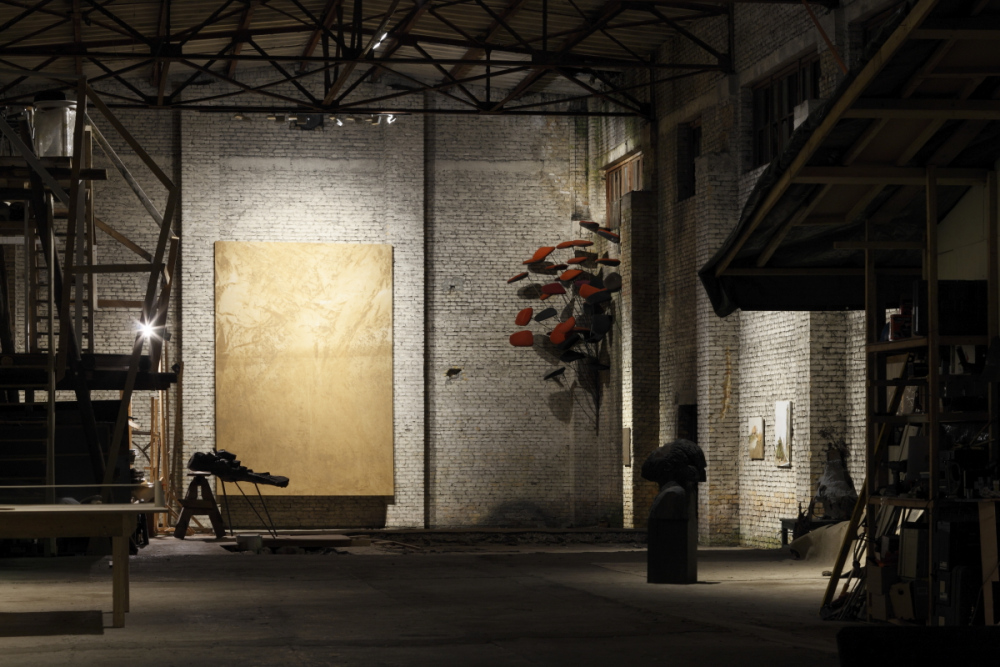
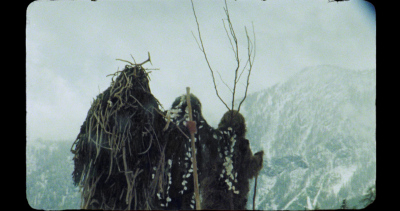
Valmiera Summer Theatre Festival, Kurtuve, Valmiera, LatviaInspired by the Greenland stories of Danish writer Jørn Riel, Chill explores solitude, longing and the imaginative worlds people create to sustain themselves in isolation.
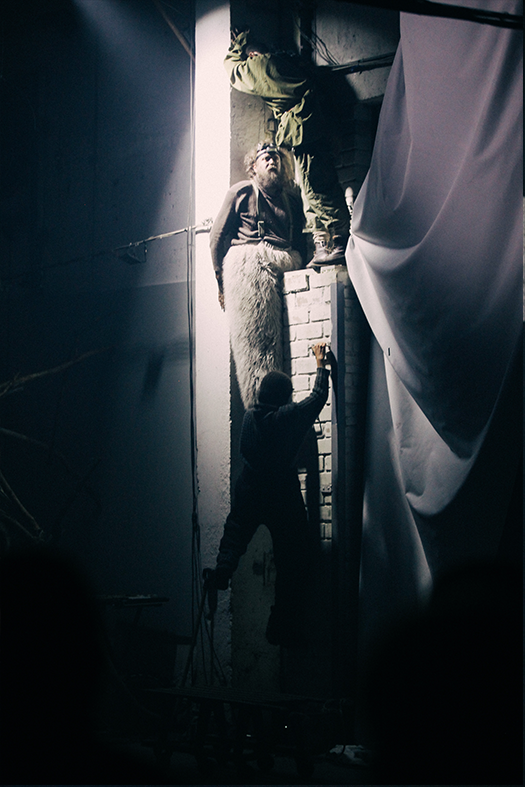
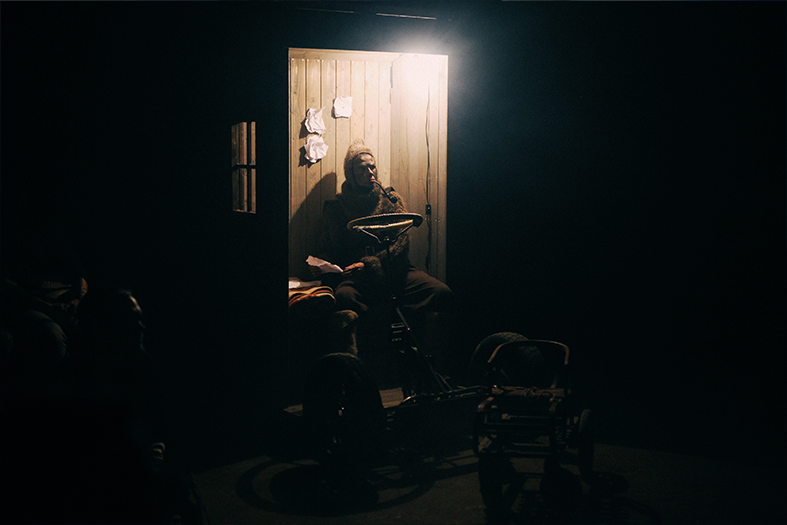
Conceived by Katrīna Neiburga as an audiovisual ritual, the production brings together experimental music, voice, movement and a stark physical environment. The industrial interior of a former boiler house becomes a landscape through which the performers move from polar night towards the return of the sun.
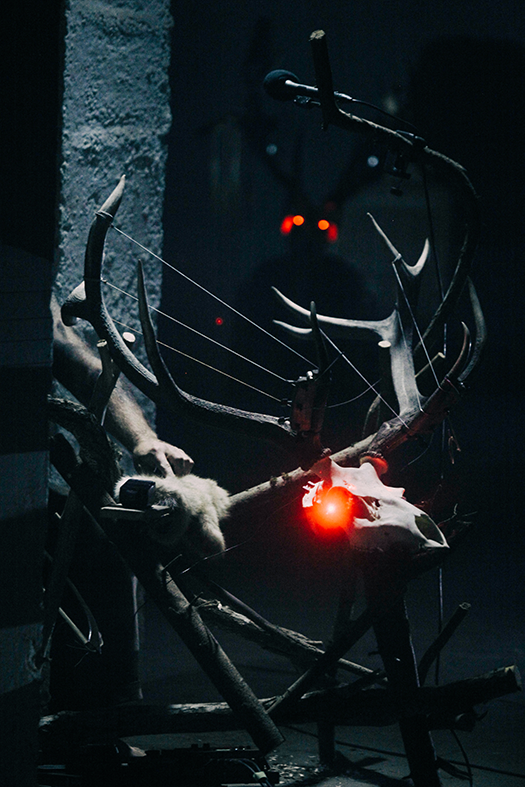
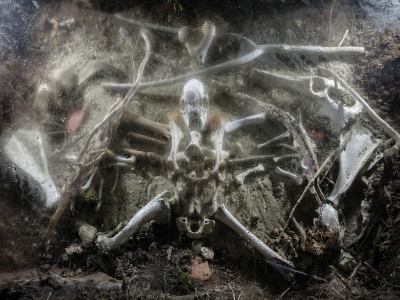
Specially created instruments, including an antler harp and a bone marimba, extend the work’s material world into sound. Blocks of ice are played as percussion, bringing the physical presence of cold into the music.
Credits
Idea, concept and scenography: Katrīna Neiburga
Composer: Anna Fišere (formerly Anna Ķirse)
Director: Klāvs Mellis
Movement direction: Kristīne Brīniņa
Conductor: Artūrs Gailis
Costume design: Katrīna Neiburga and Berta Vilipsone
Sound engineer: Tālis Timrots
Producer: Una Rozenbauma
Performed by singers from the Latvian Radio Choir, instrumentalists and movement artistsProduced for the Valmiera Summer Theatre Festival
Awards
2022 Latvian Grand Music Award, Production of the Year
2022 Latvian Theatre Awards, Spēlmaņu nakts, Special Jury Prize -
MÉTAMORPHOSE, 2021
Four short films created in collaboration with MÁDARA Cosmetics.
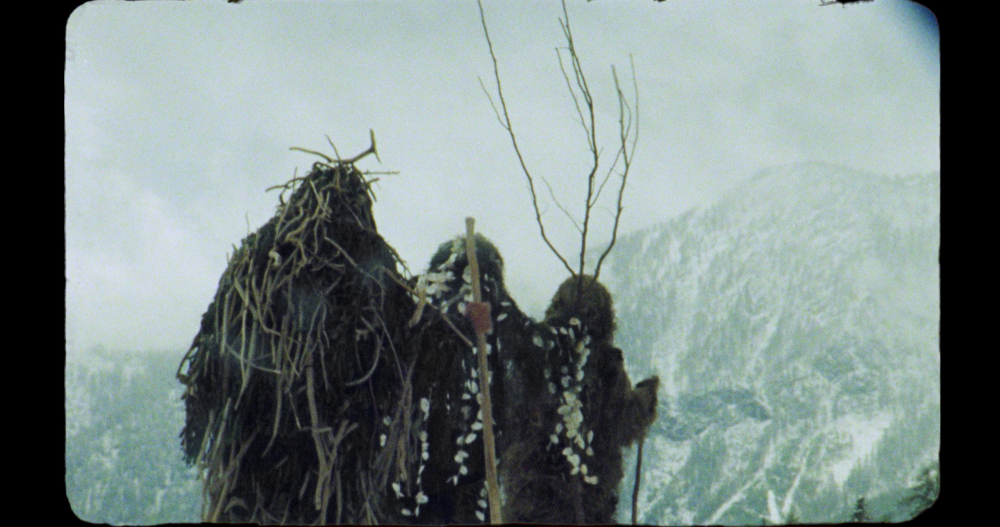
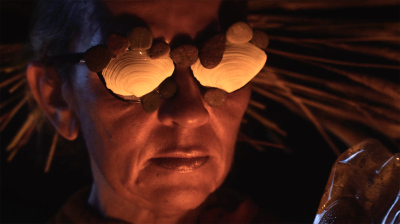
Drawing on Latvian masking traditions and her own experiences, Katrīna Neiburga explores transformation and the power of ritual to interrupt everyday life. Masked figures inhabit a world where familiar places become strange and the boundary between lived experience and imagination begins to shift.
The films approach masking as an opportunity to step outside habitual roles, encounter the unfamiliar and experience a different relationship with oneself and the natural world. Personal memories become the starting points for stories in which documentary experience meets the fantastical.
Created for MÁDARA’s 2021 Métamorphose collection.
Films by: Katrīna Neiburga
Masks: Evelīna Deičmane-Vida -
CONSOLATION, 2021
Video installation
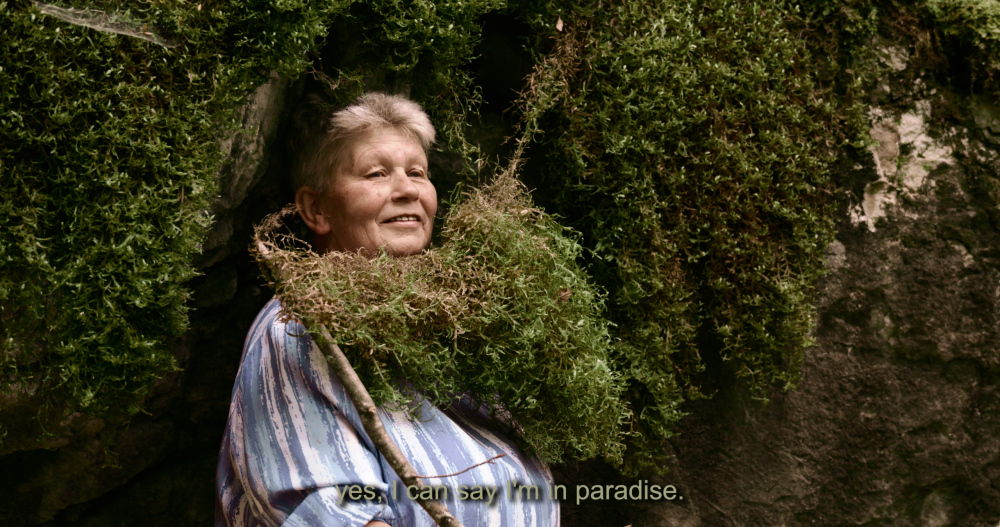
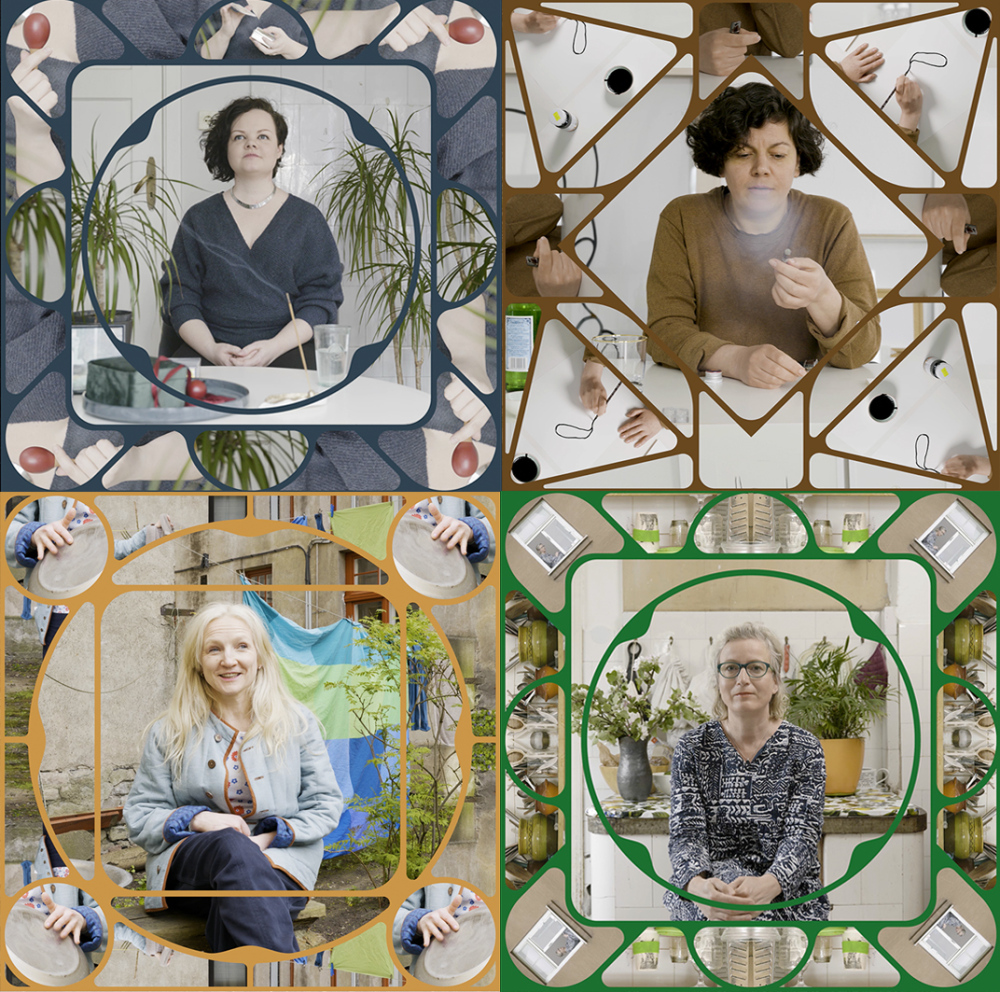
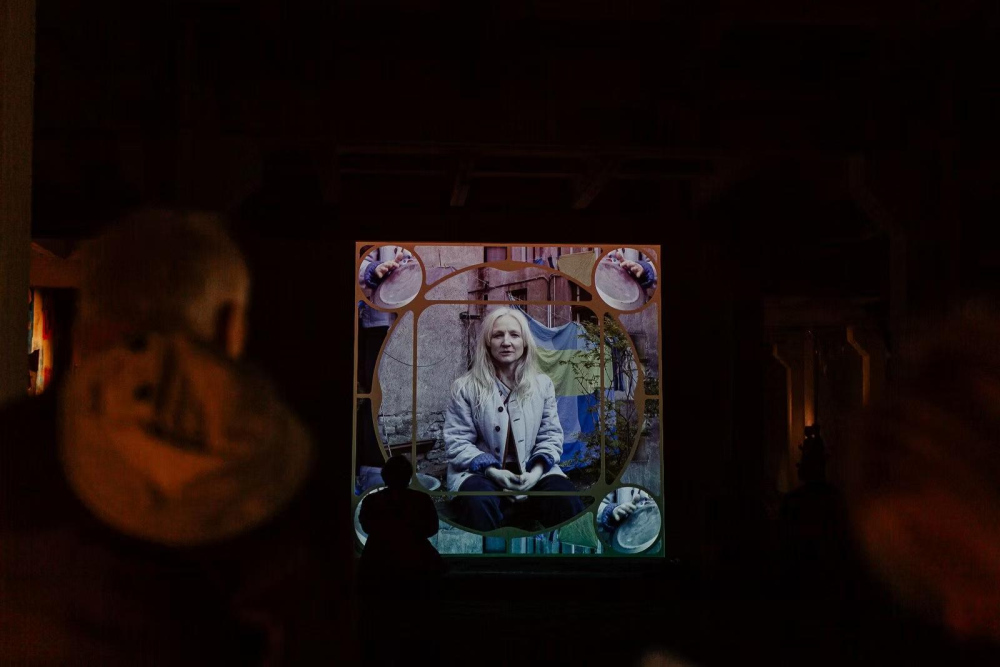
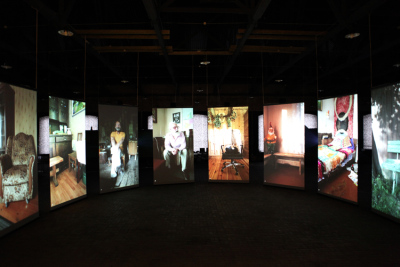
Cēsis Centre for Contemporary Art, Cēsis, LatviaWhat matters in life? Why are we here? What happens after death?
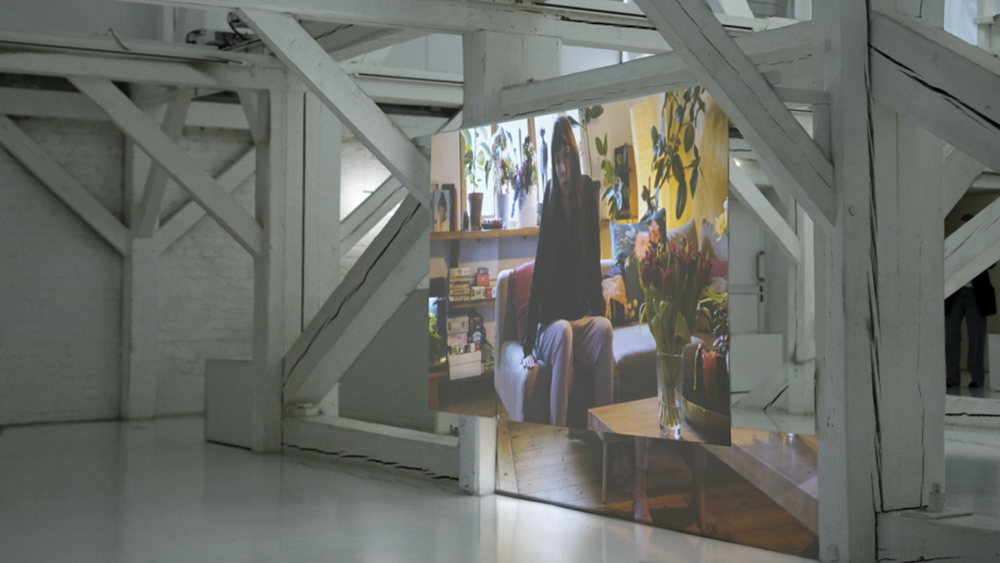
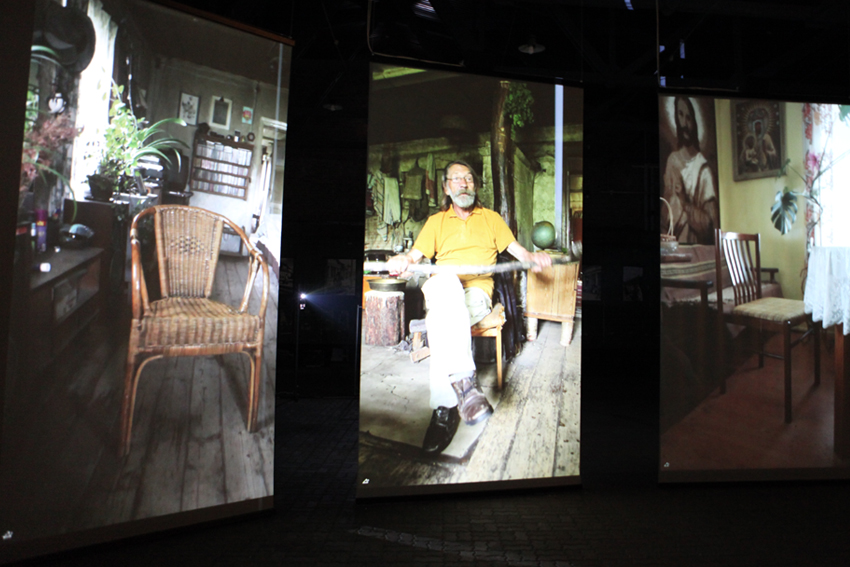
In Consolation, Katrīna Neiburga brings together filmed conversations with women who inspire her. Their reflections reveal the different beliefs, doubts and personal philosophies through which people make sense of their lives.
Created during the pandemic, the work grew from the artist’s own need for reassurance. The conversations form a kaleidoscope of perspectives, each offering another way of looking at the world. Together, they create room for uncertainty, allowing contradictory answers and possibilities to coexist.
Consolation emerges through listening and encountering the many ways others live with the same unanswered questions.
Artist: Katrīna Neiburga
Presented in the group exhibition Flying Closer to the Sun, part of the Cēsis Art Festival programme Myths and Rituals, from 10 July to 15 August 2021.
Exhibition curators: Daiga Rudzāte and Žanete Skarule
-
SEKRETJIKI, 2021
Outdoor installation
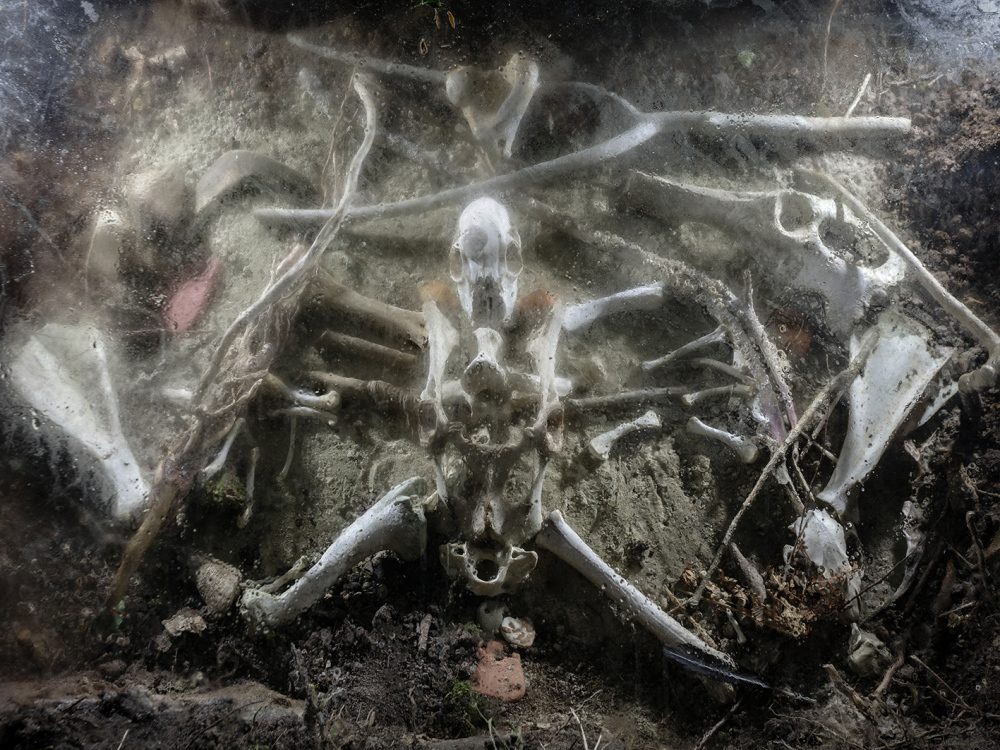
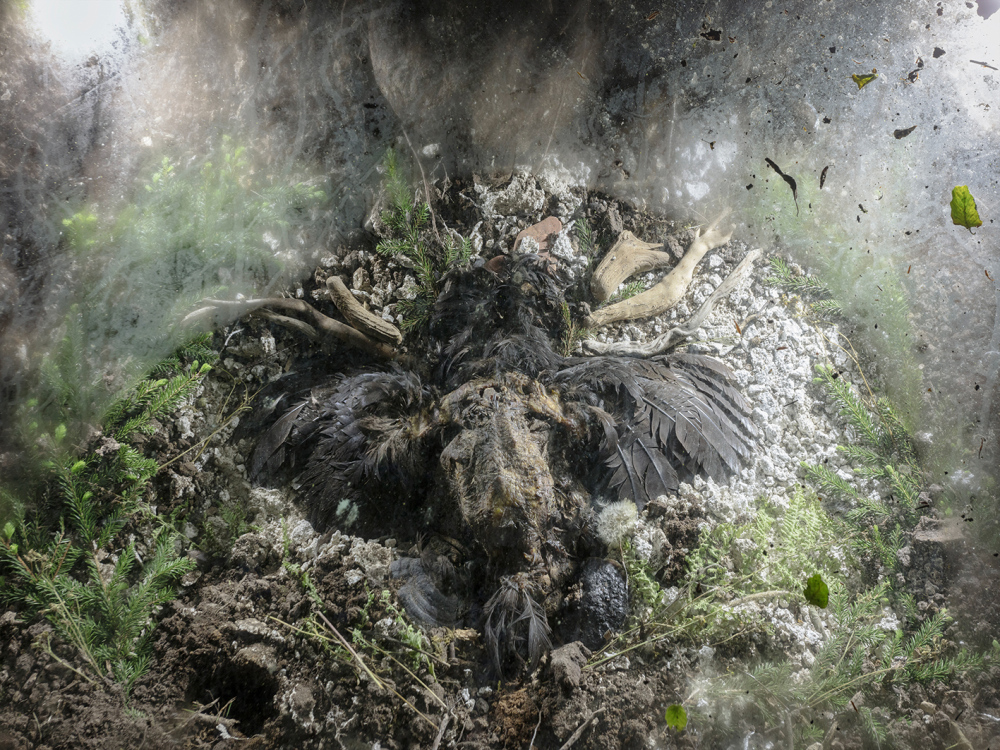
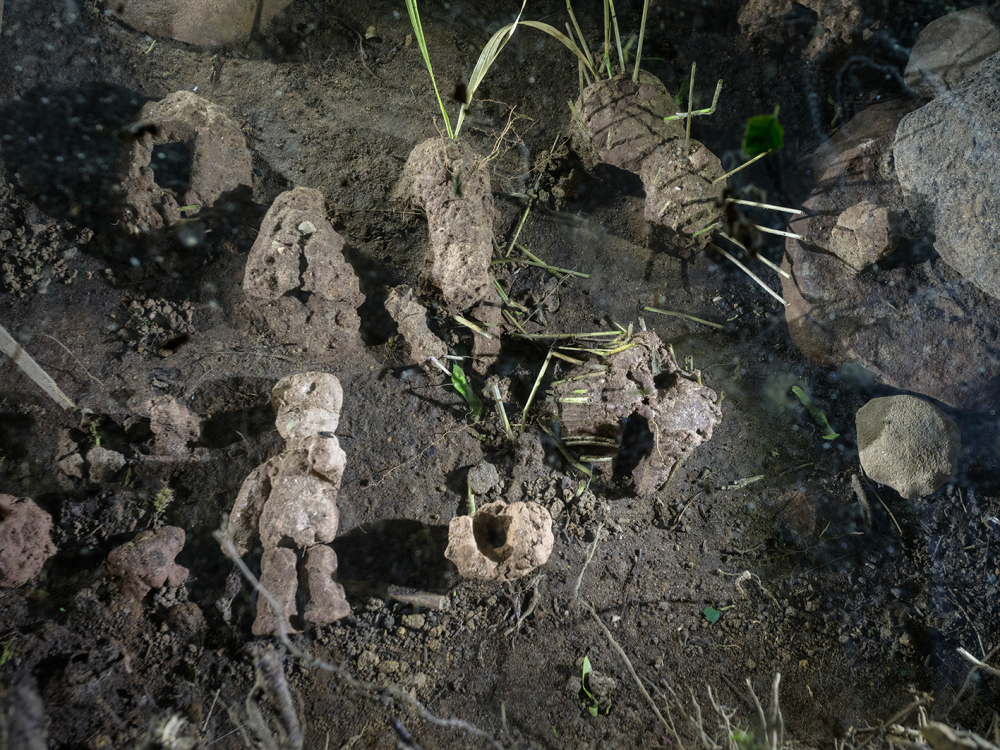
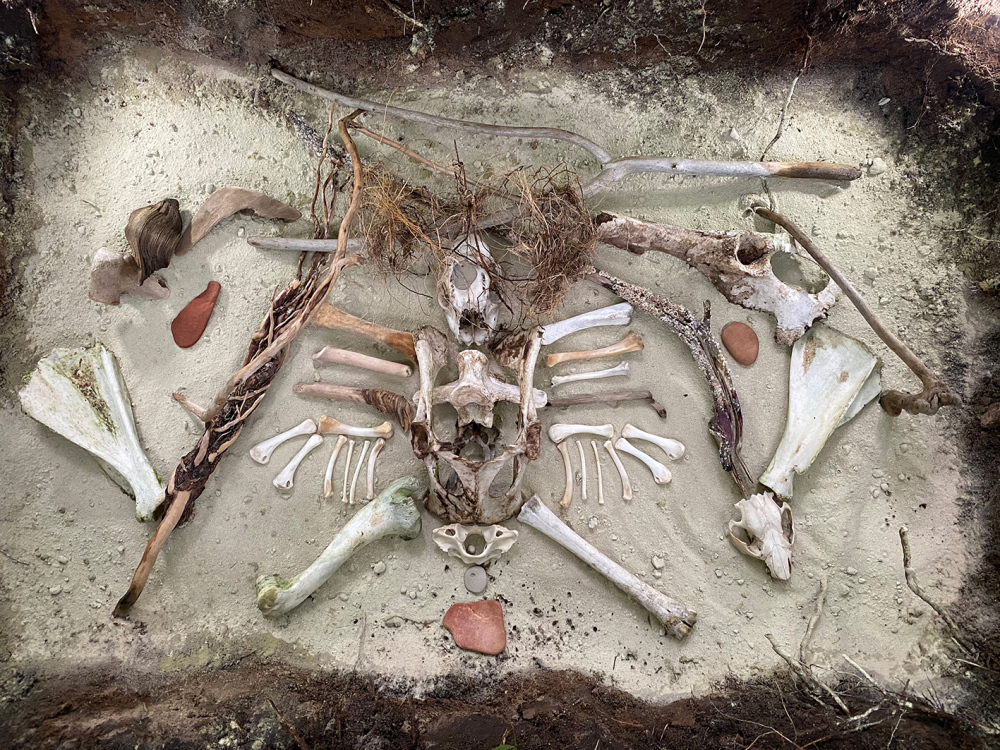
Savvaļa, Drusti, LatviaSekretjiki revisits a childhood game of making secret treasures beneath glass. A bead, a flower, a stone or a bottle cap would be carefully arranged in the earth and covered with a piece of glass. The hiding place belonged to its maker, yet part of the pleasure was imagining a friend discovering it.
At Savvaļa, Katrīna Neiburga returned to this game with her son, creating enlarged versions beneath car windscreens. Objects collected over many years along the seashore were brought into the forest and arranged into intricate compositions.
The work carries fragments of one landscape into another, connecting childhood memories with a shared act of making. Ordinary finds become precious through the attention given to them, waiting beneath the glass for someone to discover their secret.
Artist: Katrīna Neiburga
Created together with her son
Photography: Reinis Hofmanis -
TRANSFORMATIONS. WITCHES’ BROOM. THUNDERBESOM, 2020
Installation with video, sound and collected tree growths
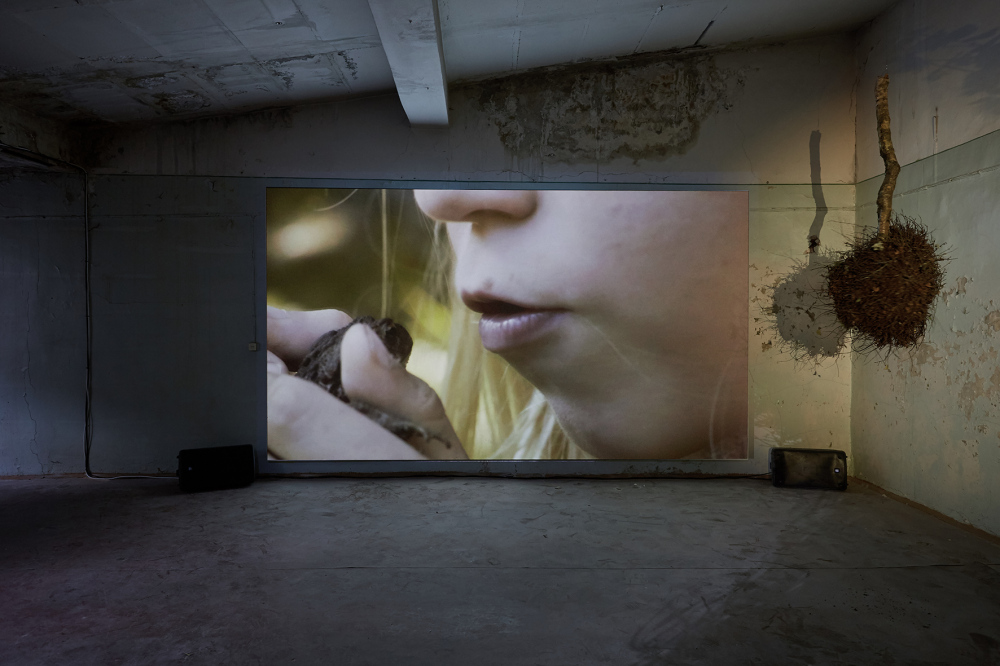
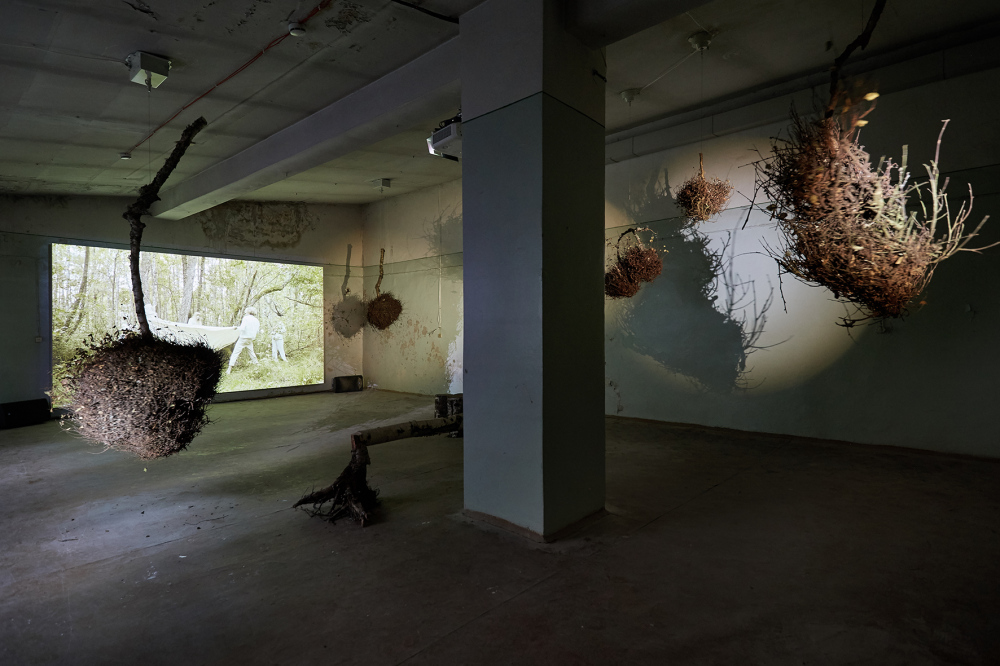
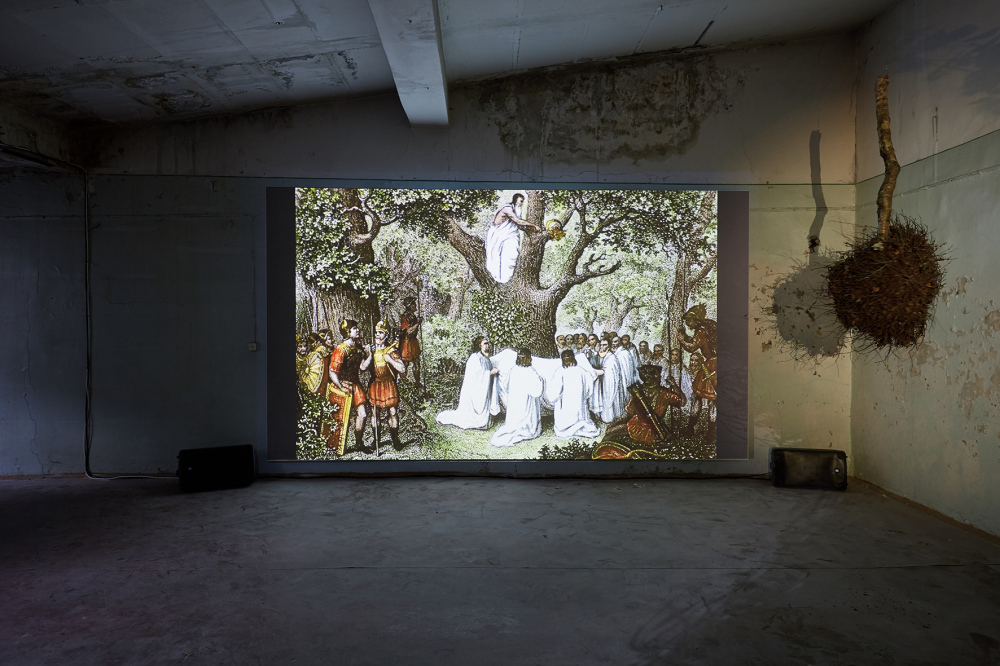
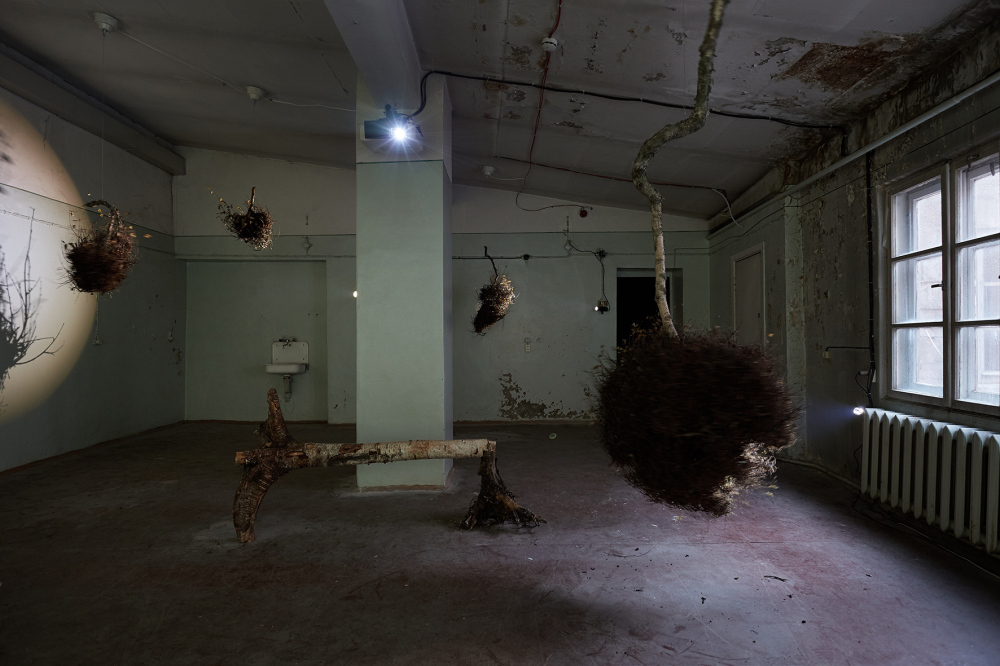
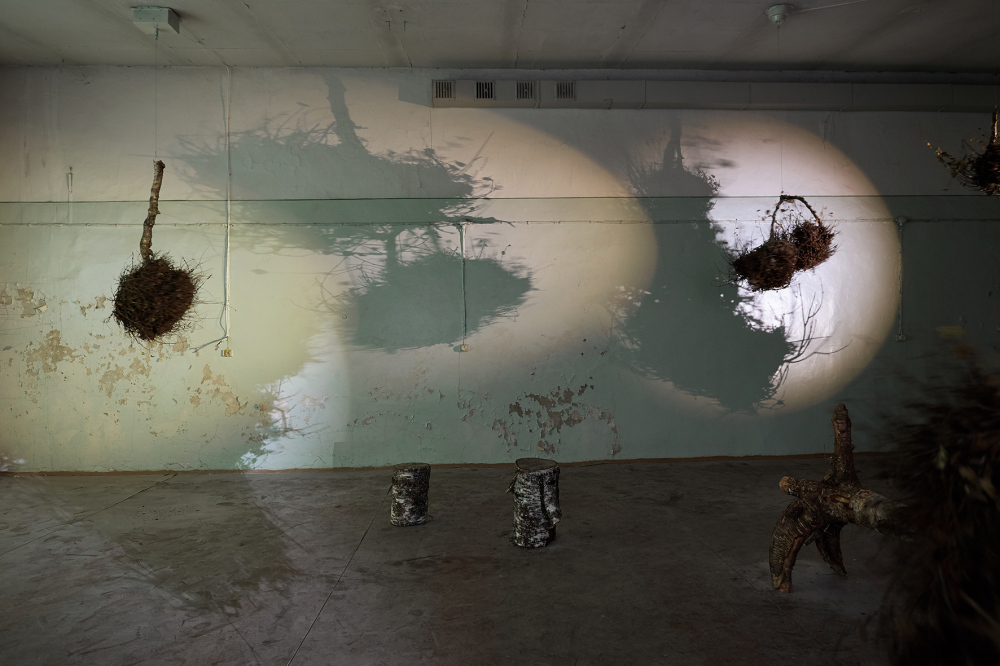
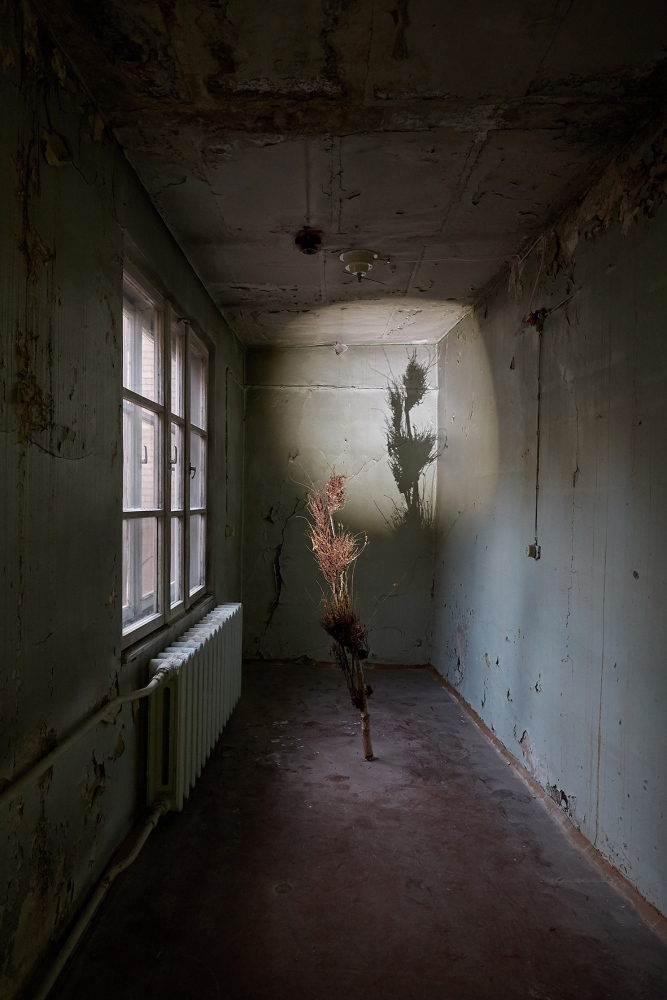
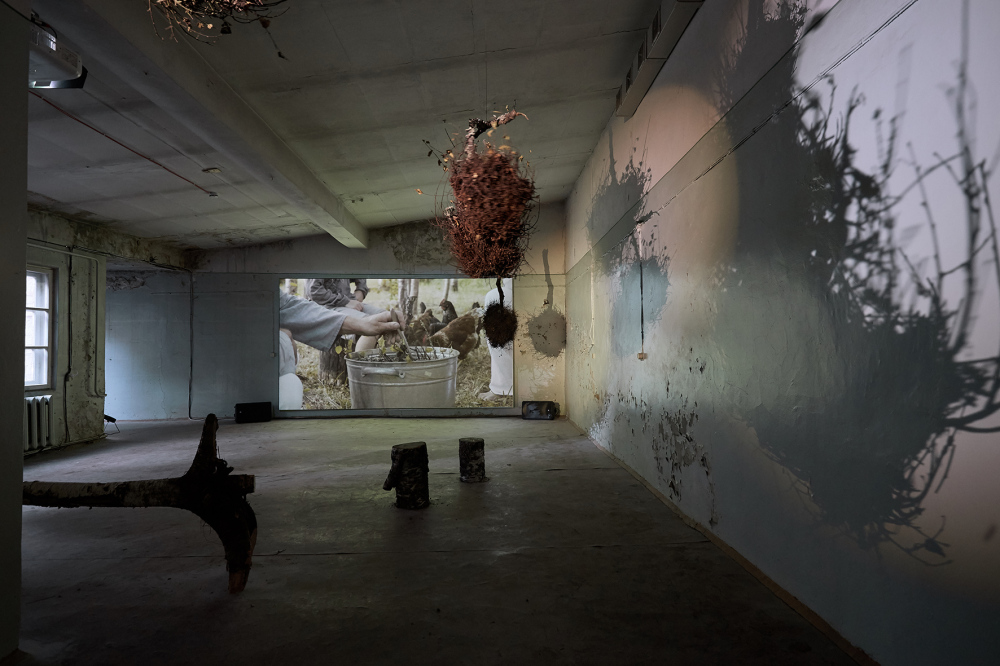
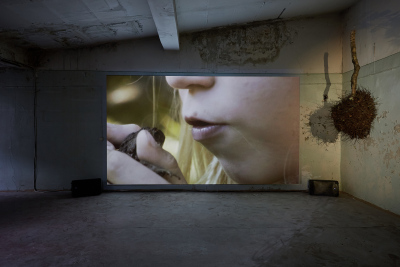
Survival Kit 11, Riga, LatviaCreated during the first months of the Covid-19 pandemic, the work follows Katrīna Neiburga and her family in the countryside. Their time in isolation unfolds into a collective ritual, as people of different generations venture into the forest in search of witches’ brooms: dense clusters of branches growing in the crowns of trees.
Combining filmed encounters with collected objects and a soundscape by Antons Georgs Grauds, the installation brings the forest into the exhibition space. Shadows, textures and sounds create an environment shaped by curiosity, uncertainty and the desire to find reassurance.
The work brings together botanical explanations and magical beliefs. A growth understood as a mutation or disease can also become an object of fascination and ritual significance. This shifting perspective opens questions about anxiety, faith and the ways people seek a sense of connection through nature and shared actions.
Artist: Katrīna Neiburga
Sound: Antons Georgs Grauds
Commissioned by: Survival Kit 11, Latvian Centre for Contemporary Art
Exhibition curator: Katia KrupennikovaCollection: Museum of Contemporary Art Kiasma, Finnish National Gallery. Acquired in 2021.
-
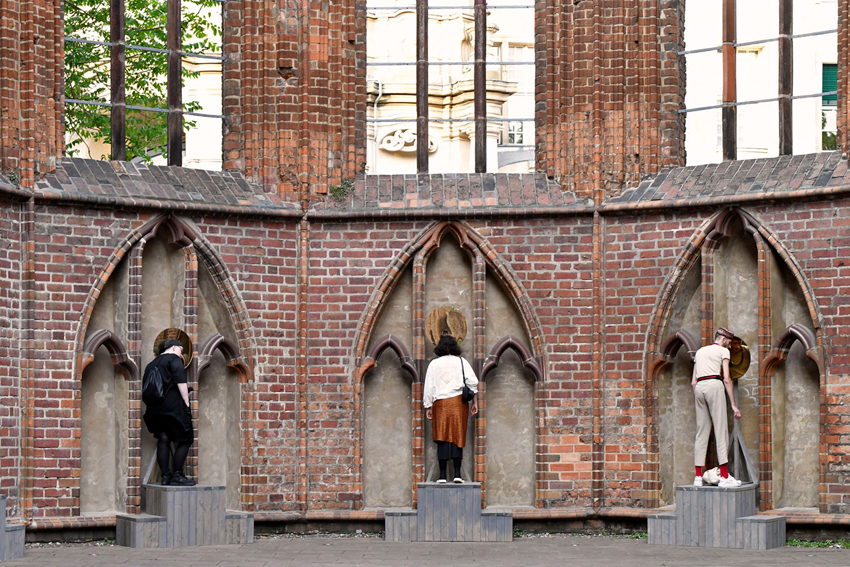
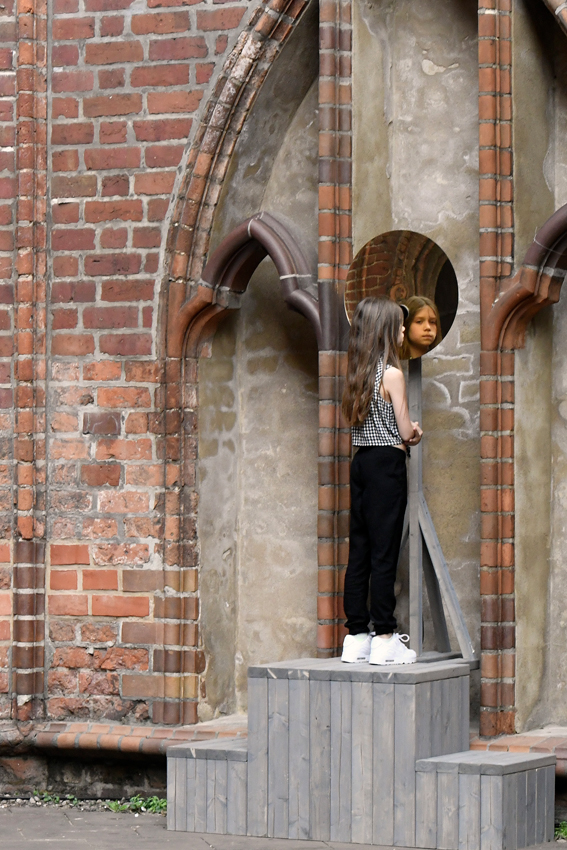
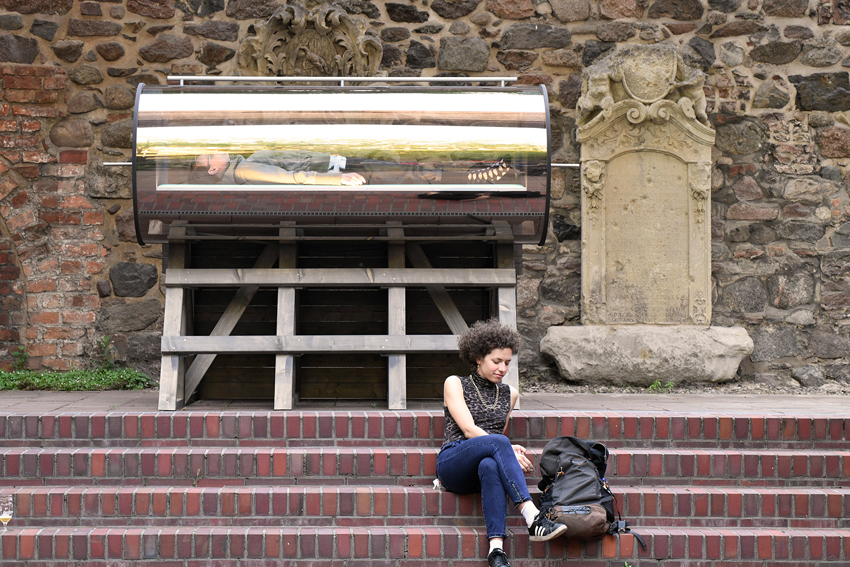
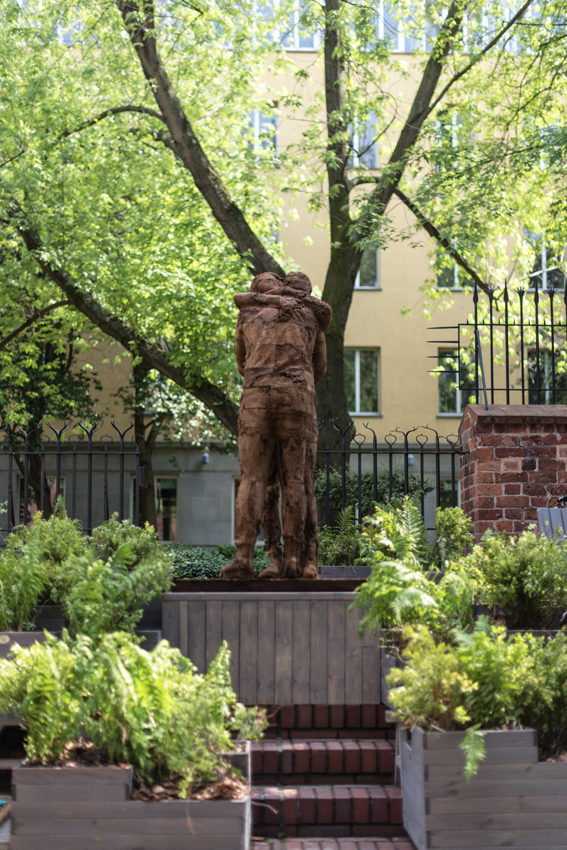
PLAYGROUND FOR ACCEPTING MORTALITY, 2019
Participatory outdoor installation
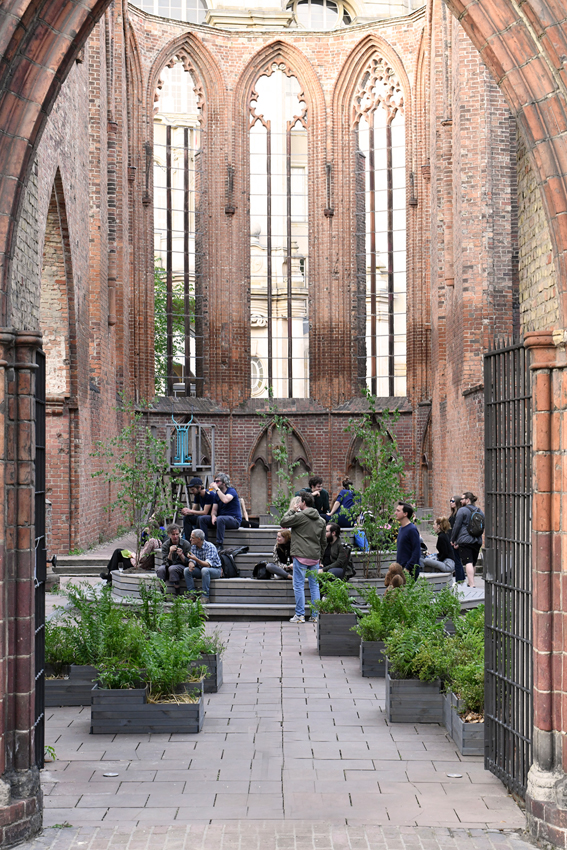
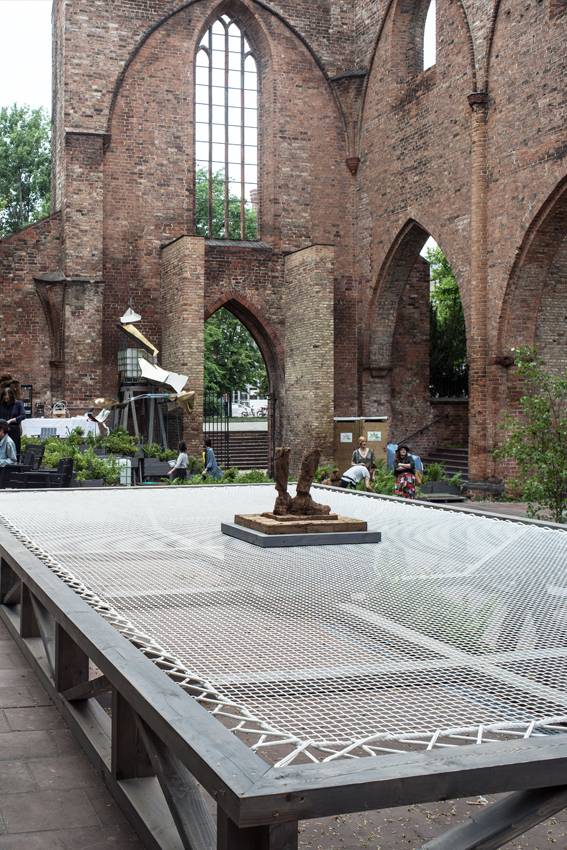
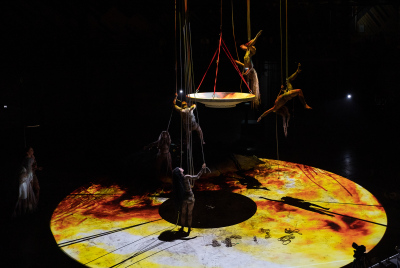
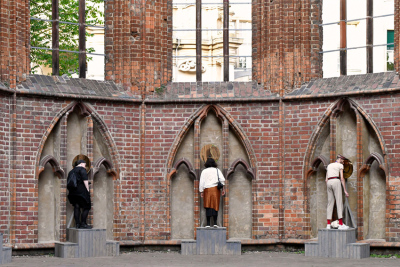
Klosterruine Berlin, GermanyCreated within the ruins of a medieval Franciscan church, Playground for Accepting Your Mortality transforms the site into a garden for play, rest and reflection. Visitors are invited to explore a series of sculptural structures through movement, stillness and encounters with their surroundings.
A slowly turning carousel, a futuristic coffin, a fern garden and suspended resting places form an unconventional landscape of bodily experiences. Drawing on ideas of paradise, alchemy and the desire to prolong life, the installation approaches mortality with curiosity and humour.
The playground offers a space to pause within the city and become attentive to the experience of being alive. Accepting the body’s limits becomes part of enjoying its possibilities.
Artists: Katrīna Neiburga and Andris Eglītis, with Jānis Noviks
Curators: Solvej Helweg Ovesen and Ute Müller-Tischler
Exhibition dates: 25 May to 31 October 2019 -
HAIR, 2019
Hairsalon
Hairstory 1
Hairstory 2
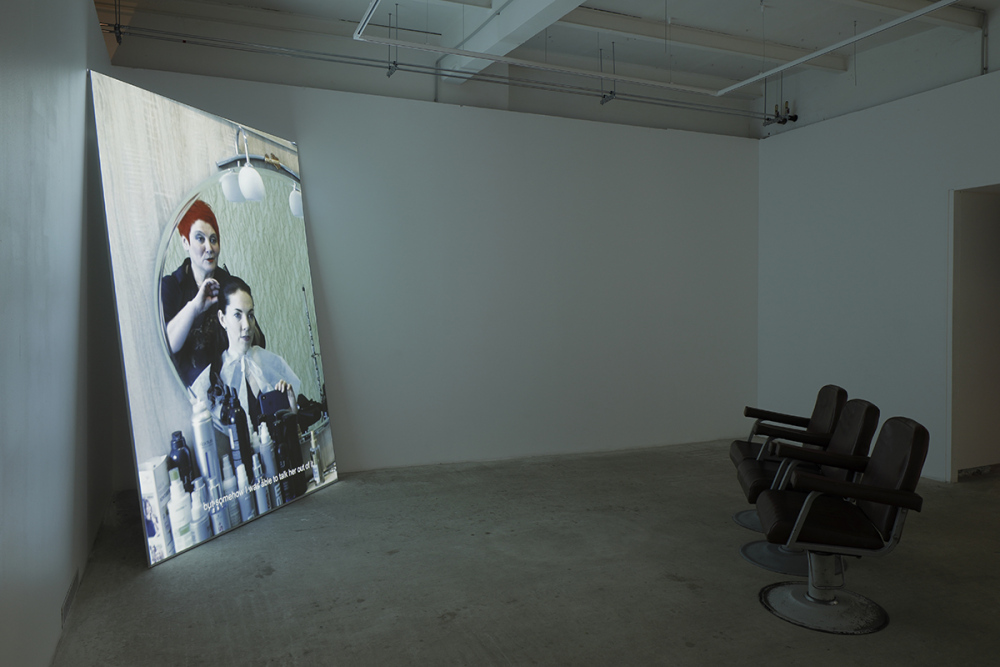
Documentary intallation about hairdressers, hairstories
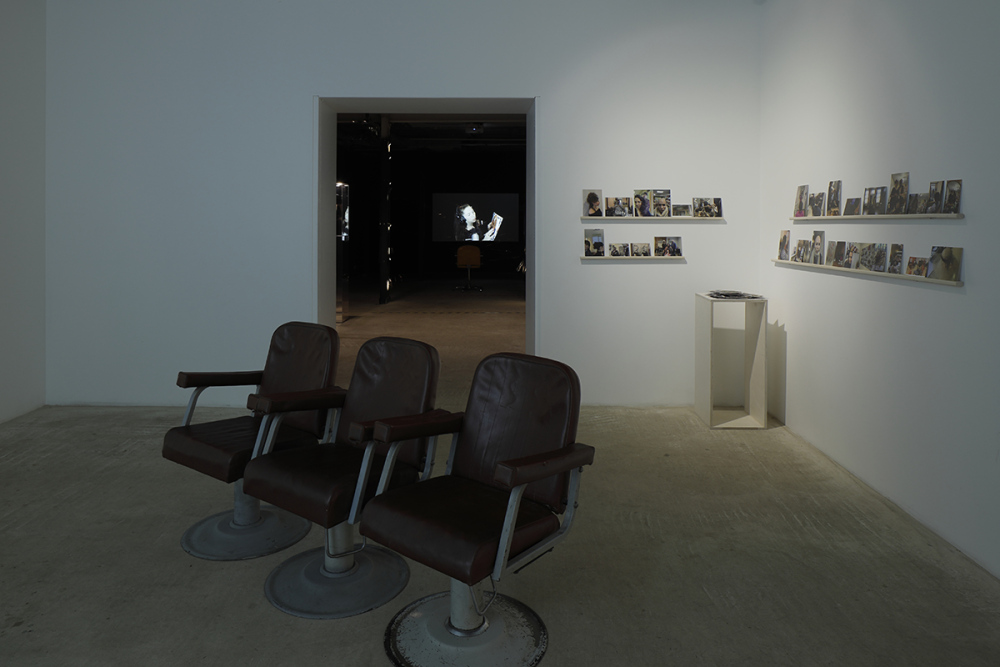
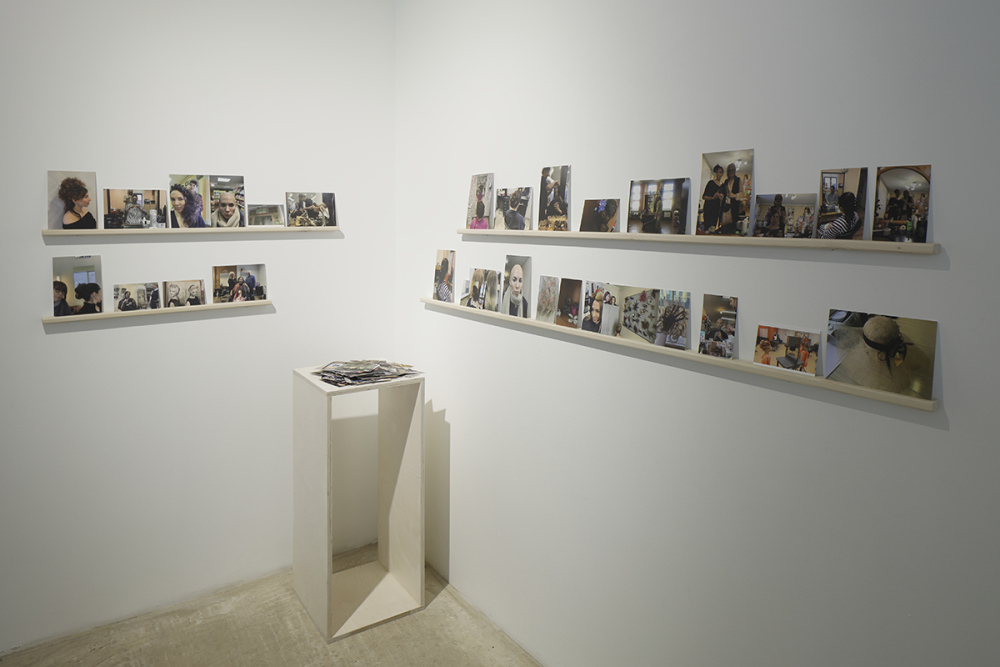
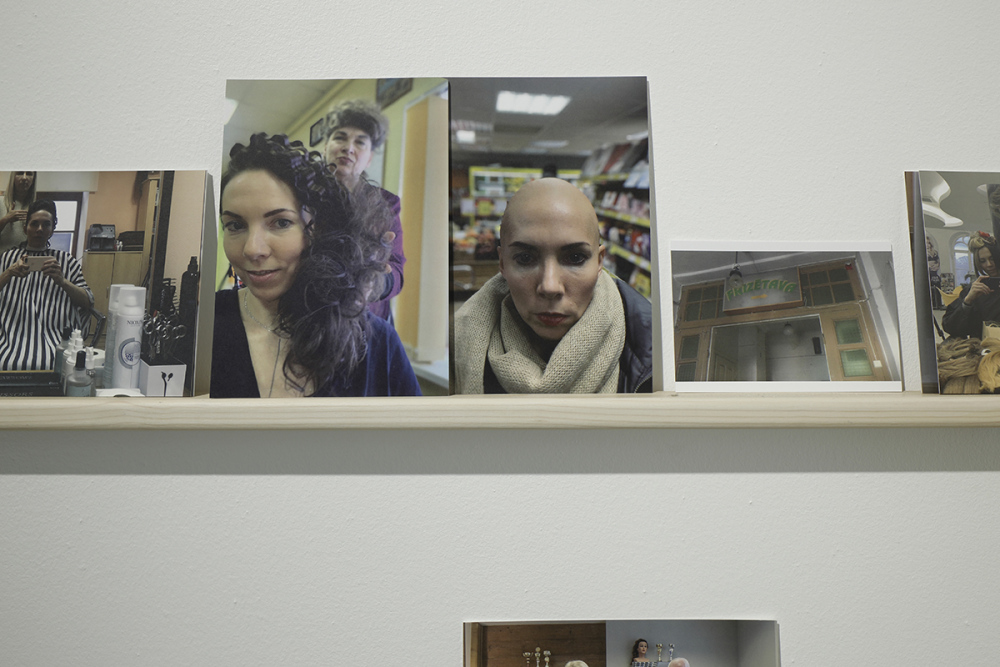
Notes from hair trip
ASMR video
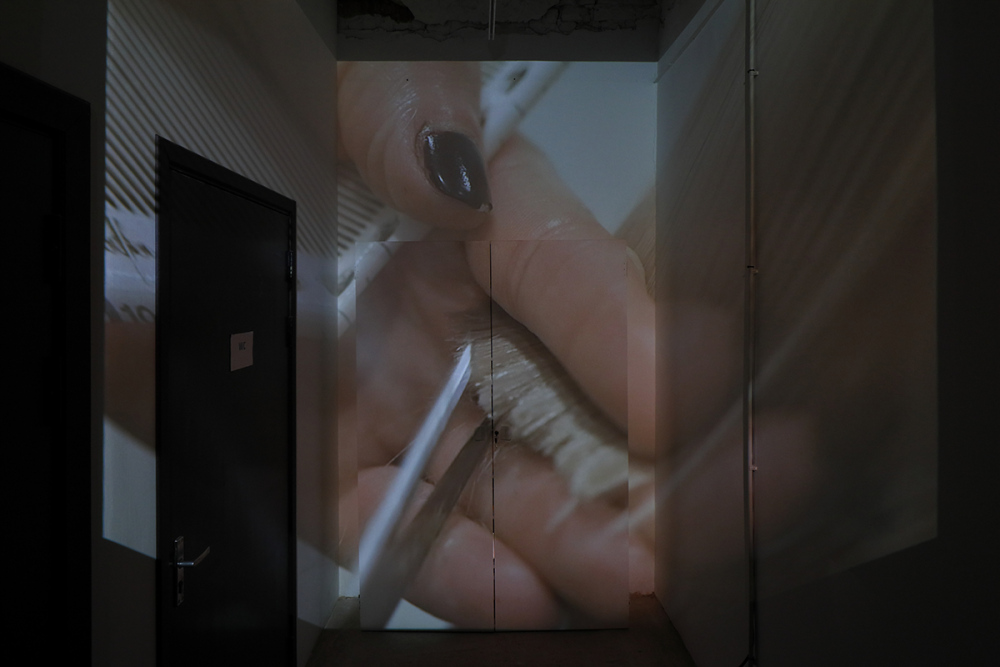
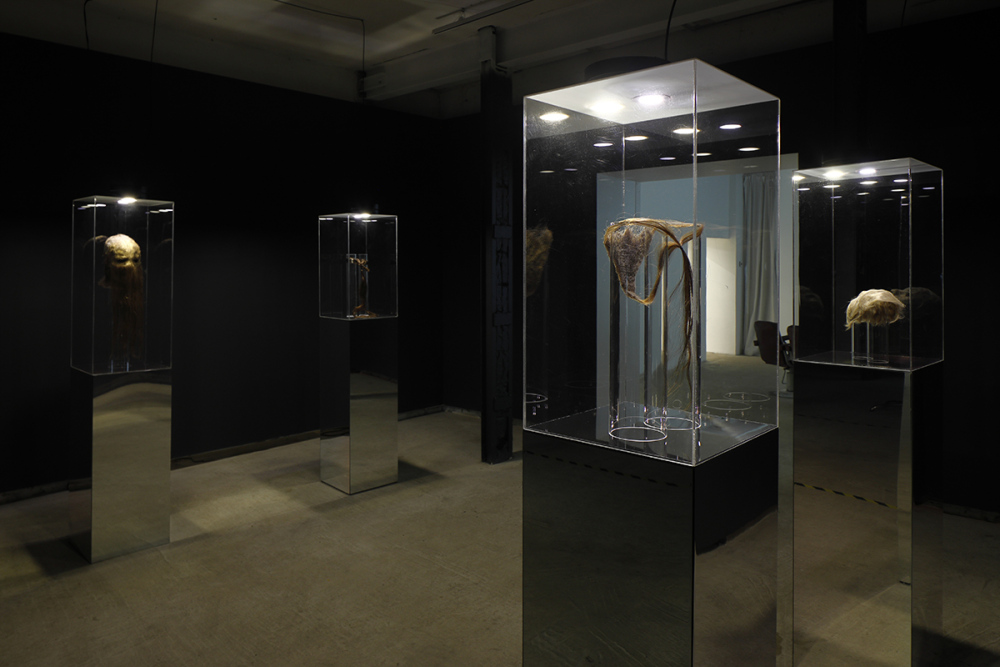
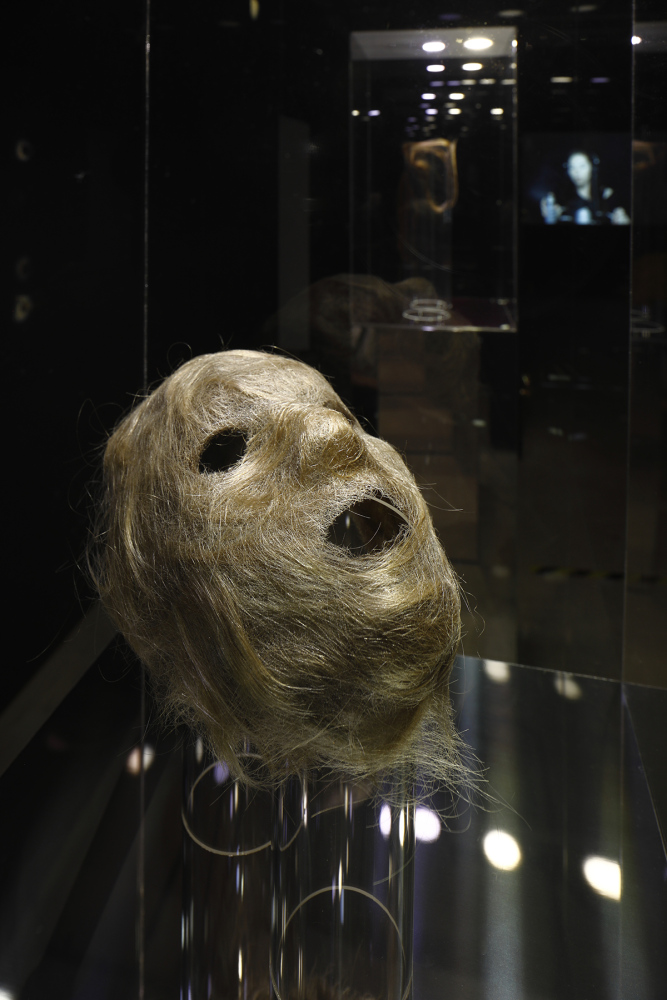
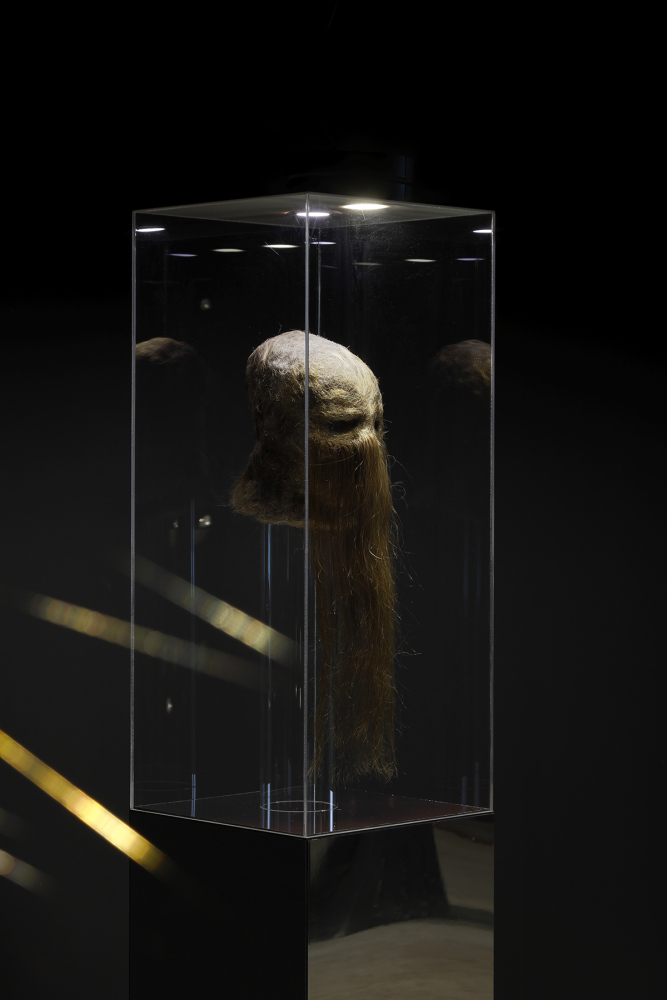
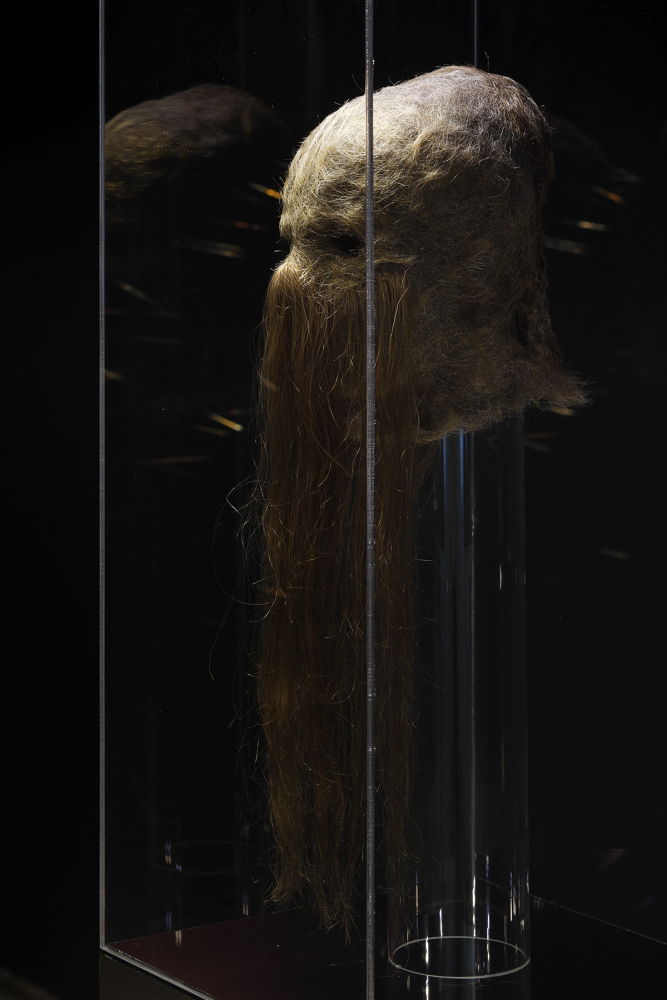
Hairmask from husbandshair for protecting yourself
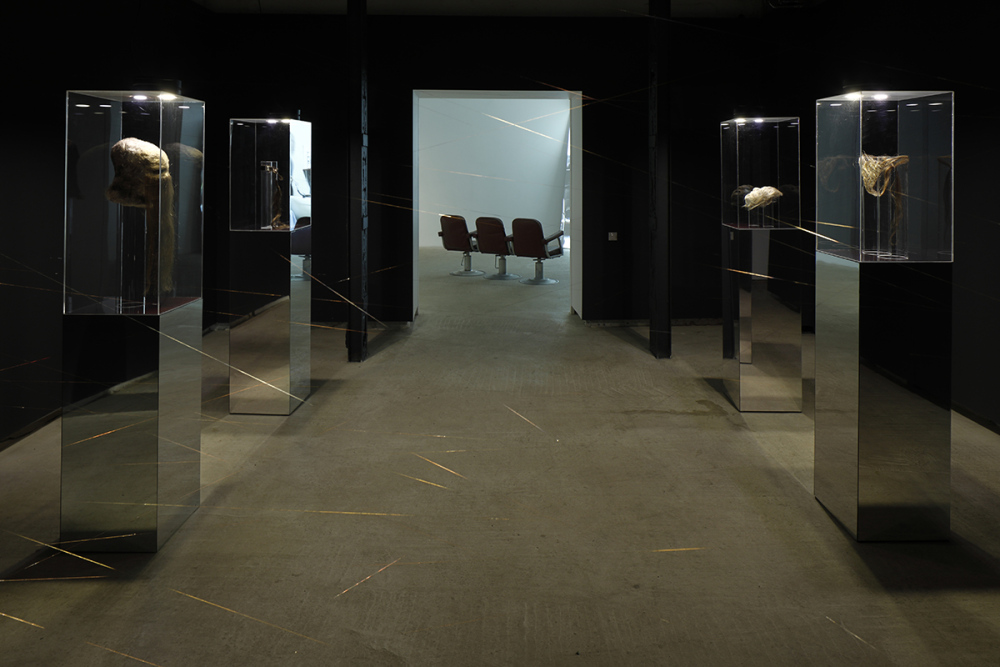
Hair matrix made of my own hair
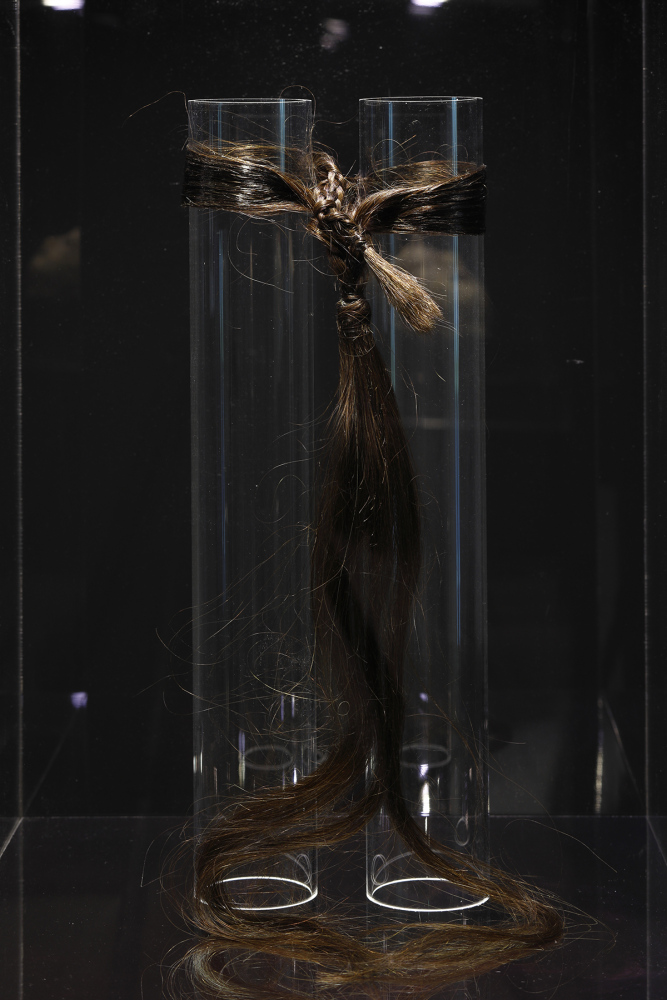
Hair hadncuff
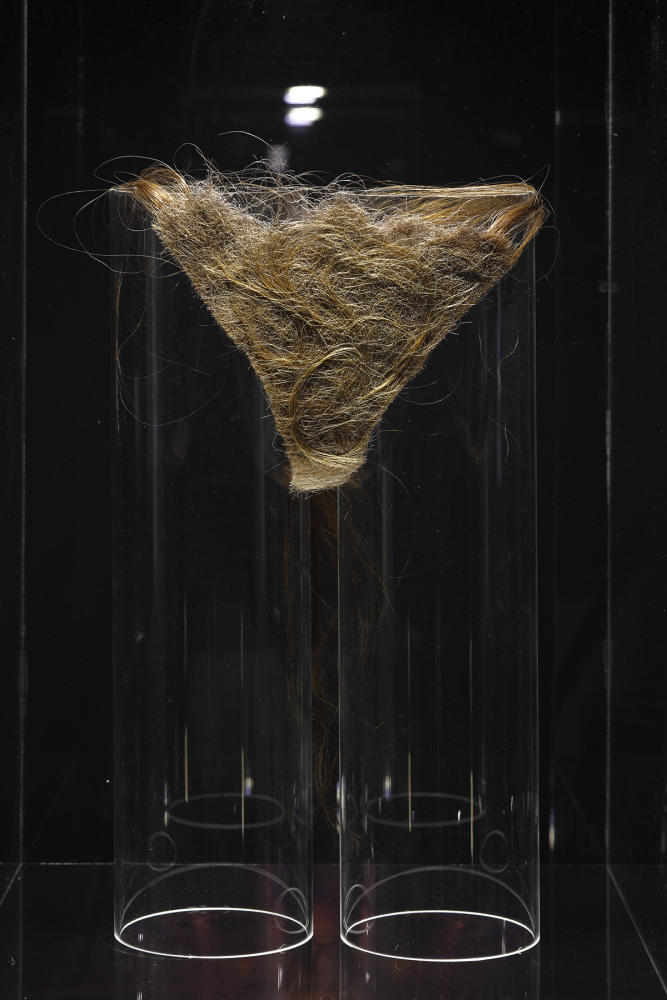
Hairbikini
- 1
-
2
Hairsalon
- 3
- 4
- 5
- 6
- 7
- 8
- 9
-
10
Hairstory 1
- 11
- 12
- 13
-
14
Hairstory 2
- 15
- 16
-
17
Documentary intallation about hairdressers, hairstories
- 18
-
19
Notes from hair trip
- 20
- 21
- 22
-
23
ASMR video
- 24
- 25
- 26
-
27
Hairmask from husbandshair for protecting yourself
- 28
-
29
Hair matrix made of my own hair
- 30
- 31
-
32
Hair hadncuff
-
33
Hairbikini
- 34
Solo exhibition combining video, installation and objects
Kim? Contemporary Art Centre, Riga, Latvia
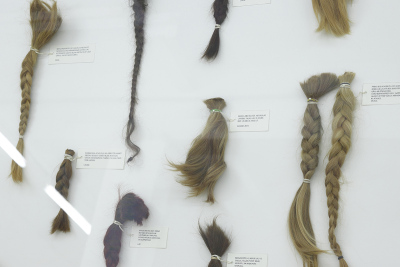
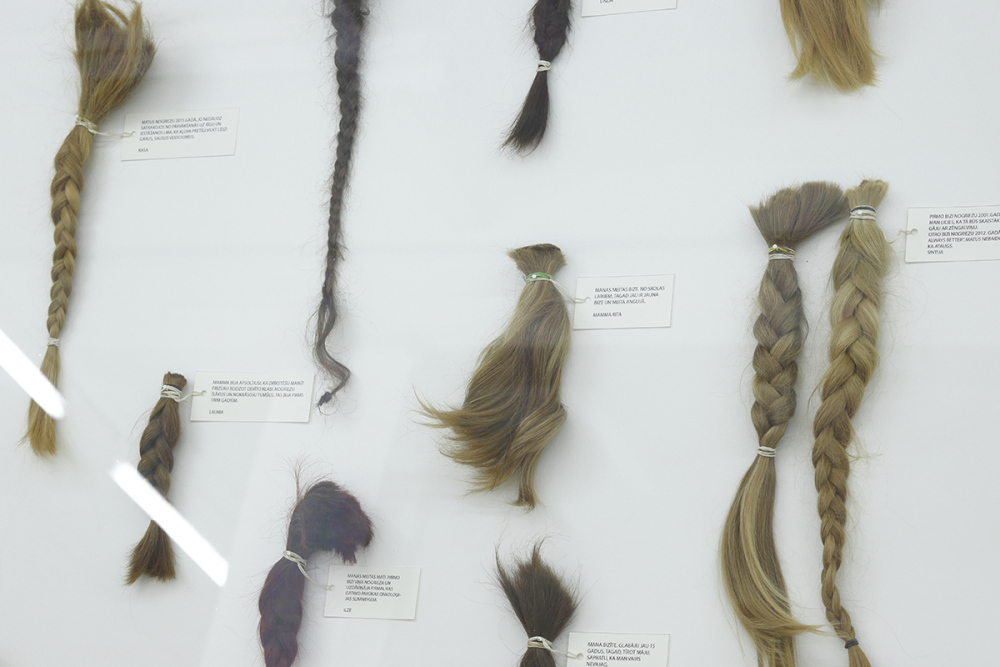
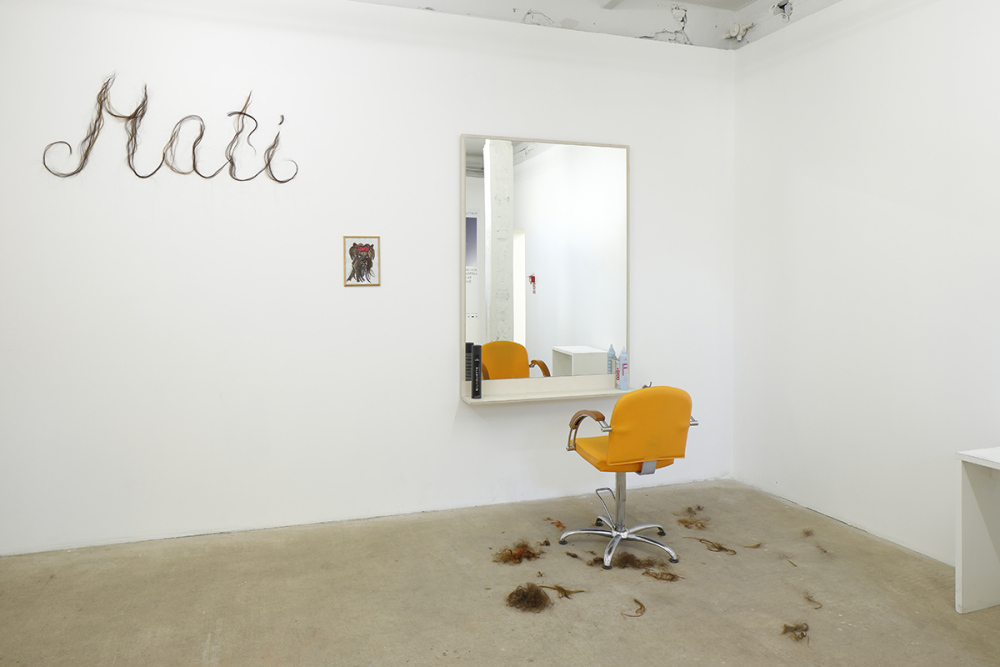
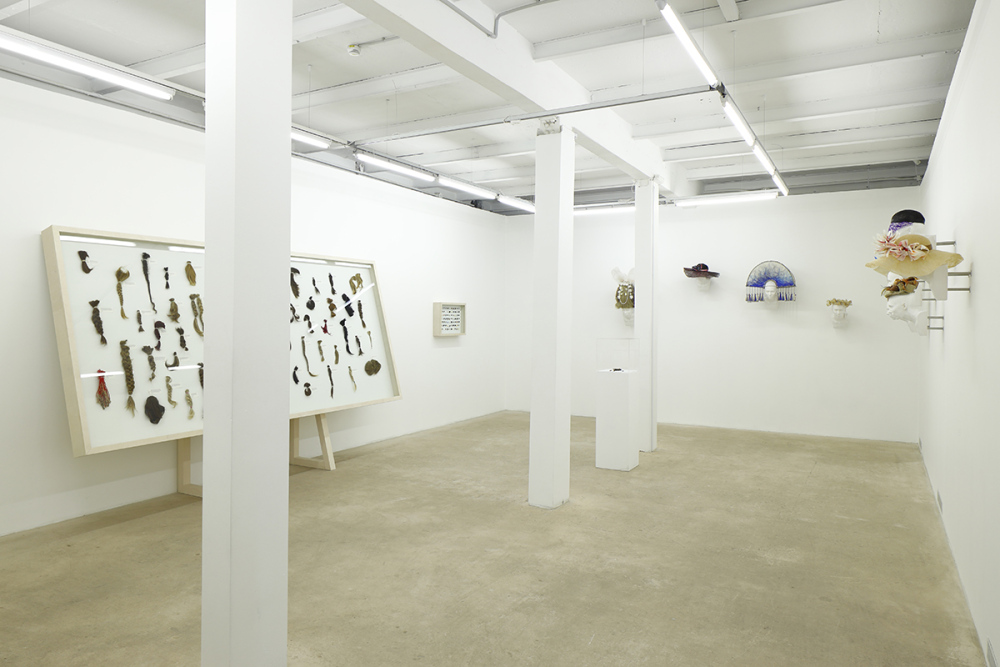
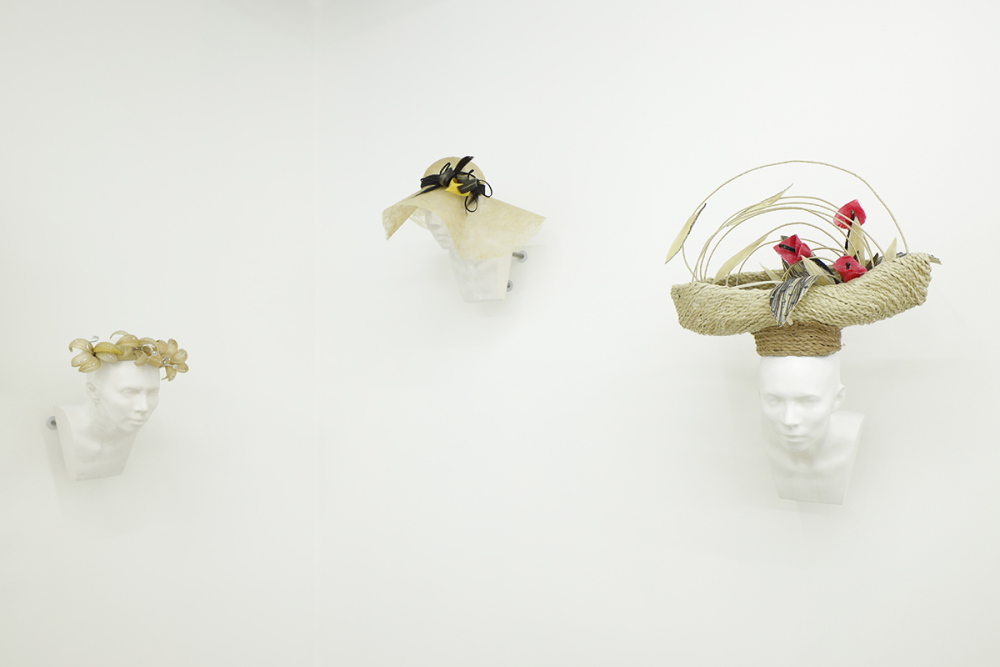
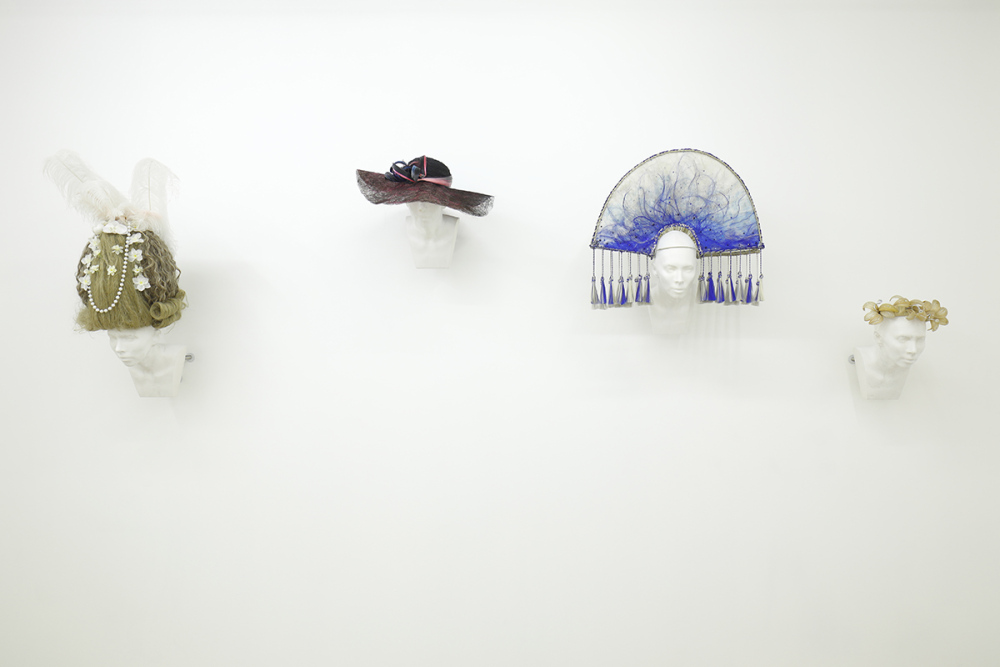
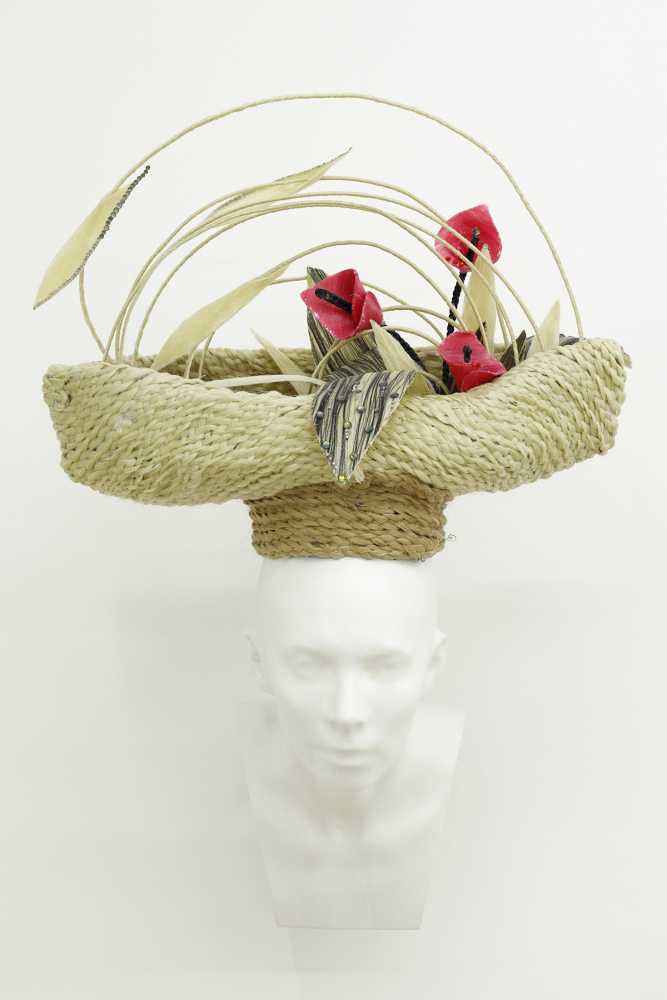
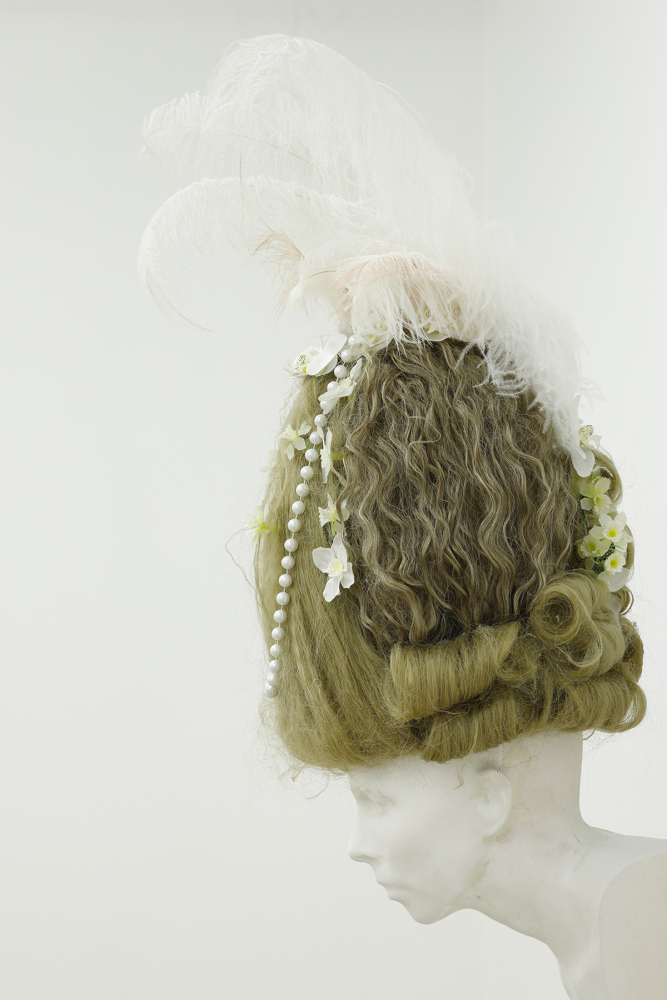
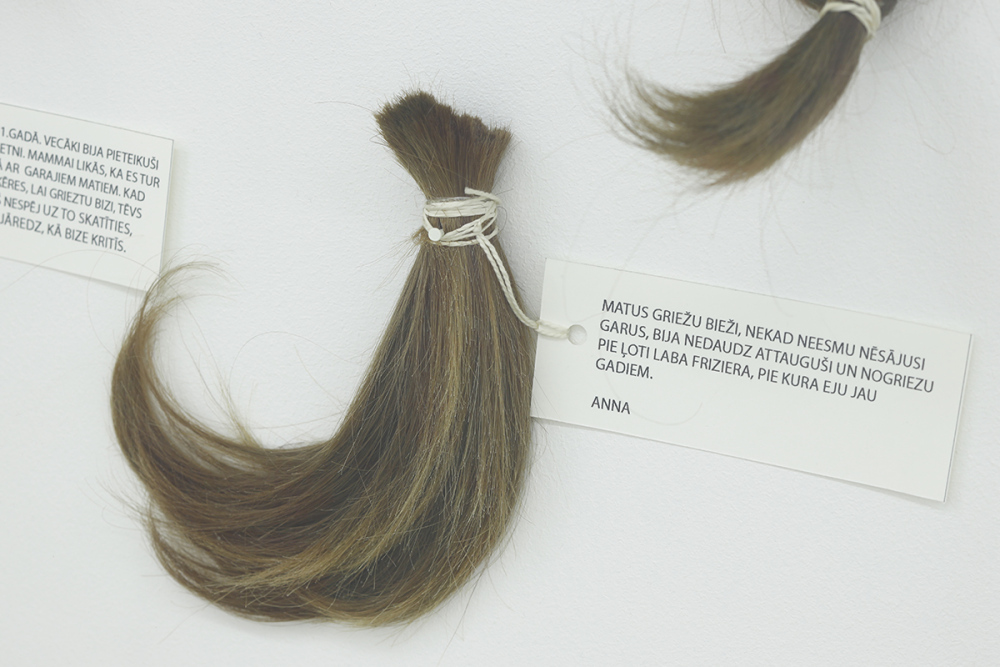
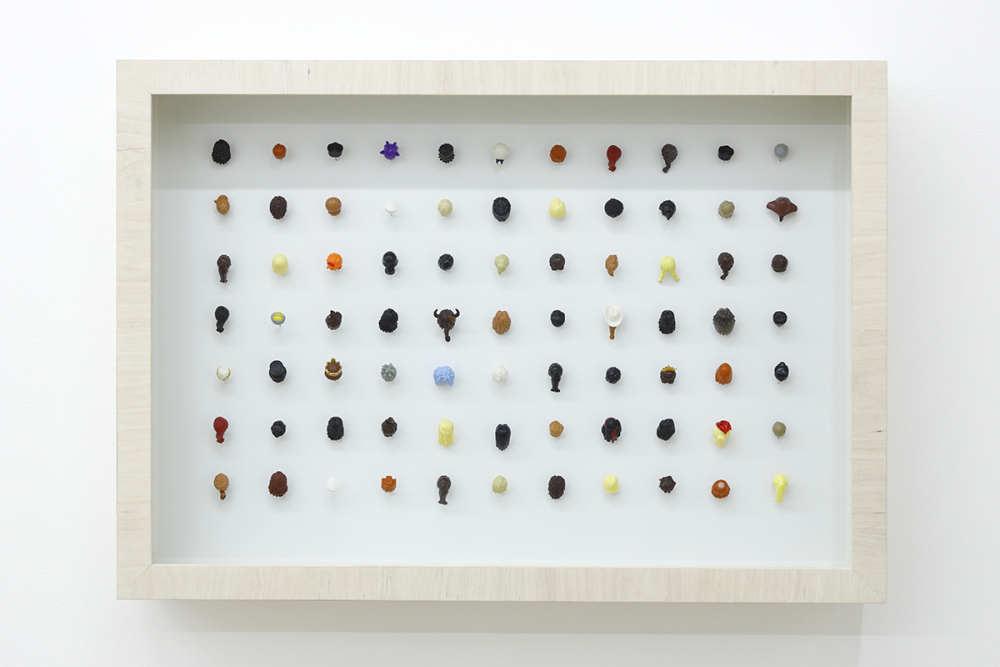
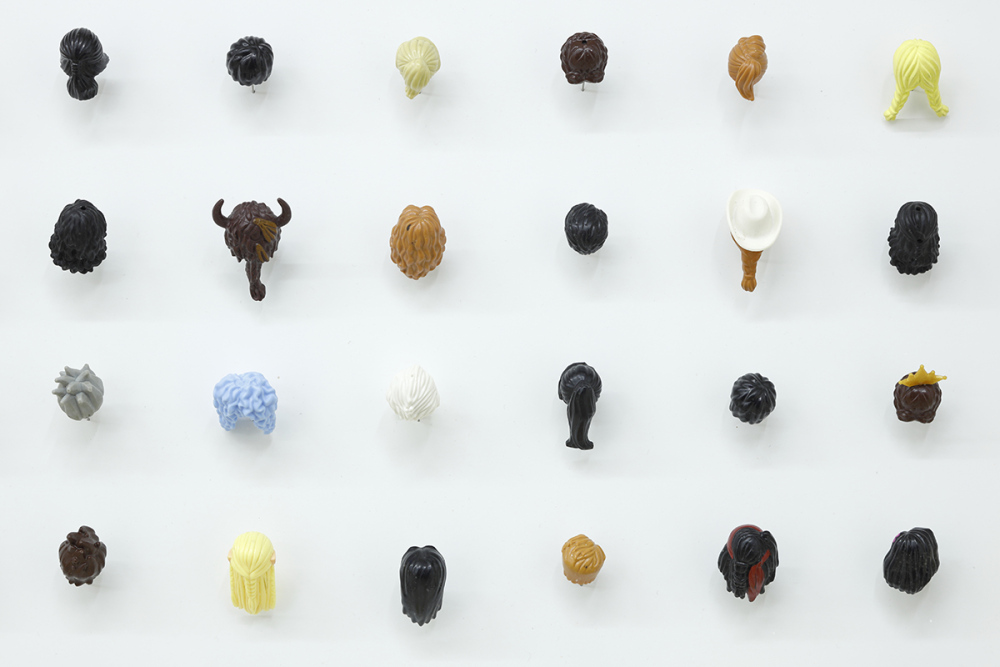
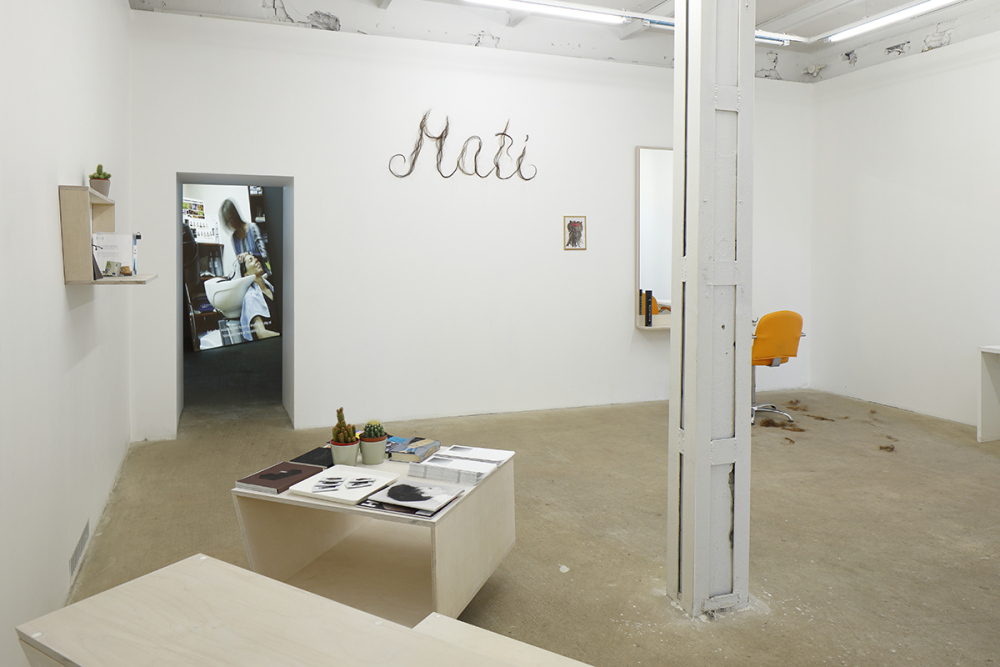
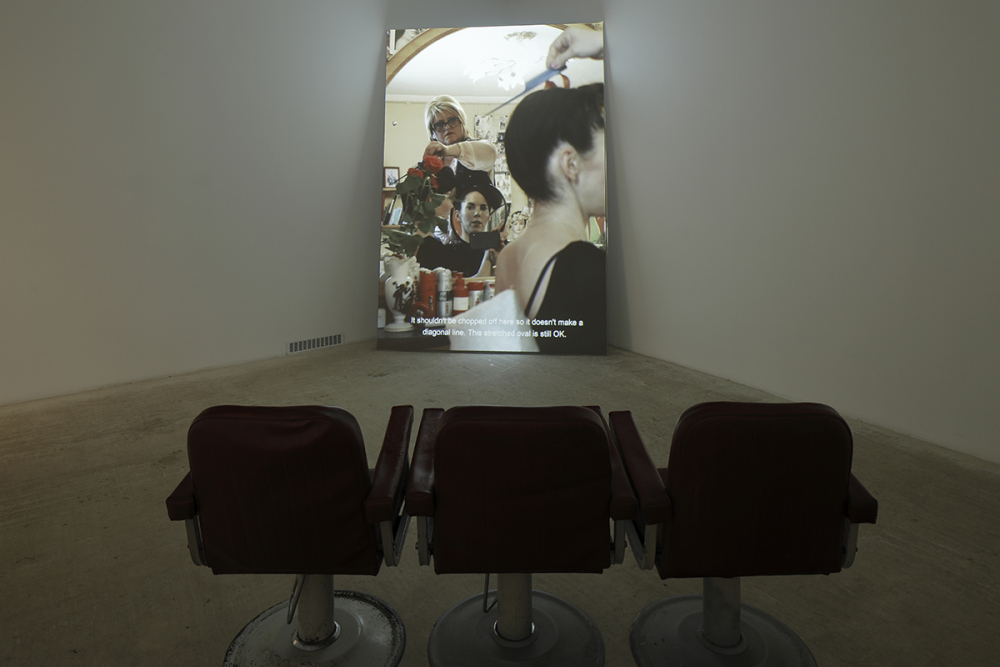
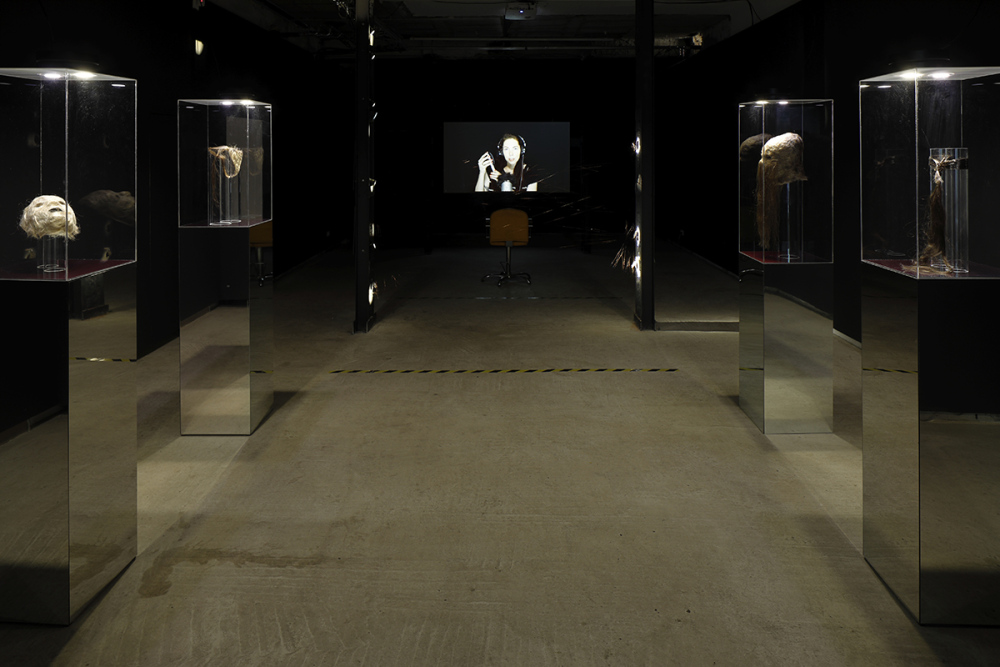
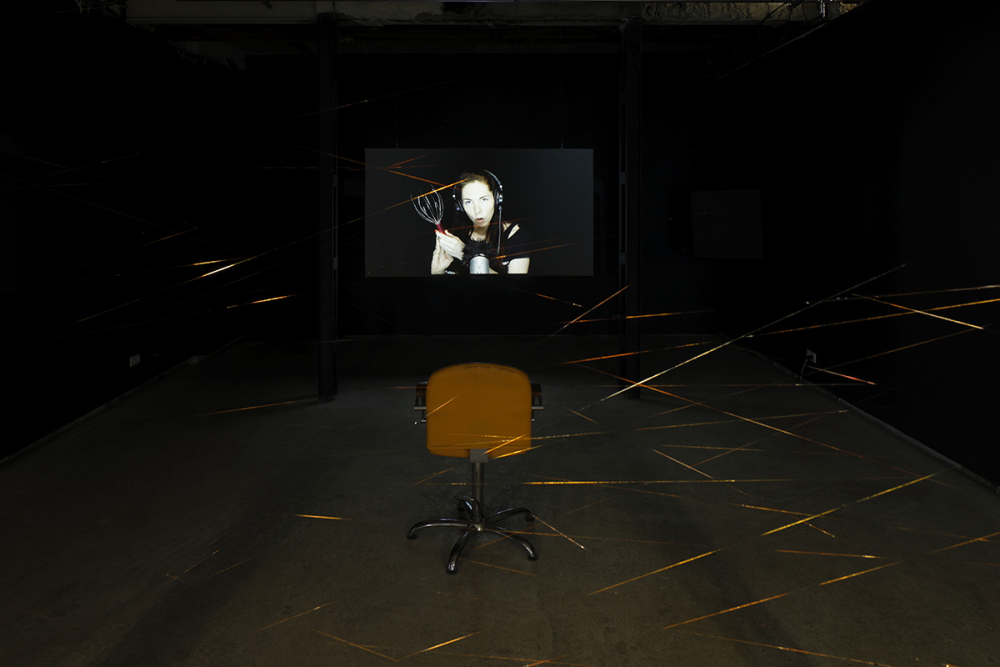
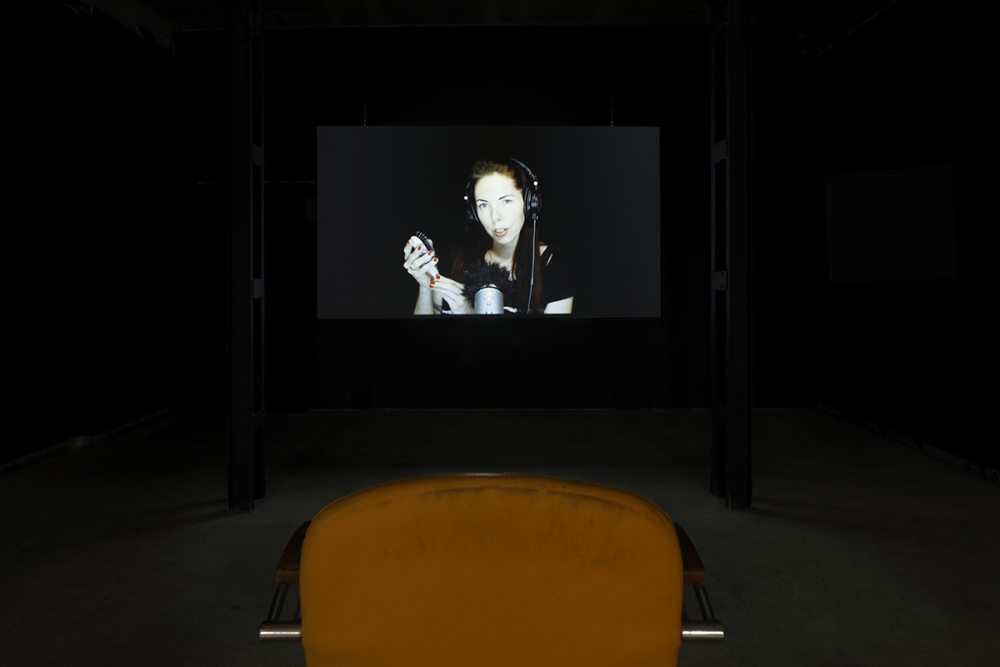
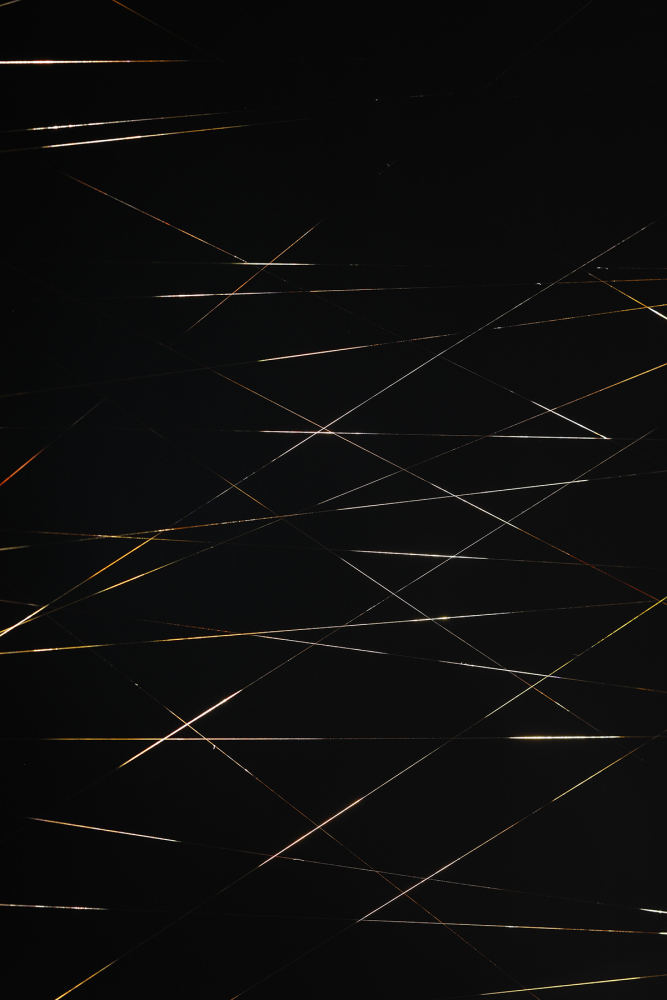
25 April to 9 June 2019Hair explores the intimate relationships, beliefs and social rituals surrounding a familiar part of the body. Hair becomes a way of speaking about identity, desire, memory and the trust involved in allowing another person to shape our appearance.
Over several months, Katrīna Neiburga visited hairdressers across Latvia, placing herself in their hands. As they transformed her hair, they shared stories about their lives and clients. These filmed encounters reveal the salon as a place of confession and care, where practical work opens into unexpectedly personal conversations.
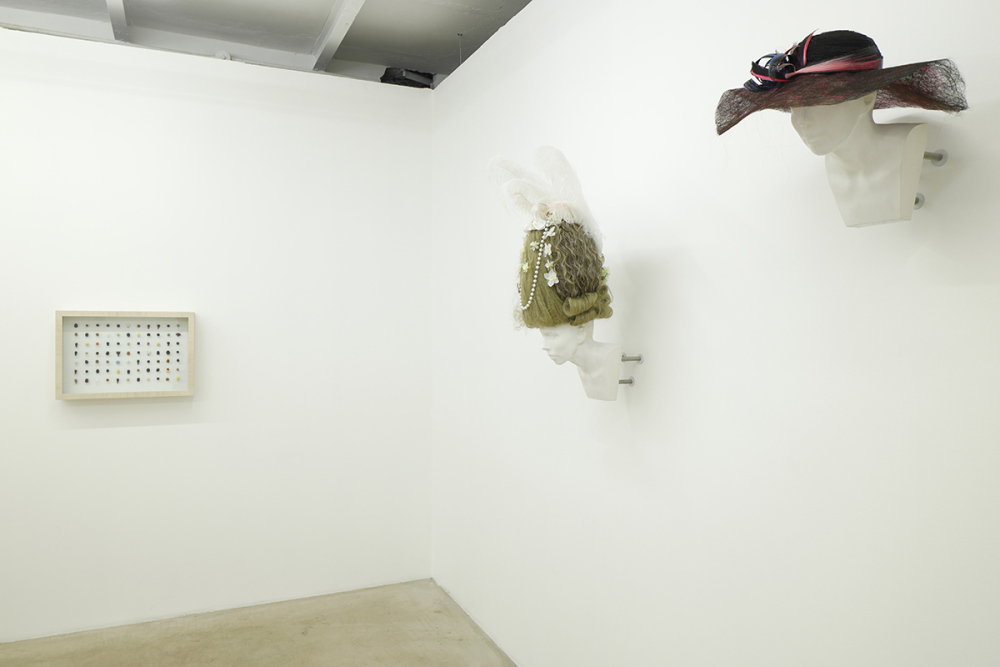
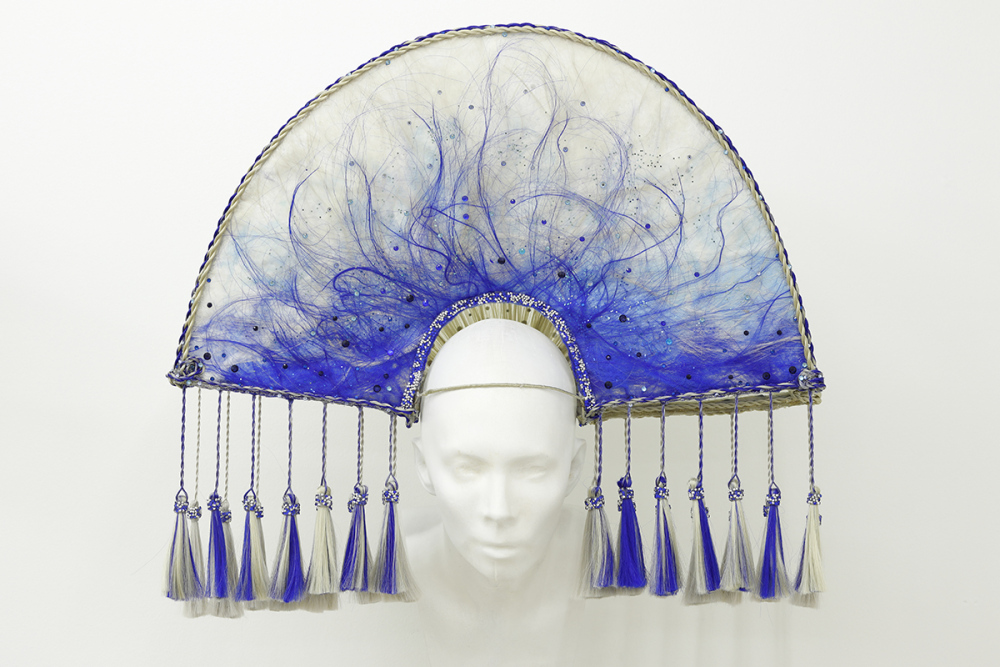
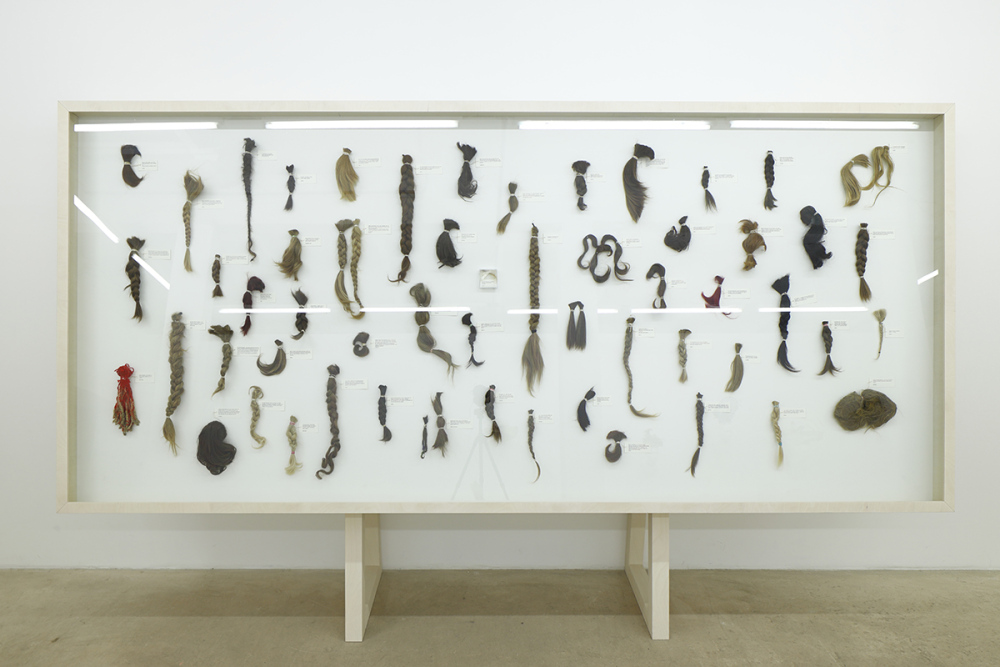
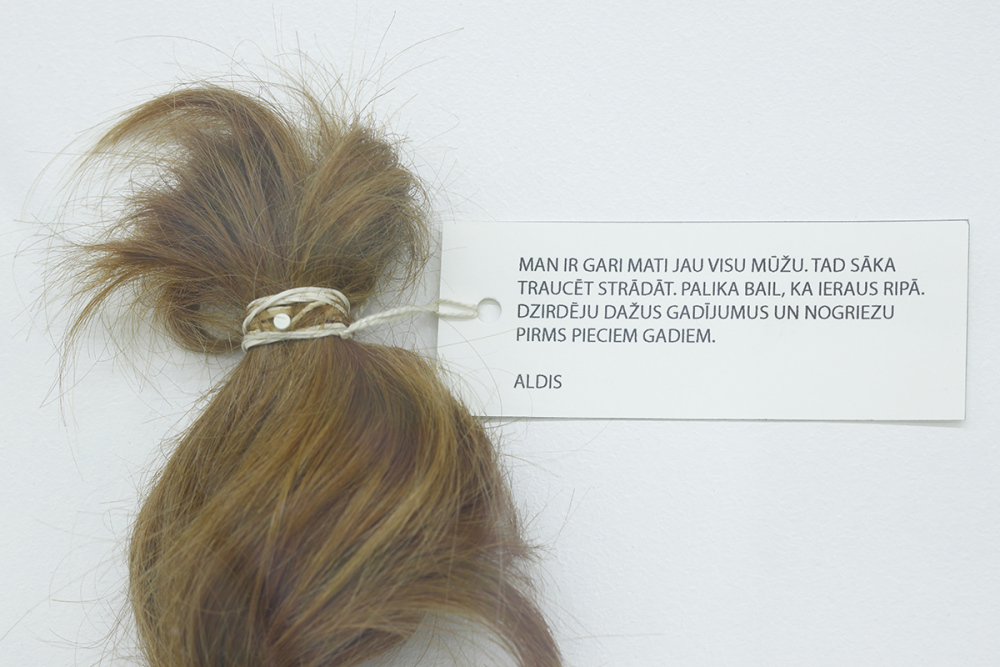
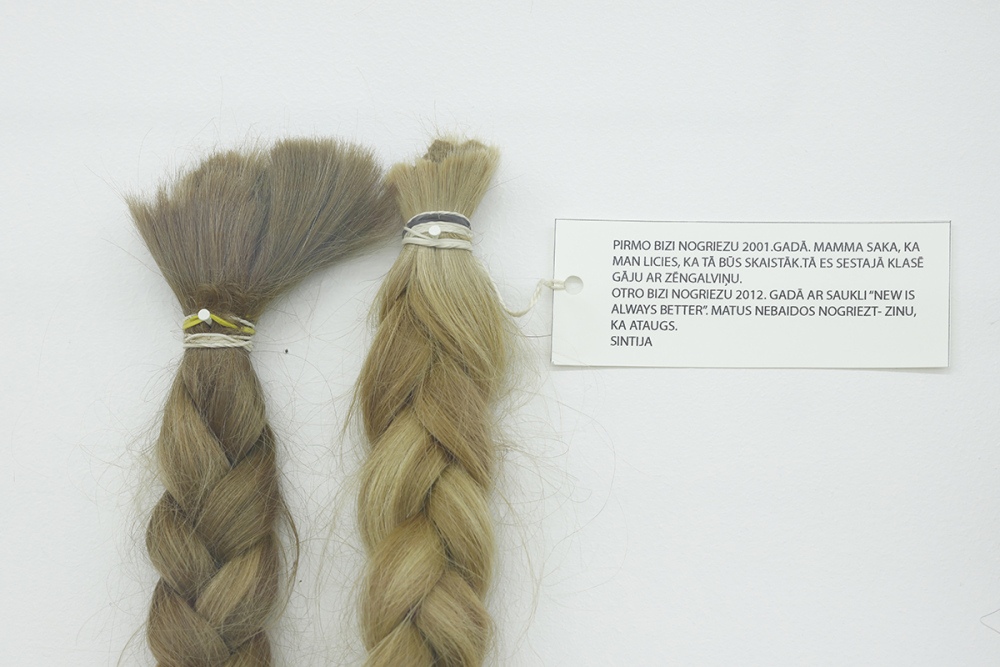
Alongside the videos, the exhibition brought together donated locks of hair and accounts of why they had been cut. Neiburga also learned techniques for making objects from hair, creating pieces including handcuffs, a protective mask and a niqab.
Moving between humour, tenderness and unease, the exhibition considers what remains of a person in something separated from their body, and how an everyday material acquires emotional, symbolic and magical significance.
Artist: Katrīna Neiburga
-
THE NEST, 2018
Outdoor installation
Kronvalda Park, Riga, Latvia
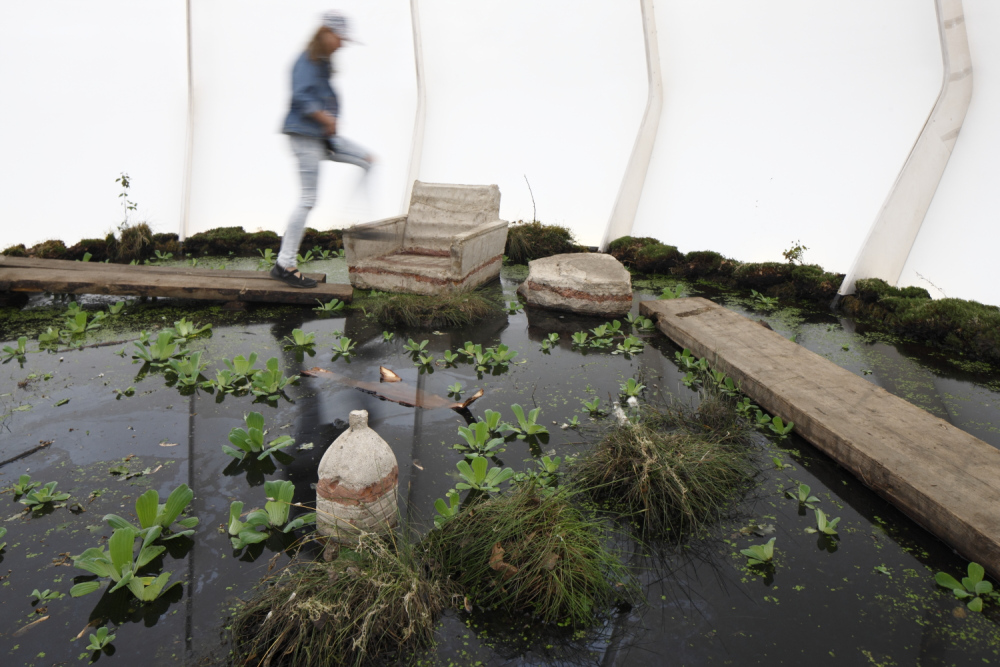
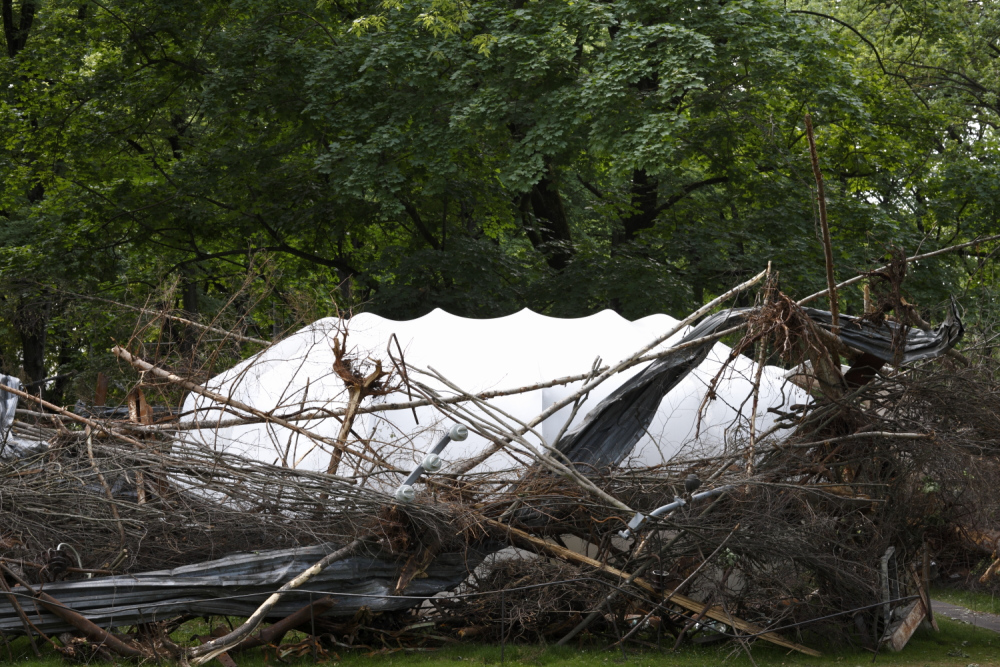
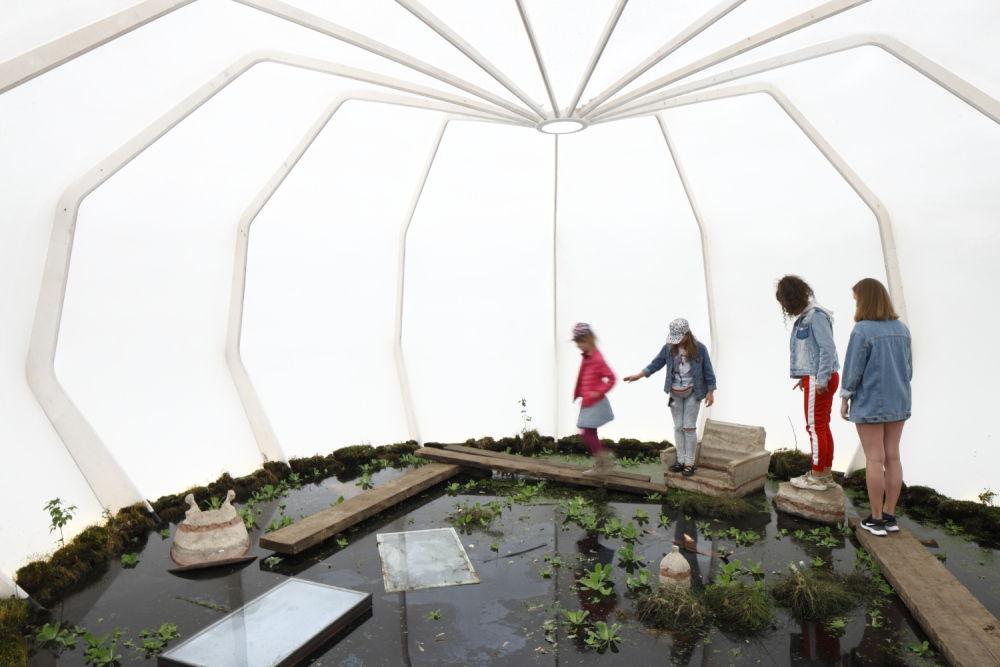
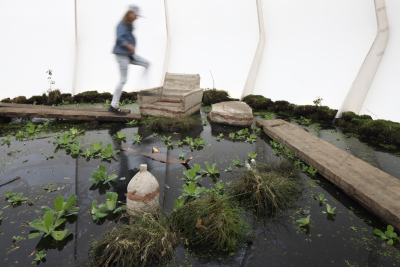
Riga International Biennial of Contemporary Art, RIBOCA1Inspired by an urban bird’s nest woven from wires, The Nest imagines how humans might build a nest on a monumental scale using materials found in the city. Uprooted trees, tram rails, trolleybus wires and other fragments of urban infrastructure form a structure that brings together natural growth and the remains of civilisation.
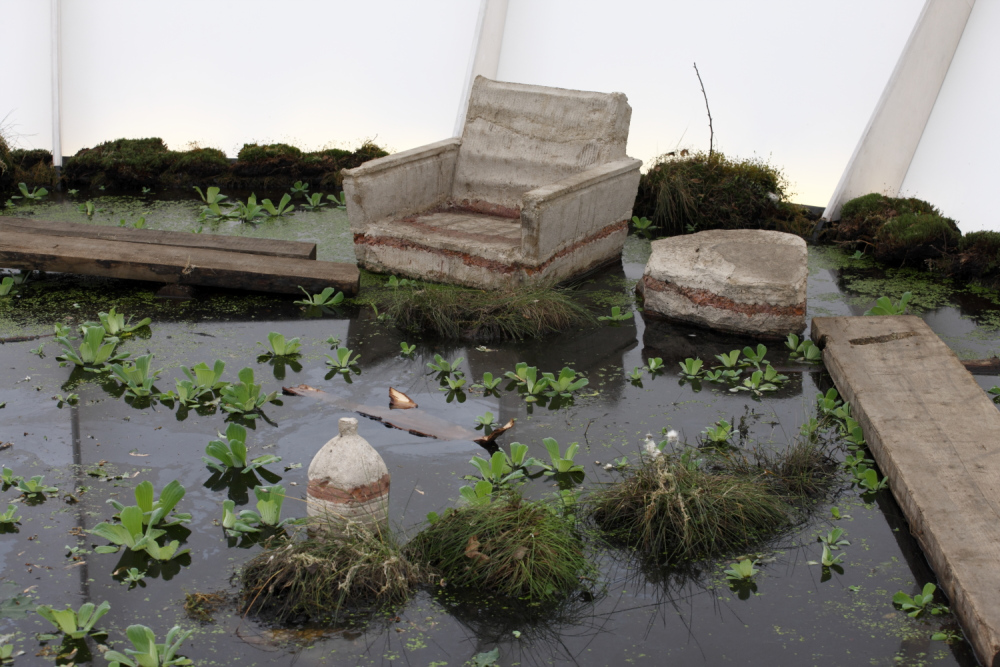
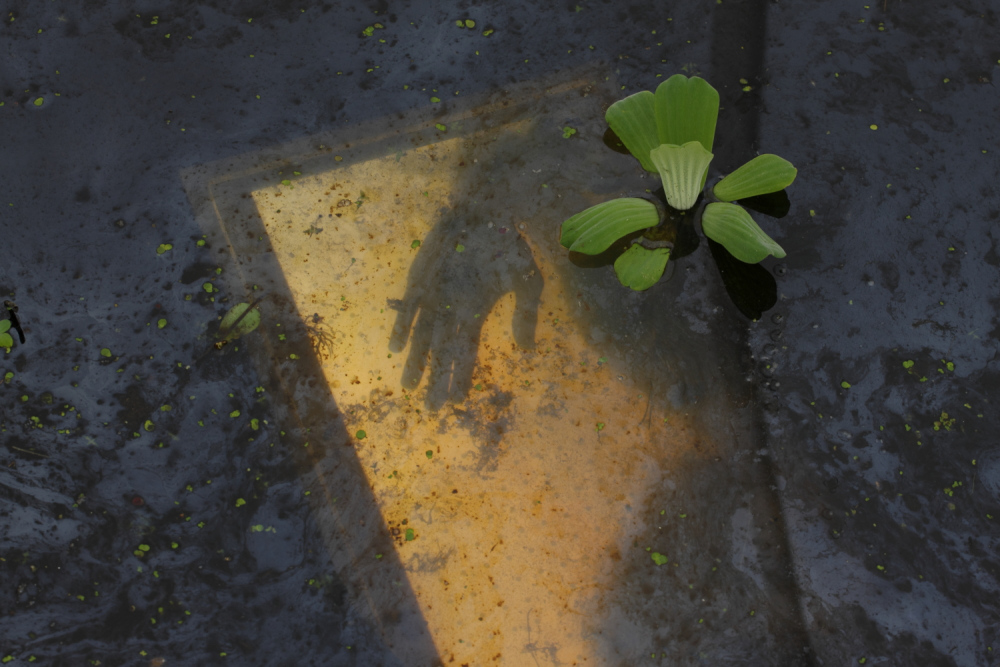
Inside, visitors encounter an unexpected wetland beneath a white dome. This enclosed landscape introduces the sensations and uncertainties of a bog into the centre of Riga, inviting a bodily encounter with an environment often regarded with apprehension.
The nest suggests shelter, while the bog evokes both softness and danger. Moving between these associations, the installation explores how familiarity, fear and curiosity shape our relationship with nature.
Artists: Katrīna Neiburga and Andris Eglītis
Photography: Ansis StarksCommissioned for RIBOCA1: Everything Was Forever, Until It Was No More, curated by Katerina Gregos.
Exhibition dates: 2 June to 28 October 2018
-
A NEW DAY’S REGIMEN, 2018
16mm film, 7 min 5 sec
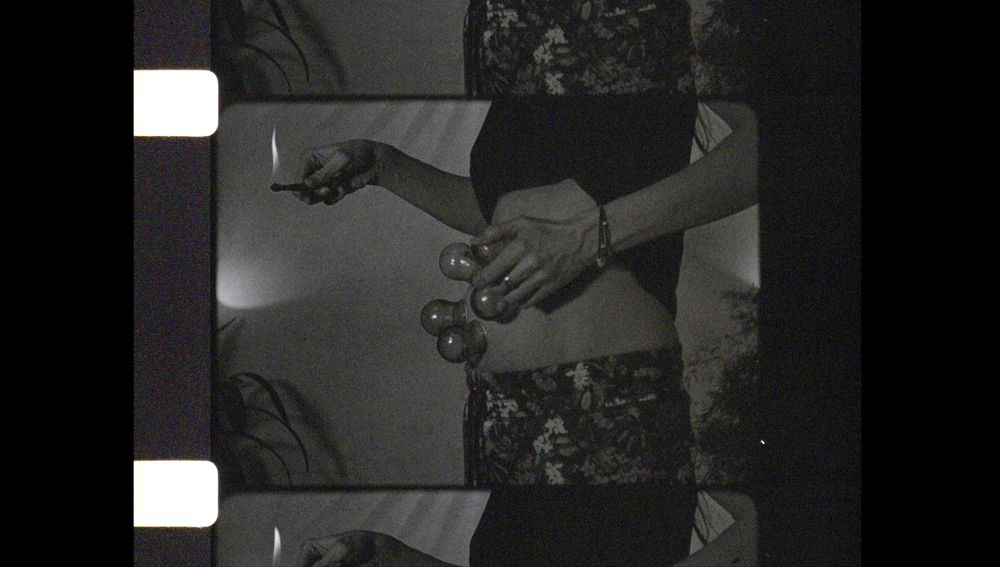
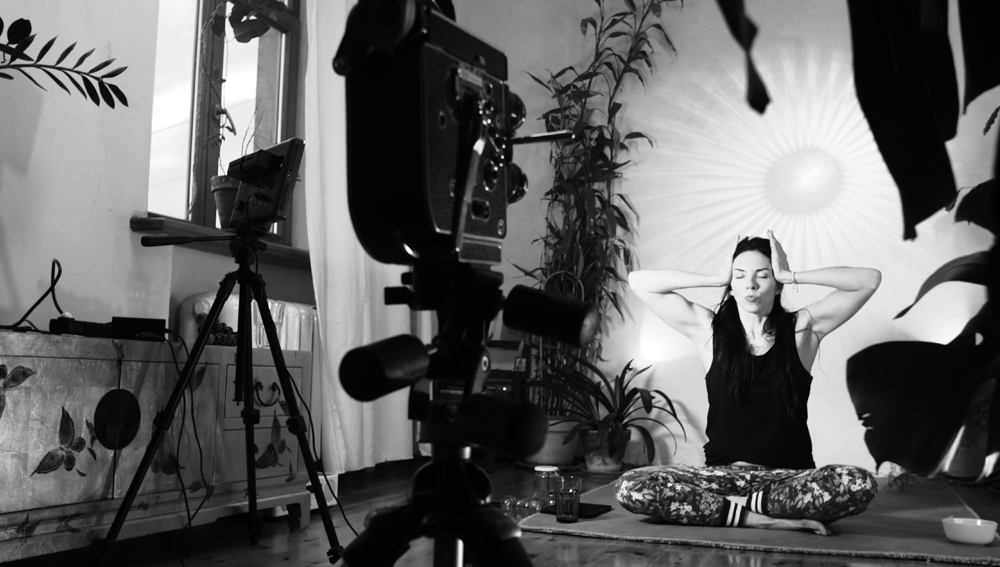
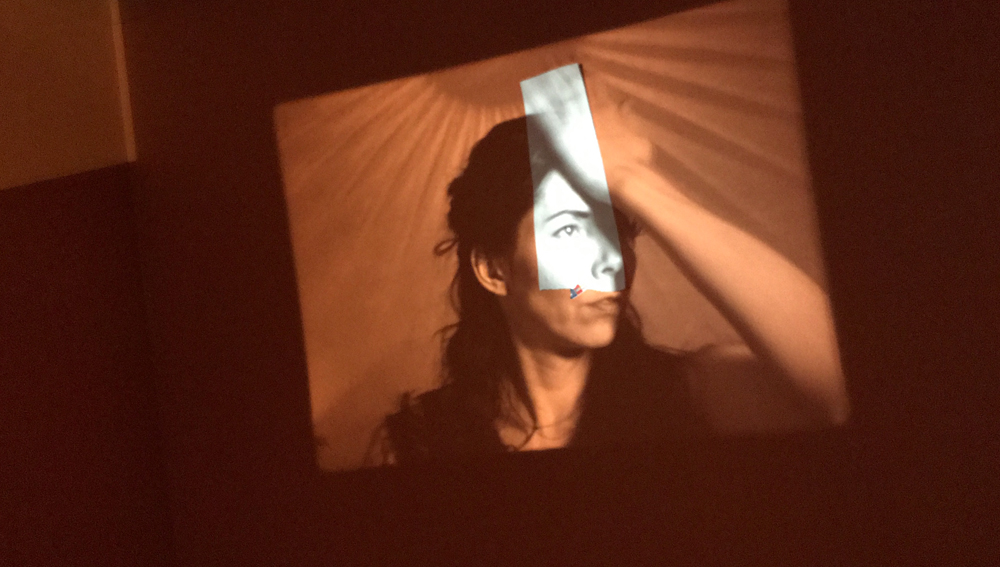
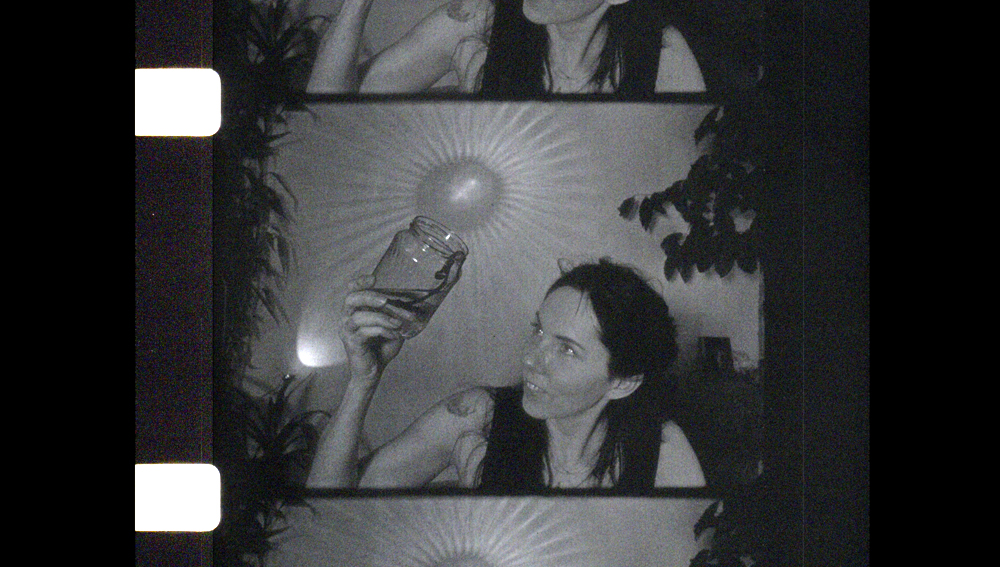
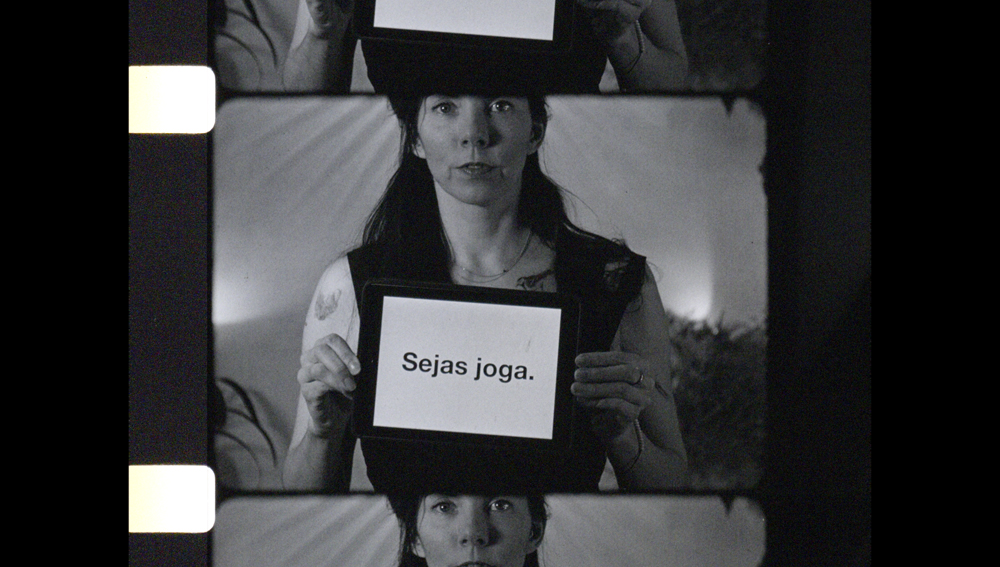
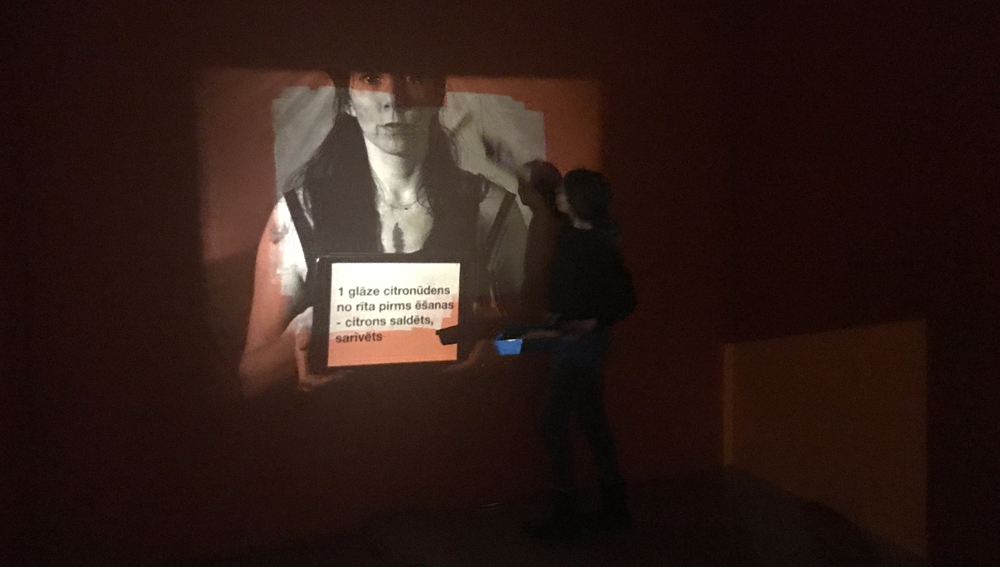
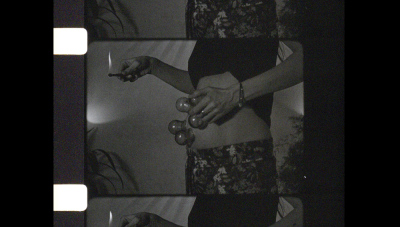
In A New Day’s Regimen, Katrīna Neiburga performs a sequence of daily practices intended to improve physical and spiritual wellbeing. Lemon water, yoga and massage sit alongside meditations for love and money, aura expansion and exercises for receiving energy.
The accumulated instructions turn everyday self-care into an elaborate programme. The artist’s own body becomes a testing ground for promises of health, balance and transformation.
Through humour and bodily experimentation, the film explores the desire to feel better and the effort invested in becoming a better version of oneself. Practical advice and esoteric beliefs coexist, revealing how easily caring for oneself can become another demanding task.
Film and performance: Katrīna Neiburga
Sound: DJ Selecta -
PICKLED LONG CUCUMBERS, 2017
Two-channel video, colour, sound
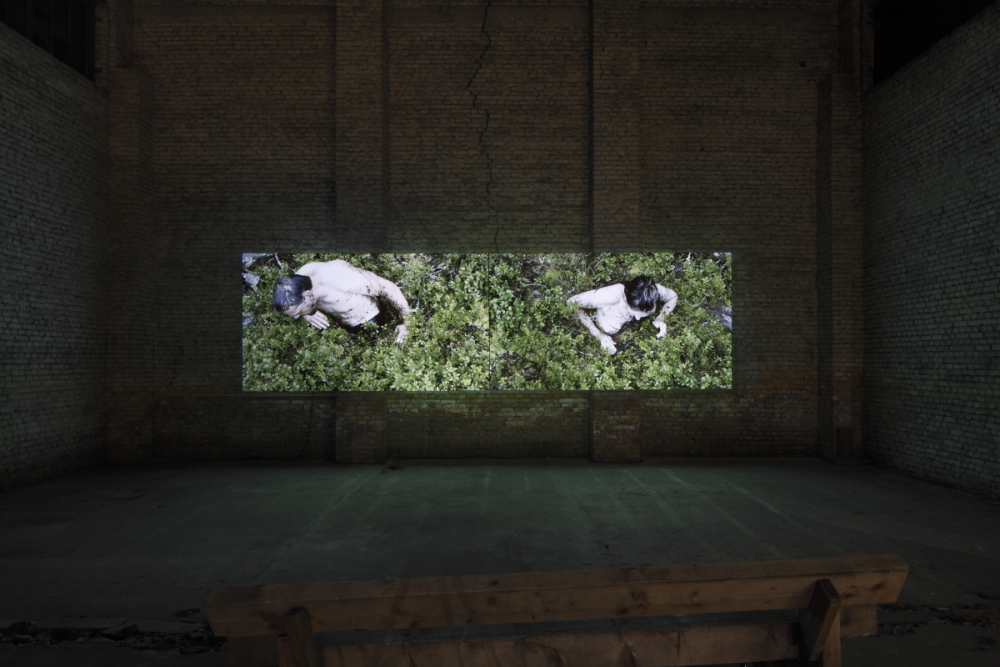
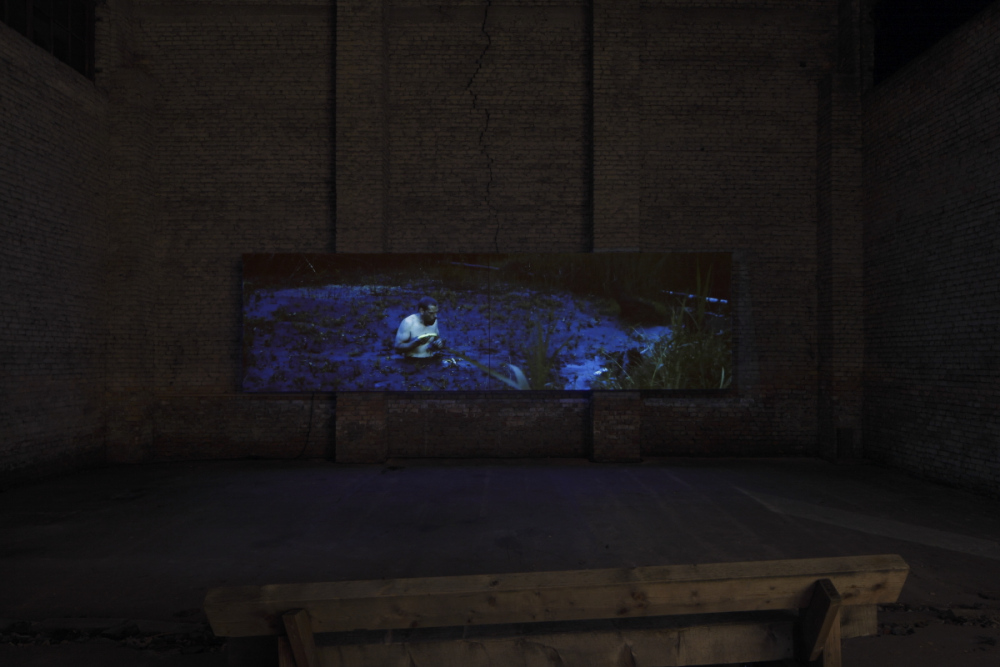
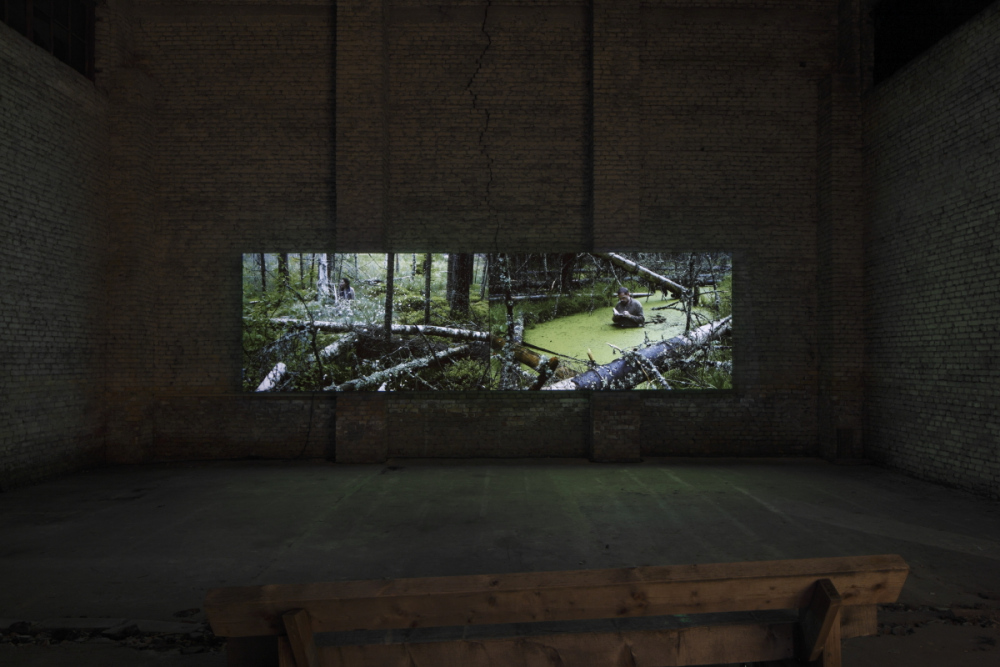
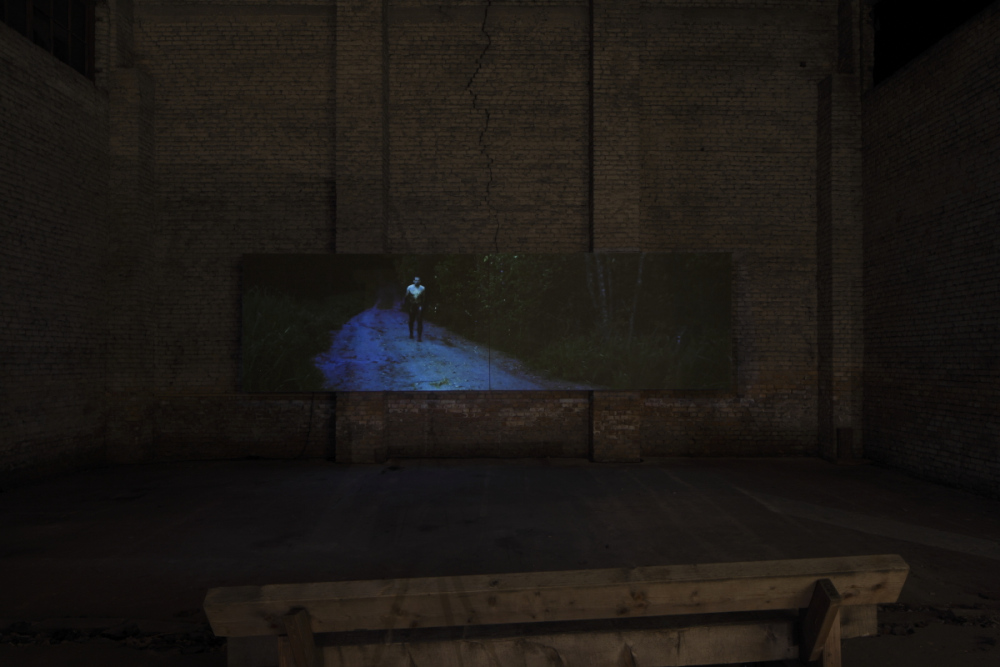
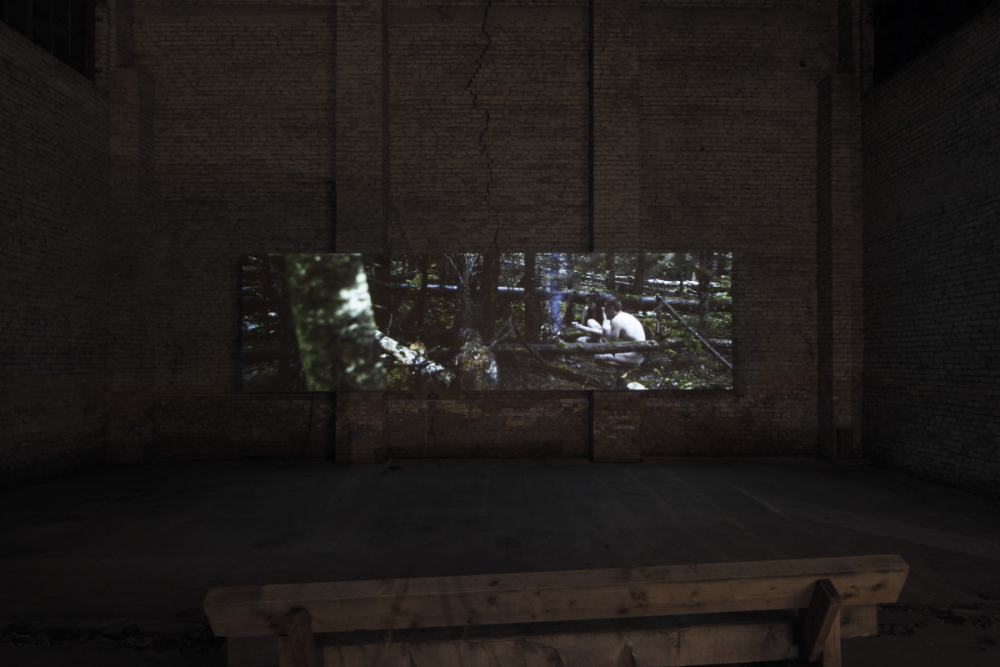
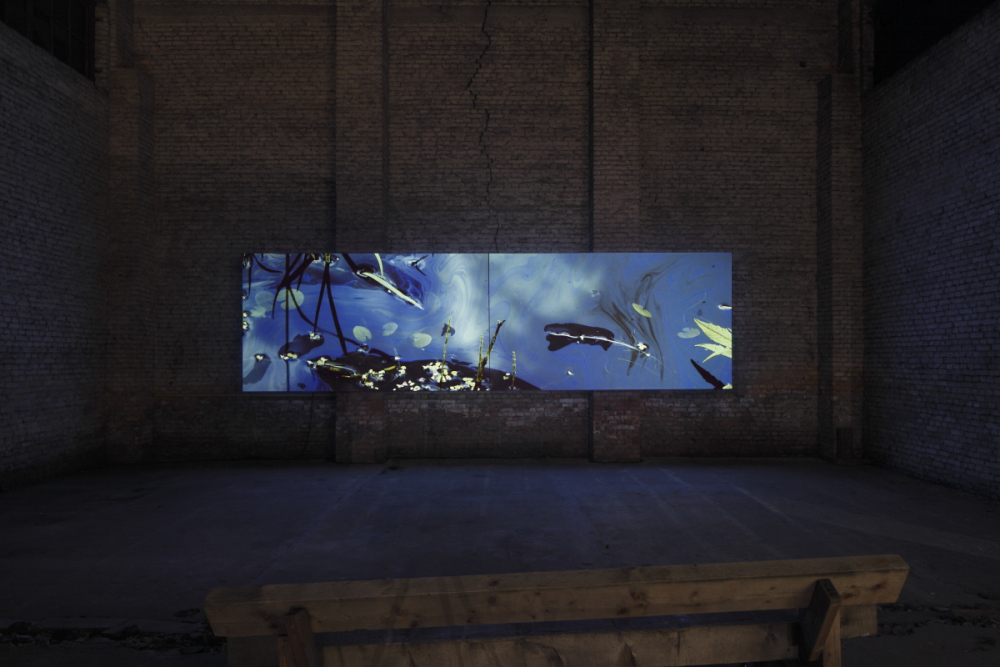
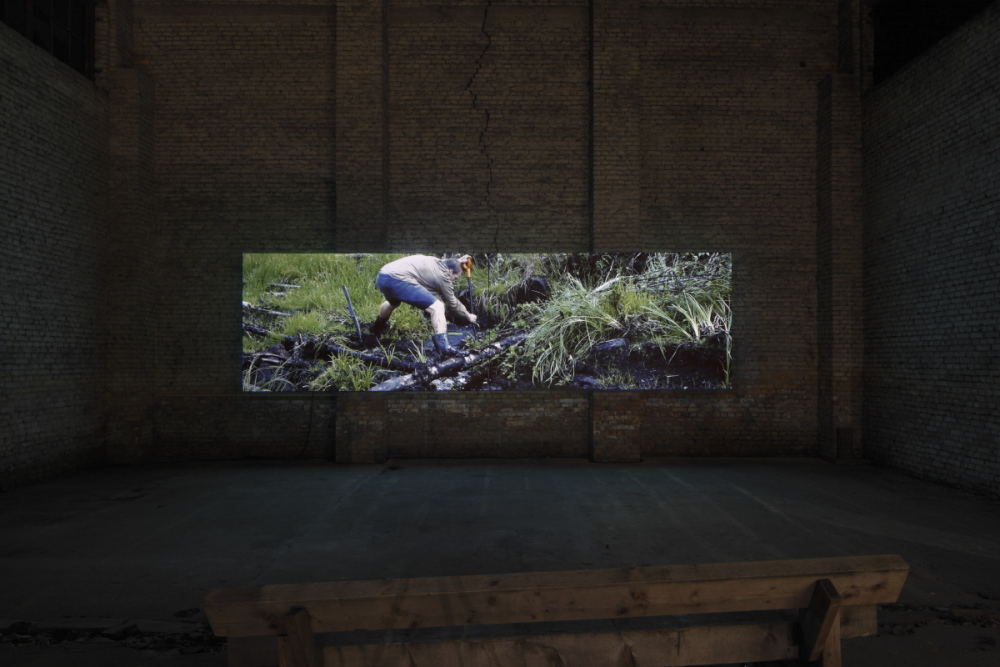
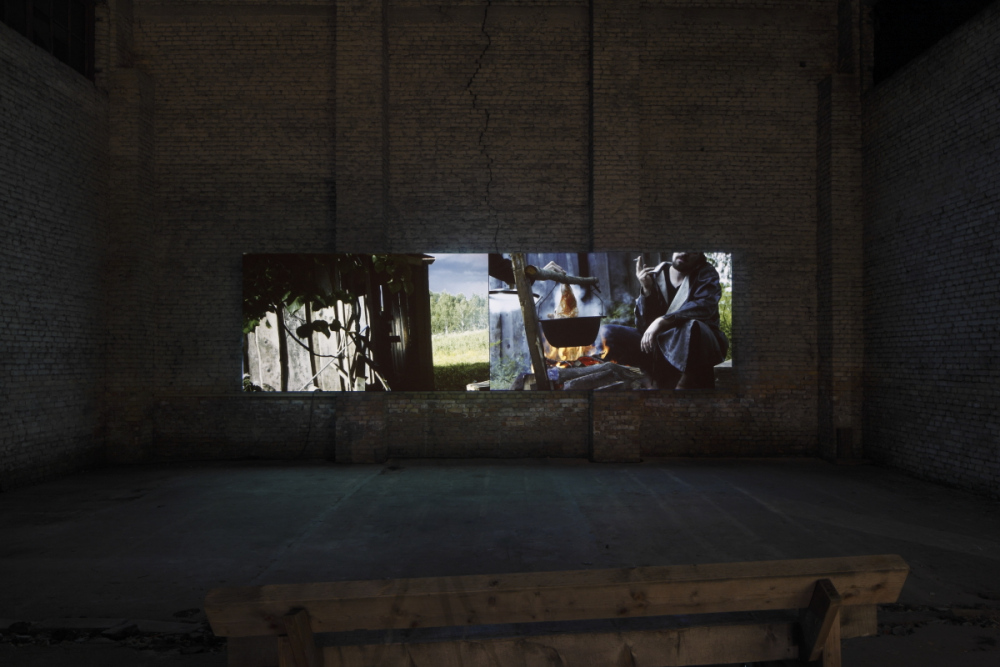
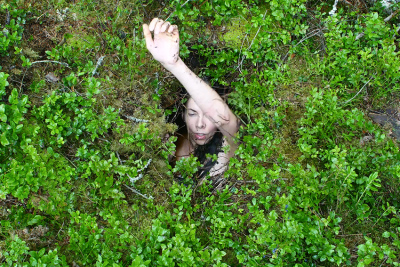
11 min 44 secFilmed during a summer in Drusti, Latvia, Pickled Long Cucumbers follows Katrīna Neiburga, Andris Eglītis and their four-year-old son as they explore living together in the countryside. Everyday activities become experiments in a family’s relationship with the surrounding wilderness.
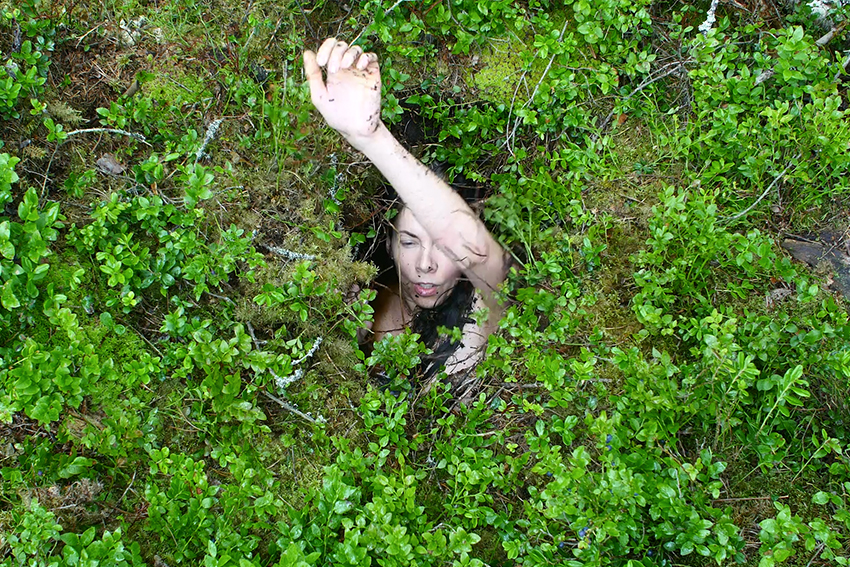
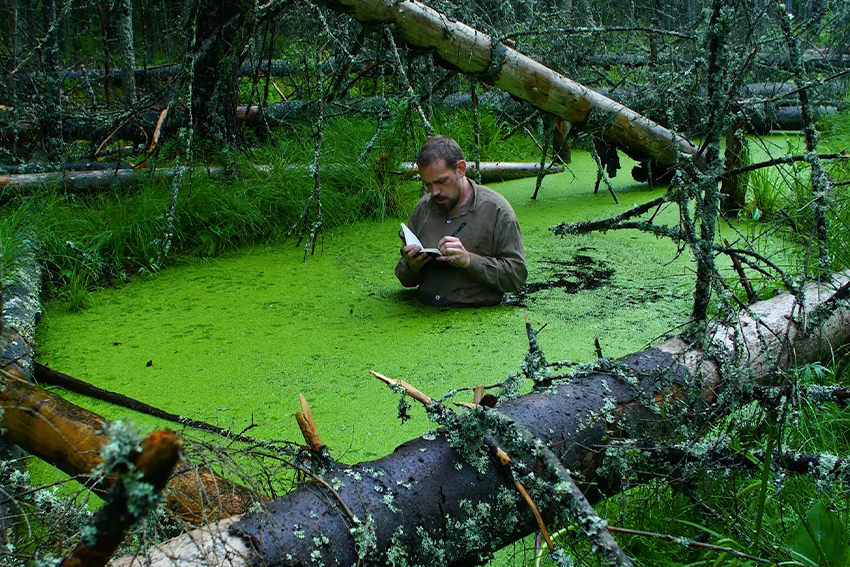
Cooking over an open fire, investigating a beaver dam and immersing themselves in a bog, the protagonists move between practical tasks and seemingly irrational actions. Documentary observations merge with playful, staged encounters, creating an intimate portrait of coexistence.
The film questions the promise of a return to a “natural” way of life. Traces of civilisation persist within the landscape, while the family brings its own habits, desires and misunderstandings into every encounter. Humour, tenderness and discomfort accompany their search for a balance that remains elusive.
Music by Richie Hawtin, also known as Plastikman, gives these encounters an electronic pulse.
Artist: Katrīna Neiburga
Featuring: Katrīna Neiburga, Andris Eglītis and their son
Music: Richie Hawtin / Plastikman -
WILL-O’-THE-WISP, 2016
Multimedia installation with video, sound, light, bamboo and thatch
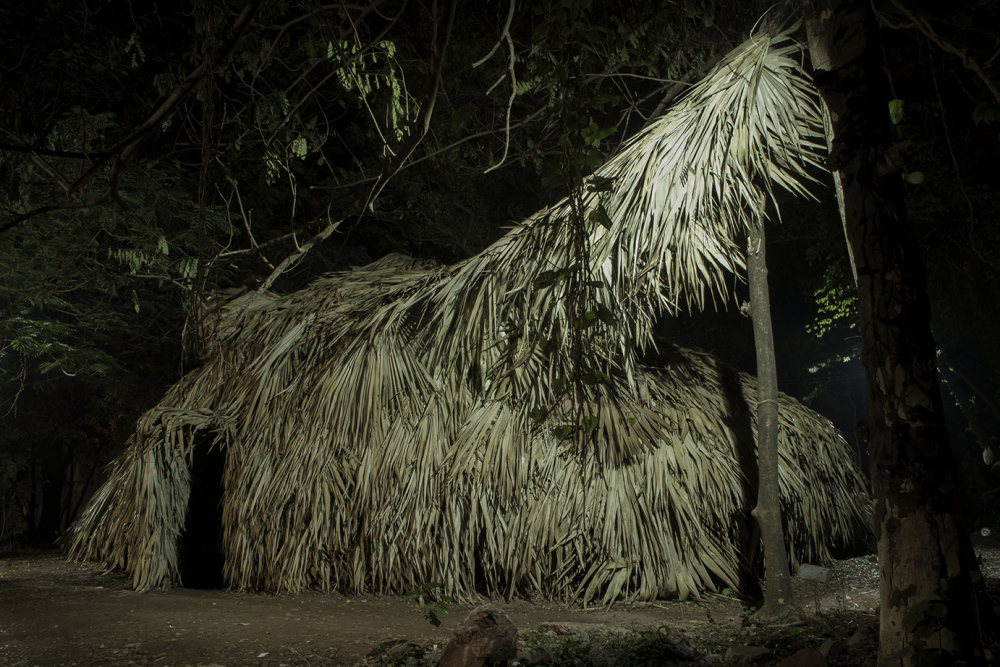
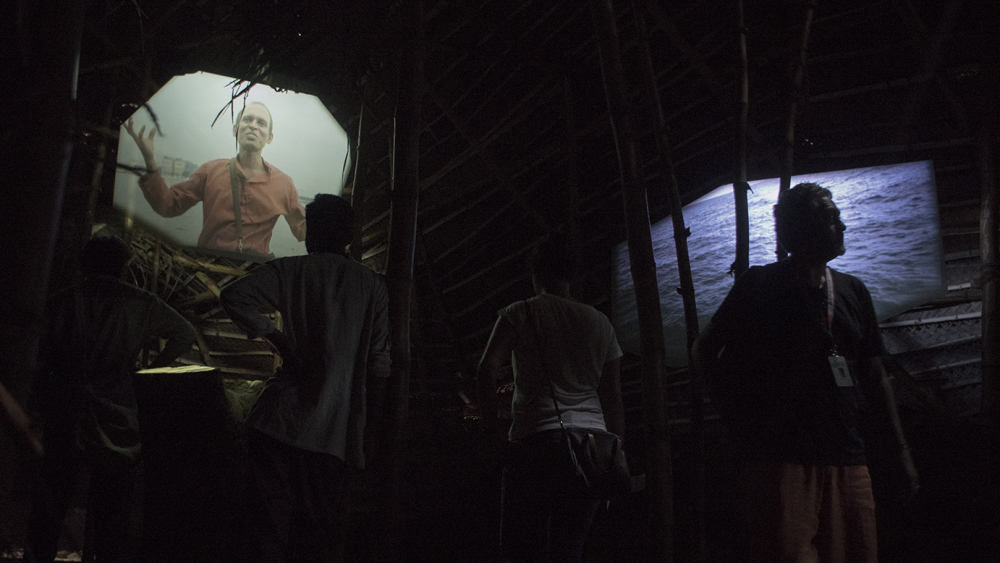
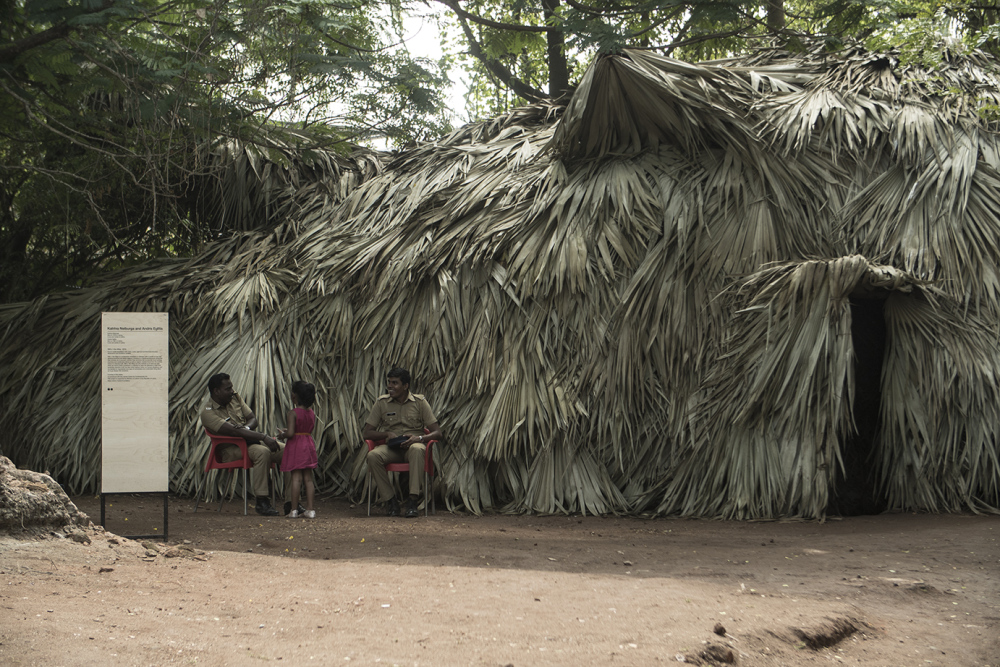
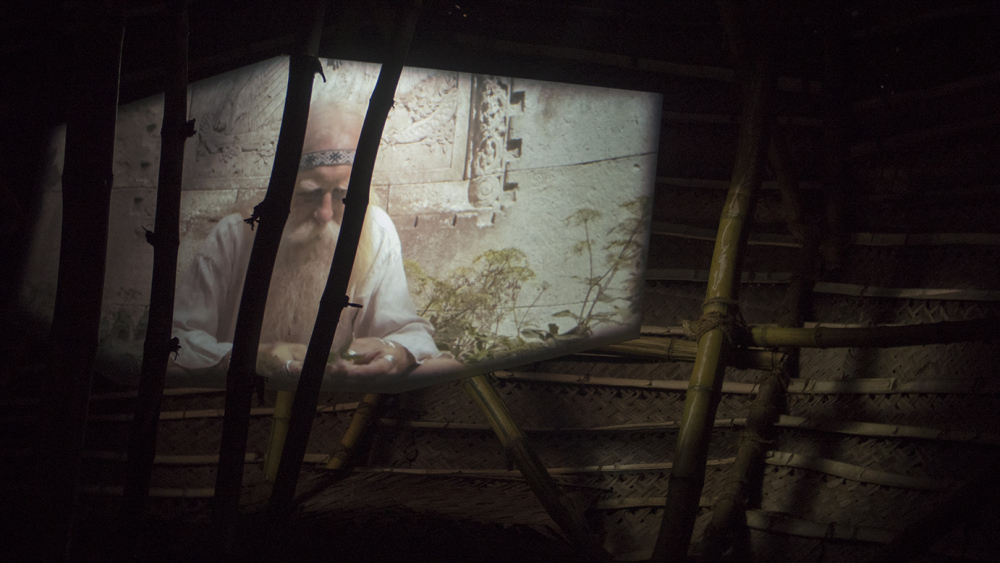
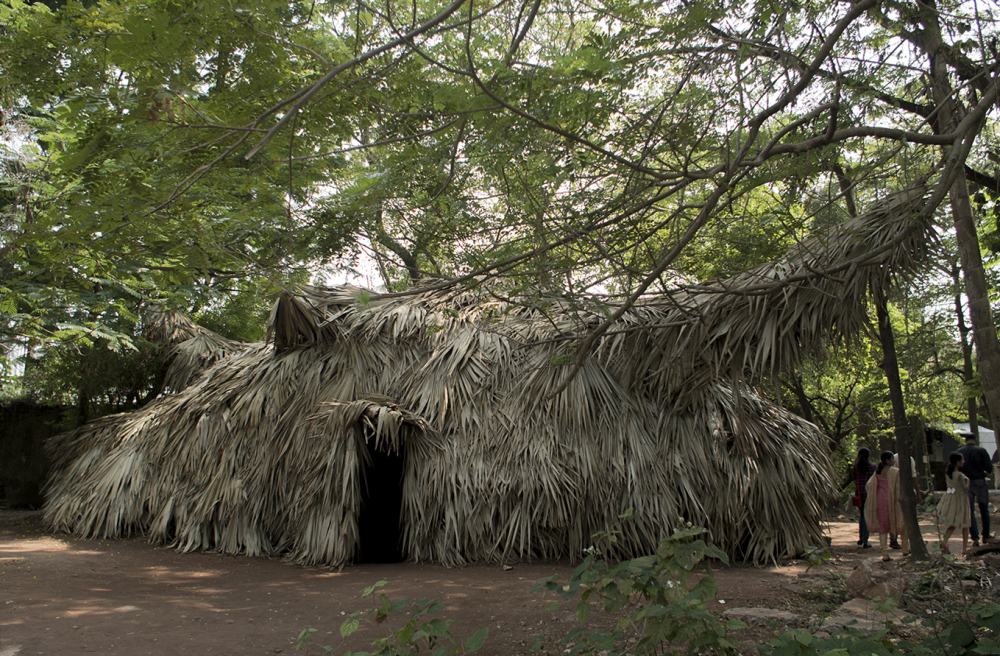
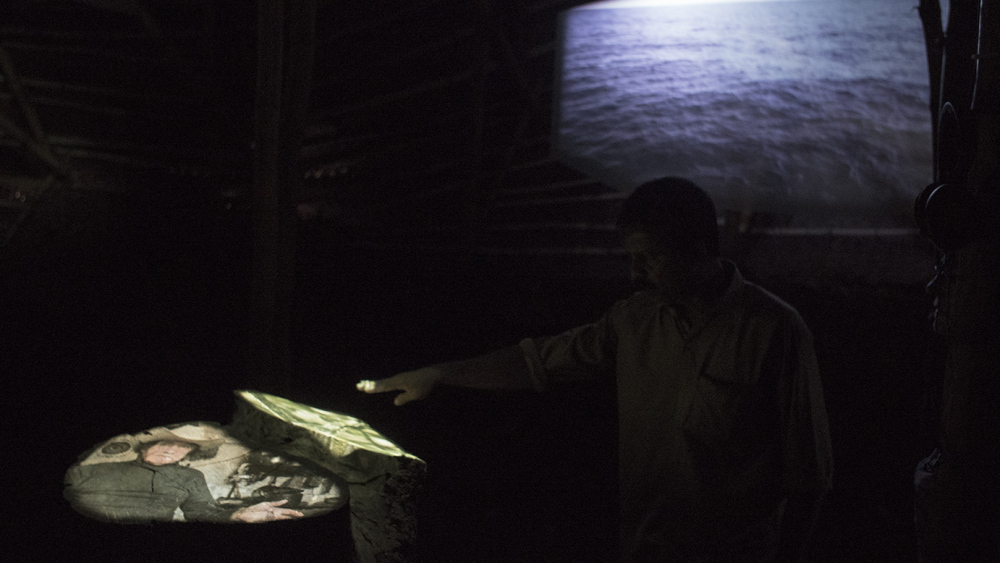
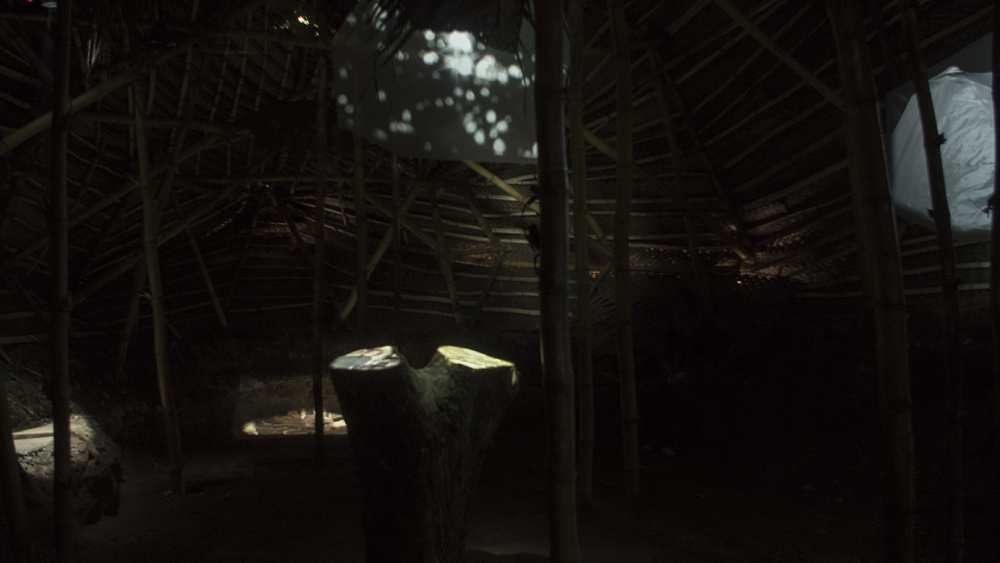
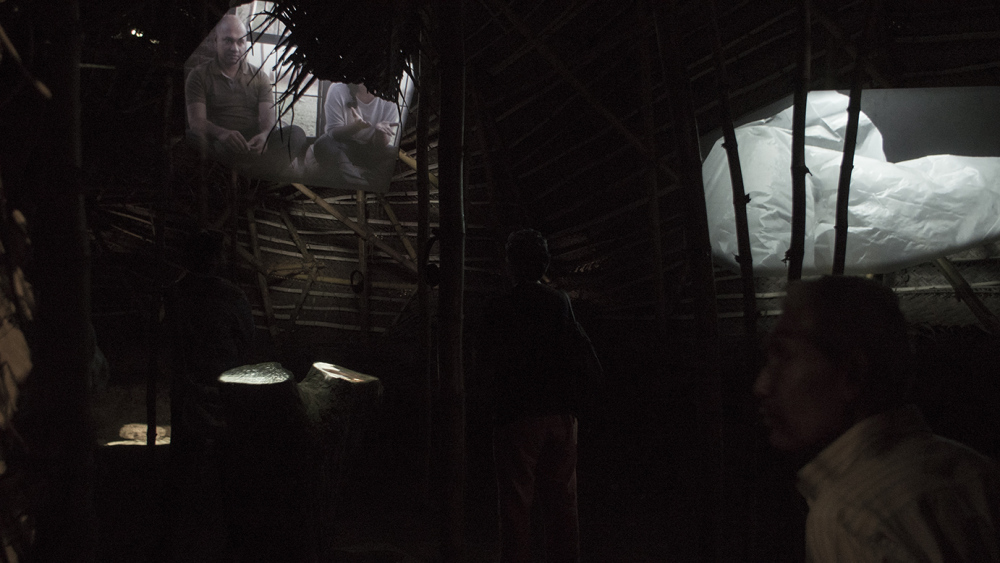
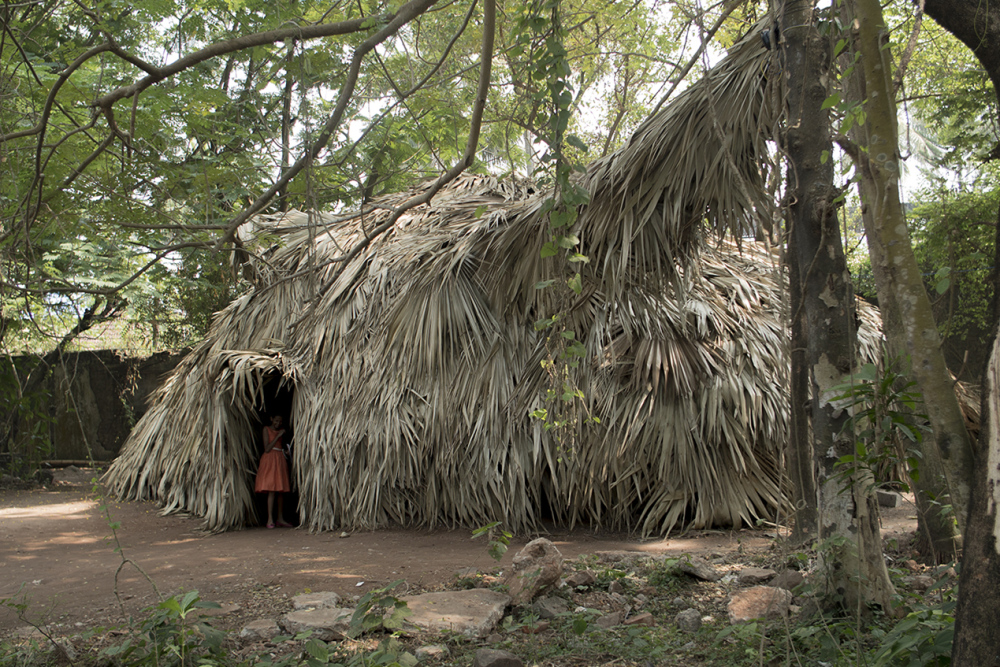
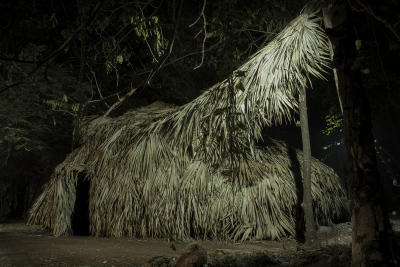
Kochi-Muziris Biennale, Kochi, IndiaWill-o’-the-Wisp explores the desire to encounter something beyond ordinary perception. Drawing on spiritual practices and religious traditions, the installation brings architecture, moving images, sound and light together in a space for sensory exploration.
Created by Katrīna Neiburga and Andris Eglītis, the structure incorporates local building techniques, bamboo, thatch and organic materials gathered from its surroundings. Improvised construction meets audiovisual technology, connecting the physical qualities of the shelter with the shifting experiences within it.
The title evokes an elusive light that draws the traveller onwards. Within the installation, this becomes a way of approaching the search for truth, meaning and an unnamed presence: something sensed, pursued and never fully grasped.
Artists: Katrīna Neiburga and Andris Eglītis
Biennale curator: Sudarshan ShettyCreated for the Kochi-Muziris Biennale in collaboration with the Latvian Centre for Contemporary Art.
-
ENLIGHTENMENT IN THE BASEMENT, 2016
Video, sound and light installation
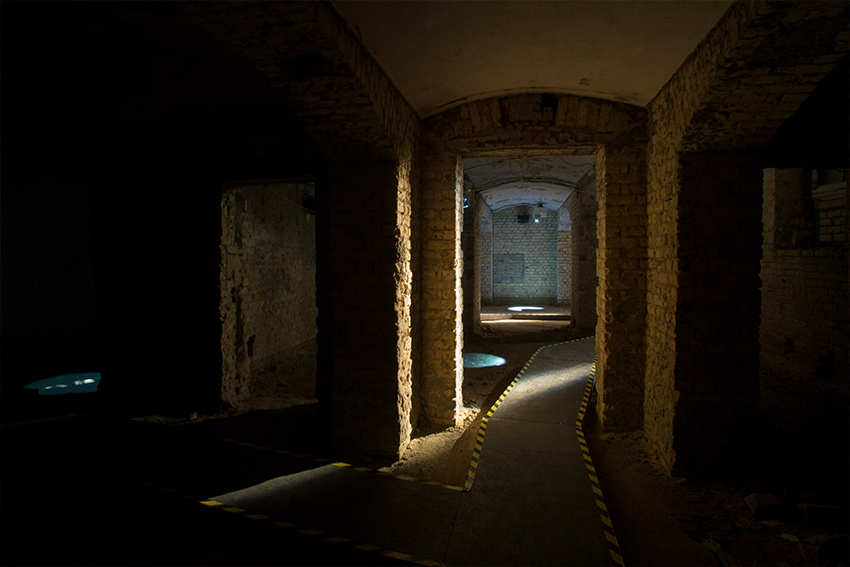
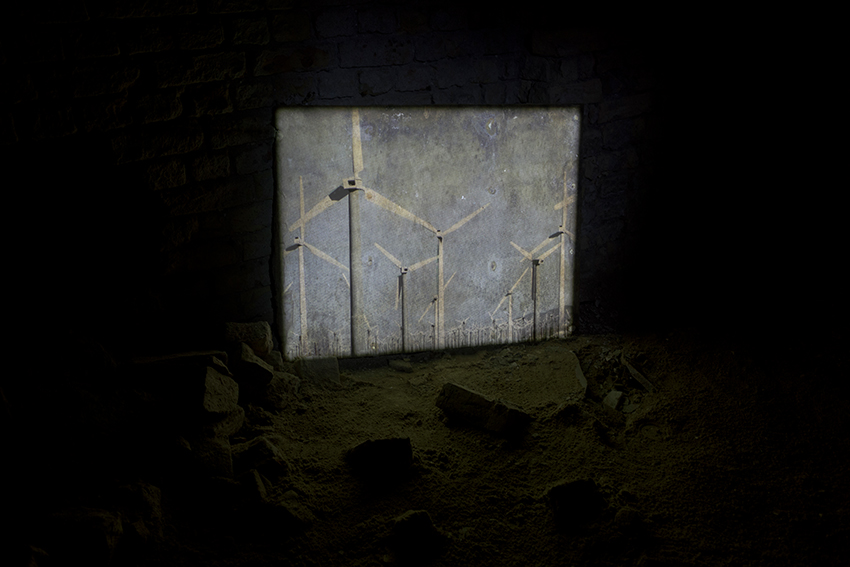
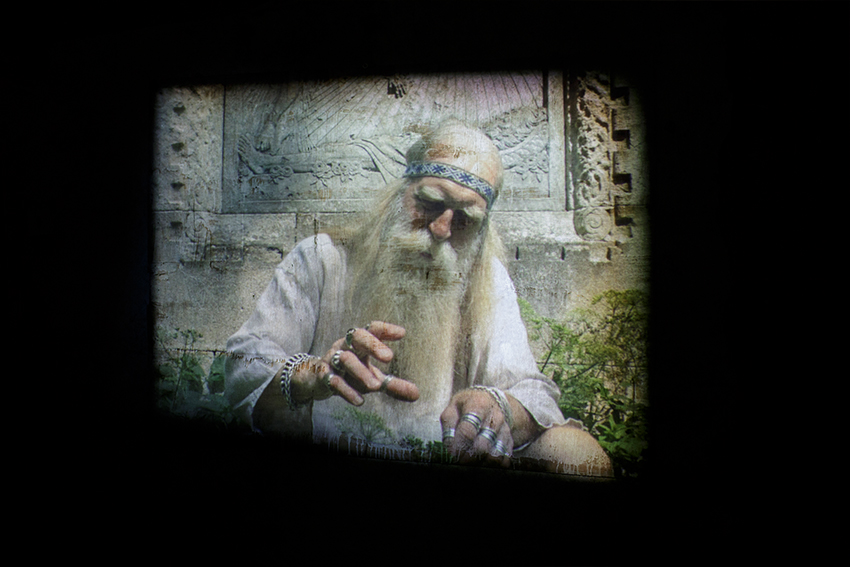
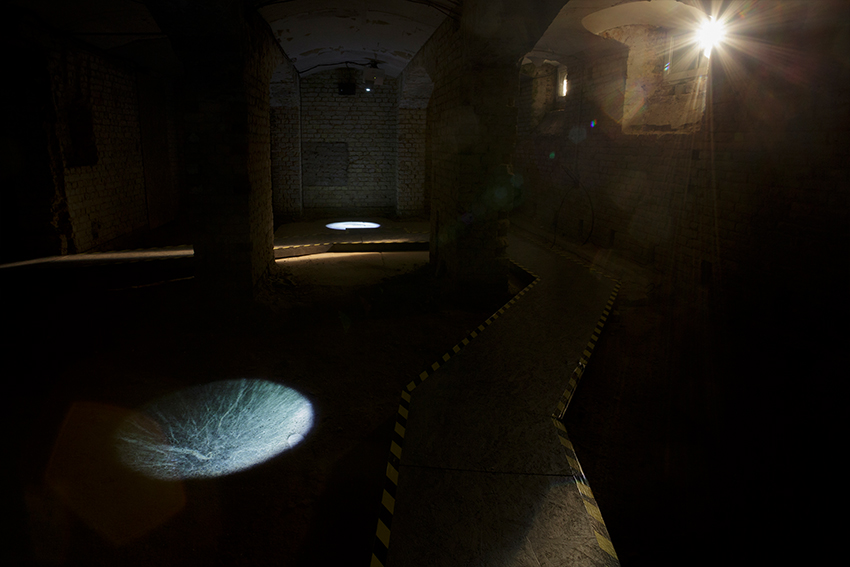
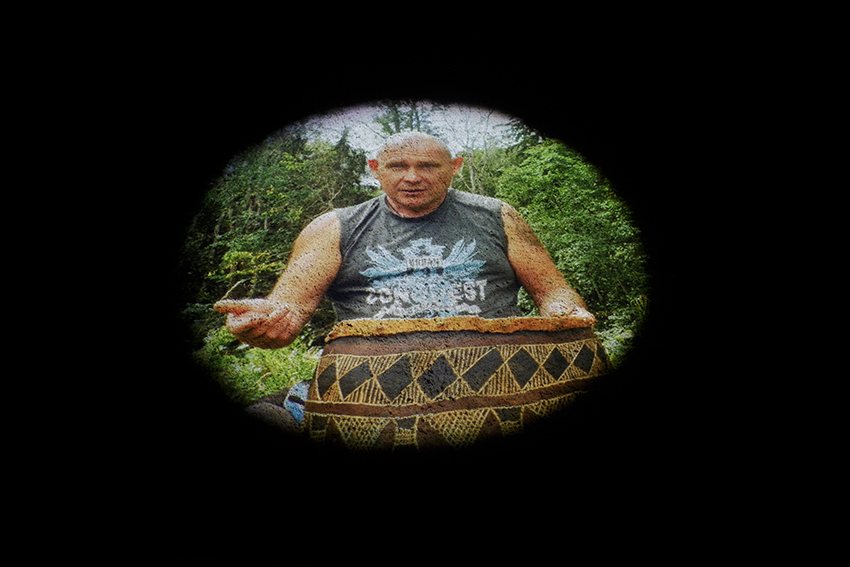
Survival Kit 8, K. K. von Strick’s Villa, Riga, LatviaEnlightenment in the Basement brings together personal accounts of miracles and different approaches to finding happiness. Through filmed conversations, Katrīna Neiburga encounters people whose experiences and beliefs offer distinctive ways of understanding the world.
The participants include sacred dancer Vija Vētra, shaman Vladislavs Kenga, former hippie Alfreds and Ditta Rietuma. Their stories form a constellation of individual convictions, revealing how extraordinary experiences become part of everyday life.
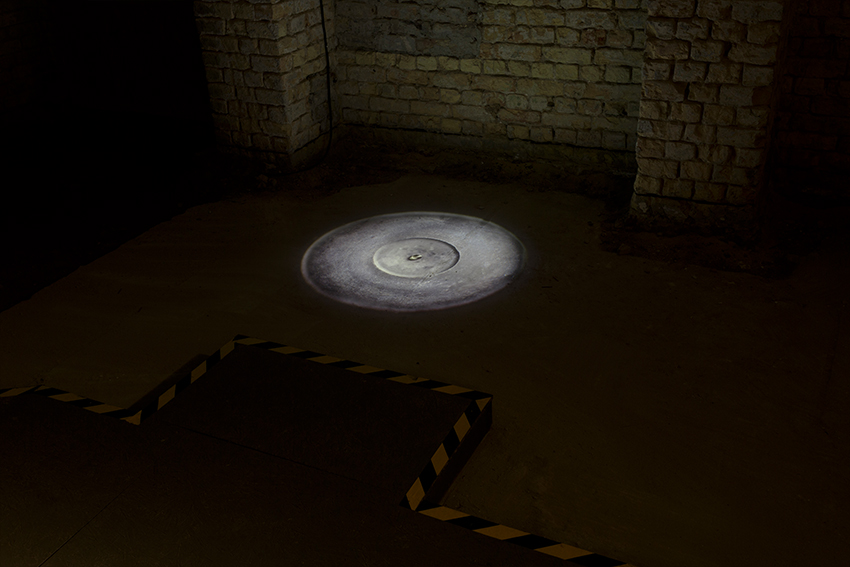
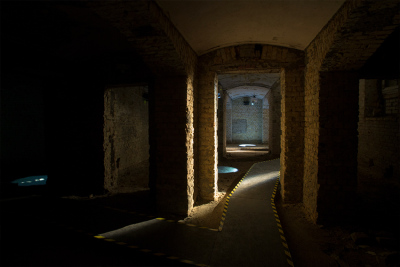
Presented in the basement of K. K. von Strick’s Villa, the installation combines these encounters with sound and light. The underground setting becomes a space for listening and considering the desire for revelation, reassurance and a meaningful existence.
Artist: Katrīna Neiburga
Festival curators: Solvita Krese and Inga Lāce
Organised by: Latvian Centre for Contemporary Art -
ARMPIT: CALIFORNIA EDITION, 2016
Multimedia installation
Coachella Valley Music and Arts Festival, Indio, California, USA
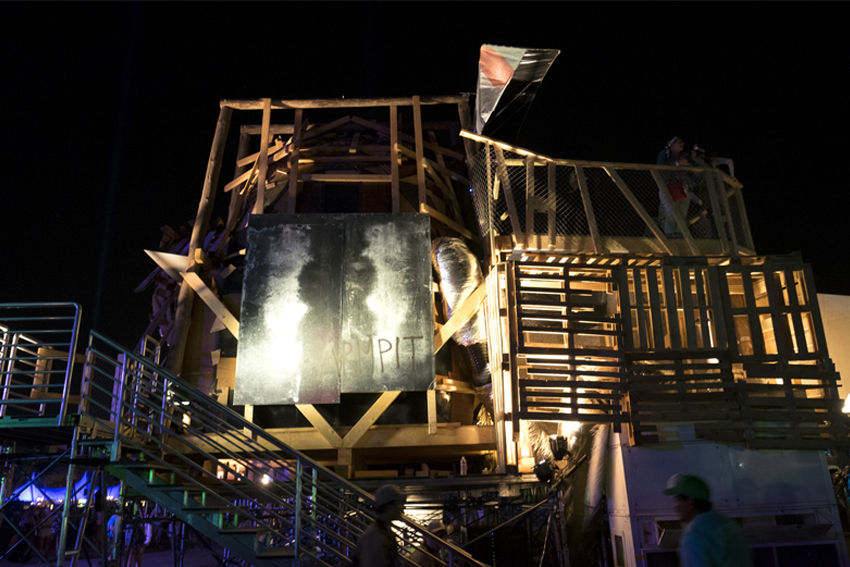
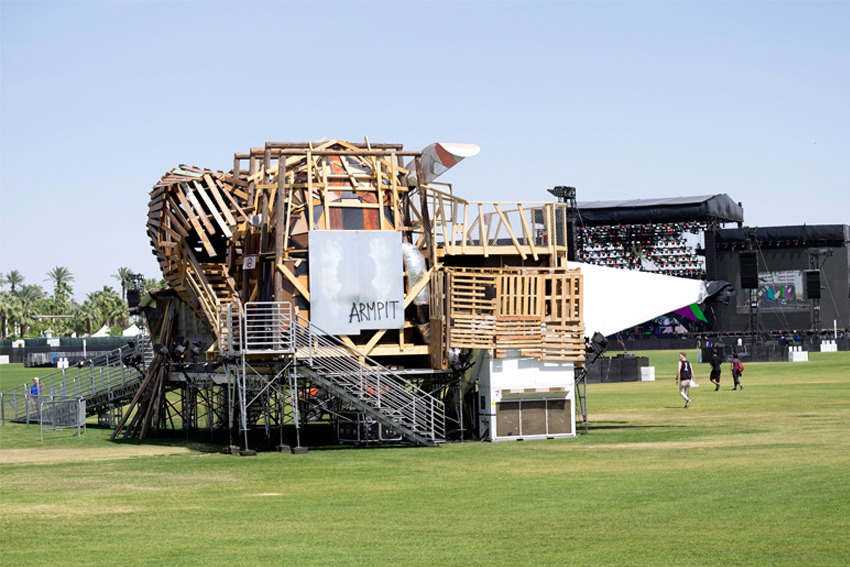
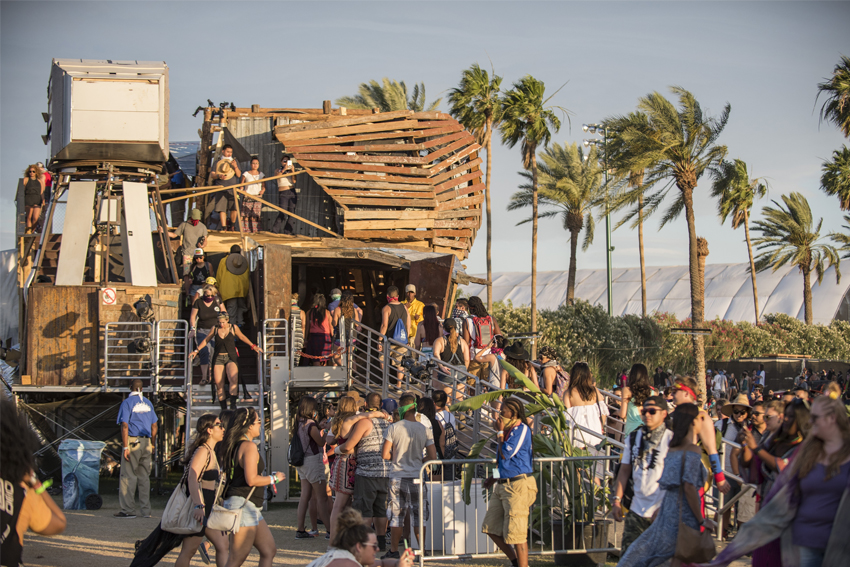
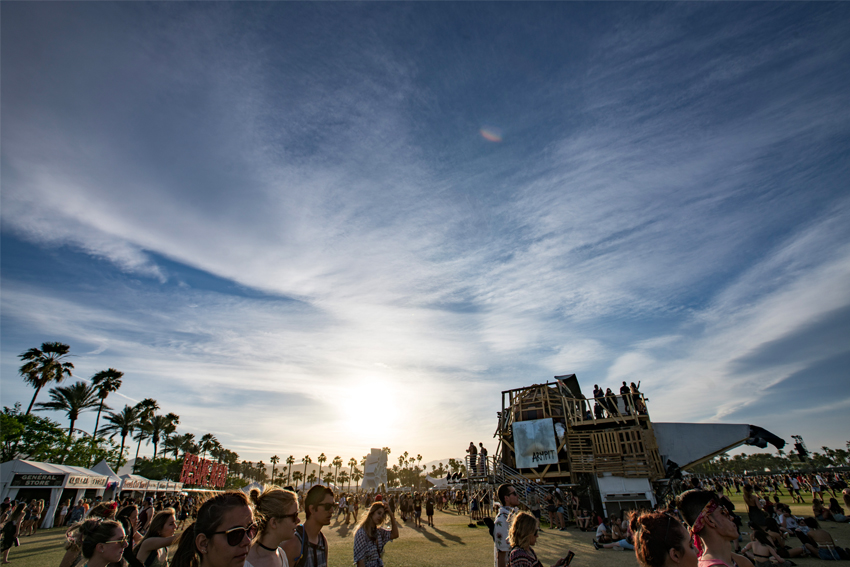
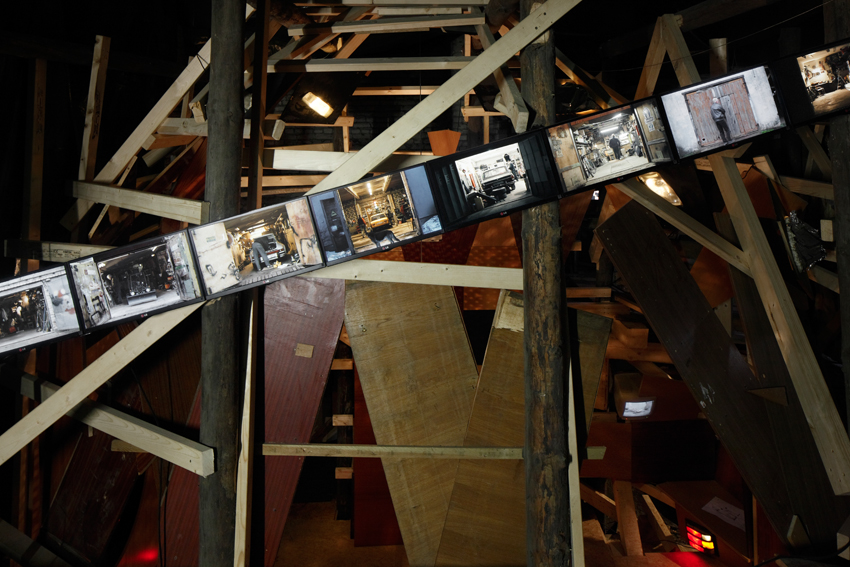
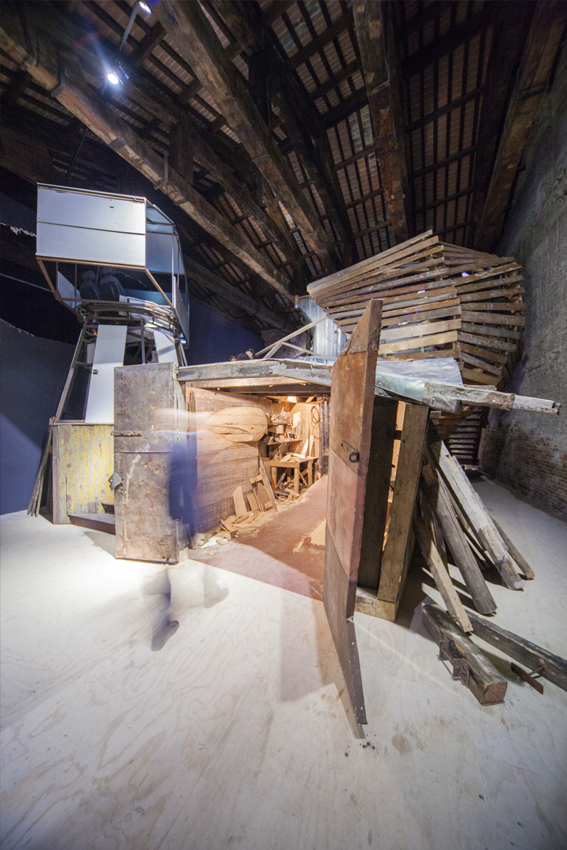
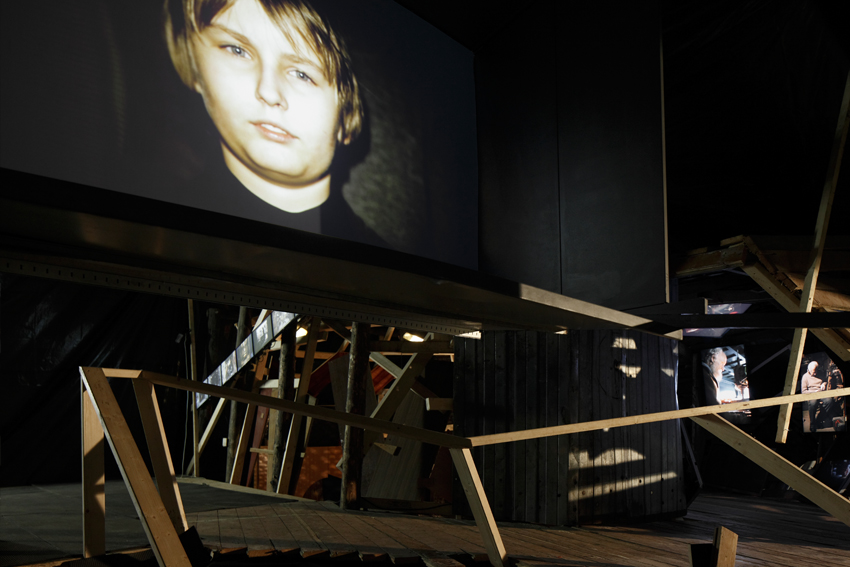
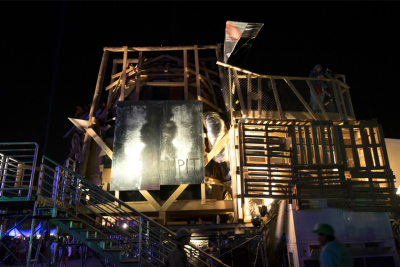
15–17 and 22–24 April 2016A towering, rambling construction of reclaimed timber, salvaged furniture, hidden rooms, screens, and sound, ARMPIT: California Edition brought the intimate world of Latvian garages into the Californian desert. Created by Katrīna Neiburga and Andris Eglītis, the installation grew out of ARMPIT, their collaborative work for the Latvian Pavilion at the 56th Venice Biennale in 2015.
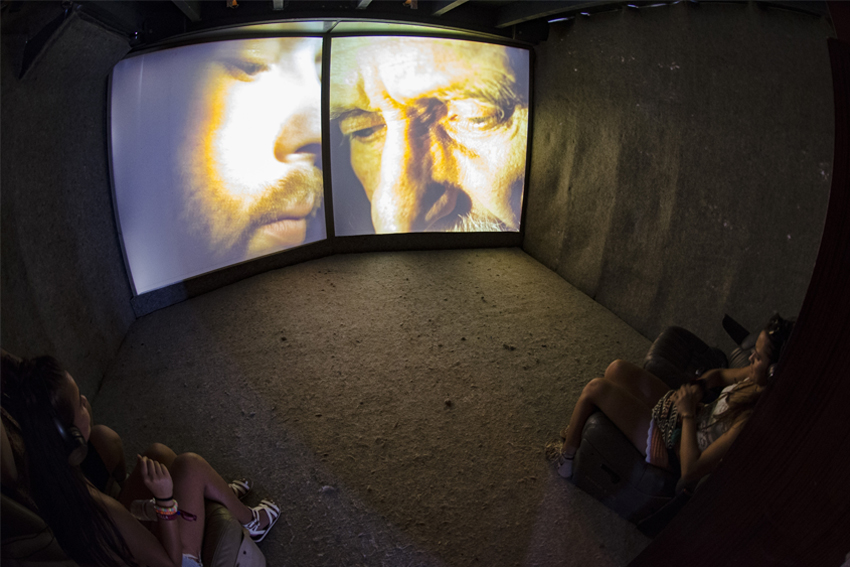
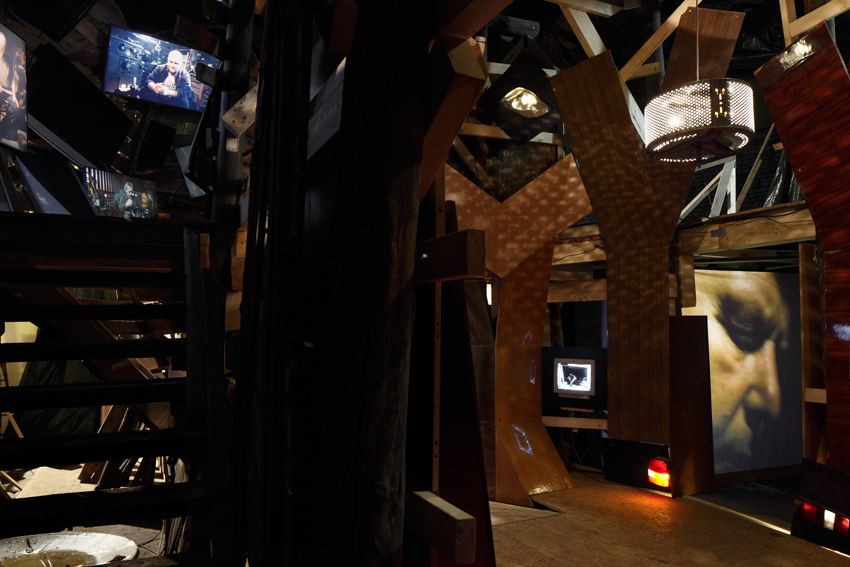
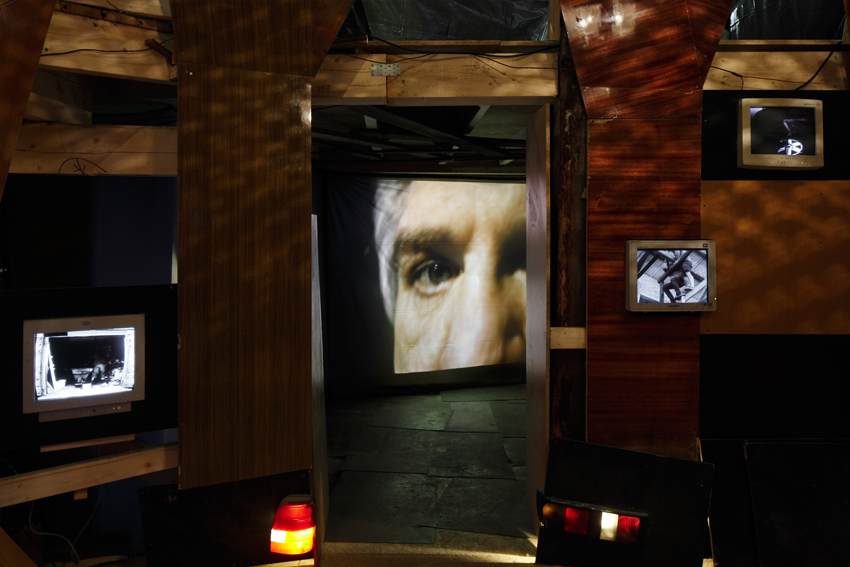
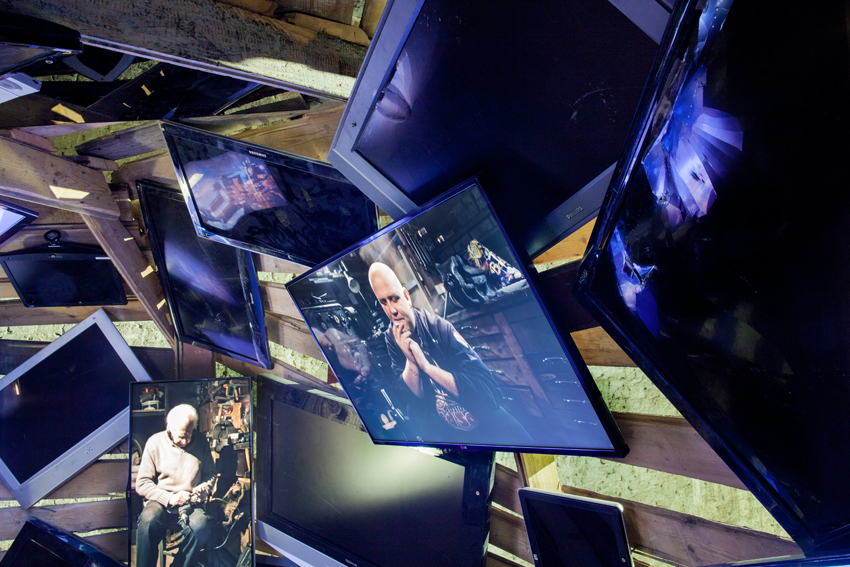
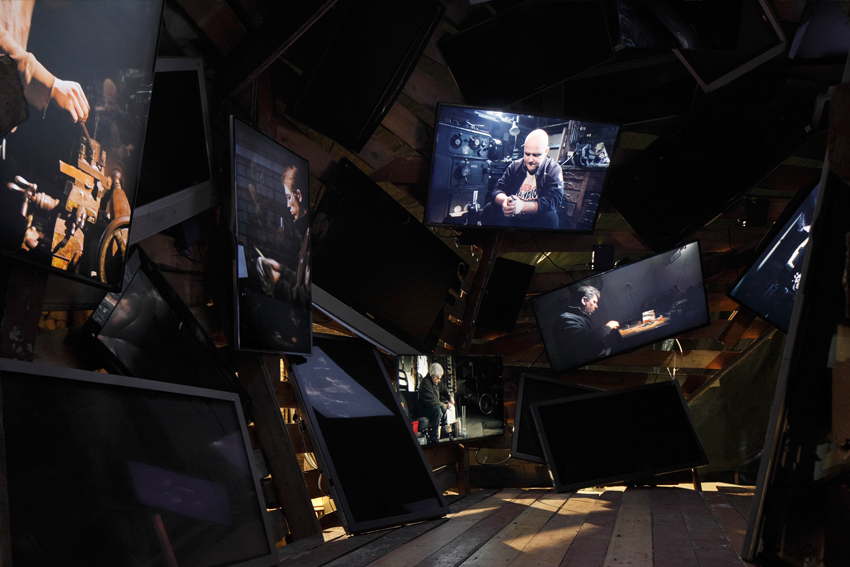
Its starting point was a particular kind of refuge: the garage as workshop, meeting place, and private universe. Here, men repair, invent, collect, and build, giving ordinary materials unexpected possibilities. Neiburga’s filmed encounters with the inhabitants of these spaces formed the installation’s human core, introducing their faces, voices, and everyday rituals into its improvised architecture.
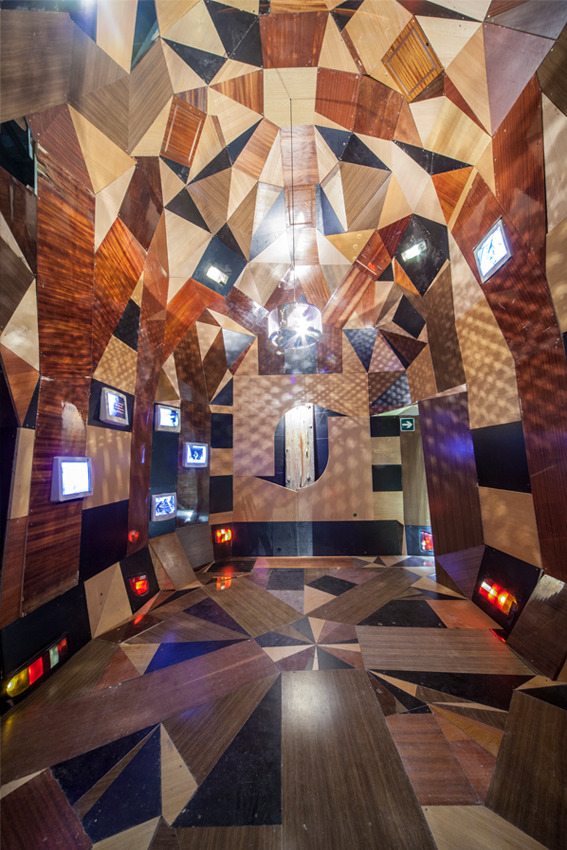
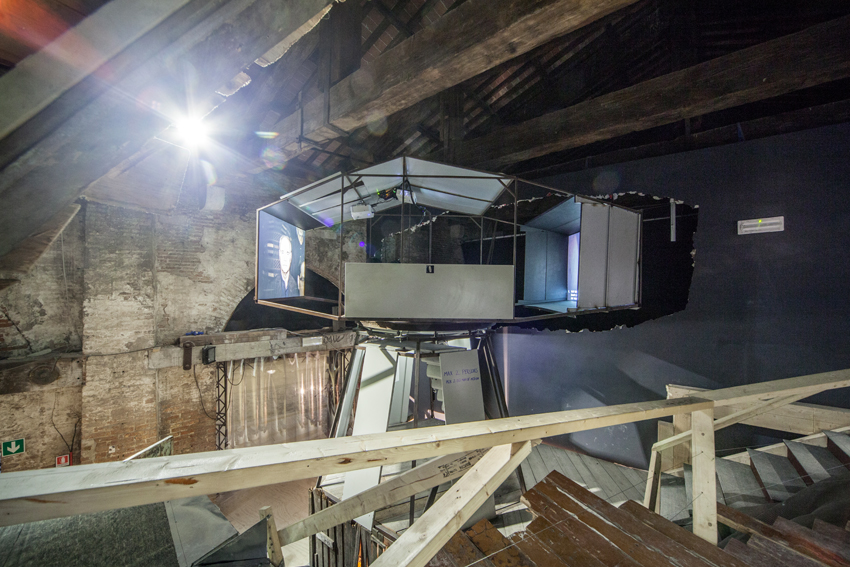
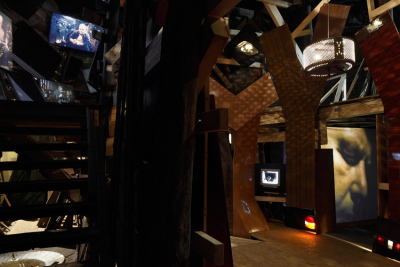
Rising approximately eight and a half metres, the structure unfolded through rooms, passageways, a tower, and terraces. Fifteen monitors embedded in its walls opened windows onto the workshops that inspired it. Part shelter, part improbable machine, part childhood hideout, ARMPIT invited visitors to enter a world assembled through ingenuity, persistence, and the pleasure of making.
Artists: Katrīna Neiburga and Andris Eglītis
Music: Andris Indāns and Shipsi (Jānis Šipkēvics), with the Riga Cathedral School boys’ choir and the male choir Gaudeamus
Produced by: Latvian Centre for Contemporary Art -
ARMPIT, 2015
Multimedia installation
Latvian Pavilion, 56th International Art Exhibition, La Biennale di Venezia
Arsenale, Venice, Italy
9 May–22 November 2015Behind the doors of Latvia’s garage cooperatives lies a world of improvised workshops, ingenious machines, accumulated objects, and private rituals. Built during the Soviet period, these spaces have outlived the economic system that produced them, becoming places where work, leisure, invention, and retreat are inseparable.
Created by Katrīna Neiburga and Andris Eglītis, ARMPIT brought this hidden world into the Latvian Pavilion at the Venice Biennale. A sprawling wooden construction interwoven with video and sound became a passage into the lives of men who spend their days repairing, dismantling, and making. Neiburga’s filmed encounters revealed the personalities and routines inhabiting these workshops, while the installation’s architecture translated their improvised environments into a world visitors could physically enter.
The sounds of labour acquired human voices. A composition by Andris Indāns and Jānis Šipkēvics, performed by boys’ and men’s choirs, transformed workshop noises into a dialogue between childhood play and adult endeavour.
Moving between documentary observation and an imagined habitat, ARMPIT explored the intimacy of making: the pleasure of understanding a mechanism, the stubborn refusal to discard something, and the freedom to construct a small universe according to one’s own rules.
Artists: Katrīna Neiburga and Andris Eglītis
Curator: Kaspars Vanags
Commissioner: Solvita Krese
Architect: Austris Mailītis
Sound artists: Andris Indāns and Jānis Šipkēvics (Shipsi)
Choirs: Riga Cathedral Boys’ Choir and Riga Technical University male choir Gaudeamus
Commissioned by: Ministry of Culture of the Republic of Latvia
Organised by: Latvian Centre for Contemporary Art -
UNTITLED, 2014
Video and sound installation
Survival Kit 6: Utopian City
Former Boļševička textile factory, Riga, Latvia
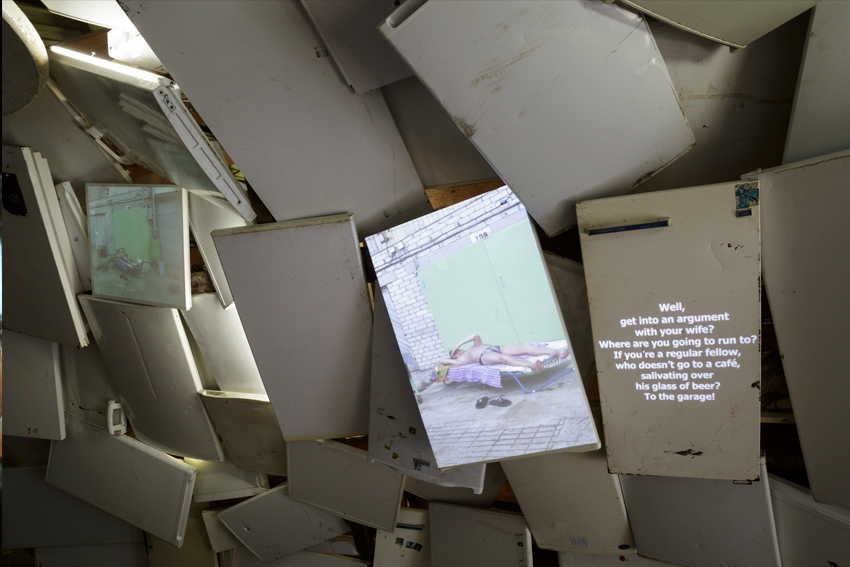
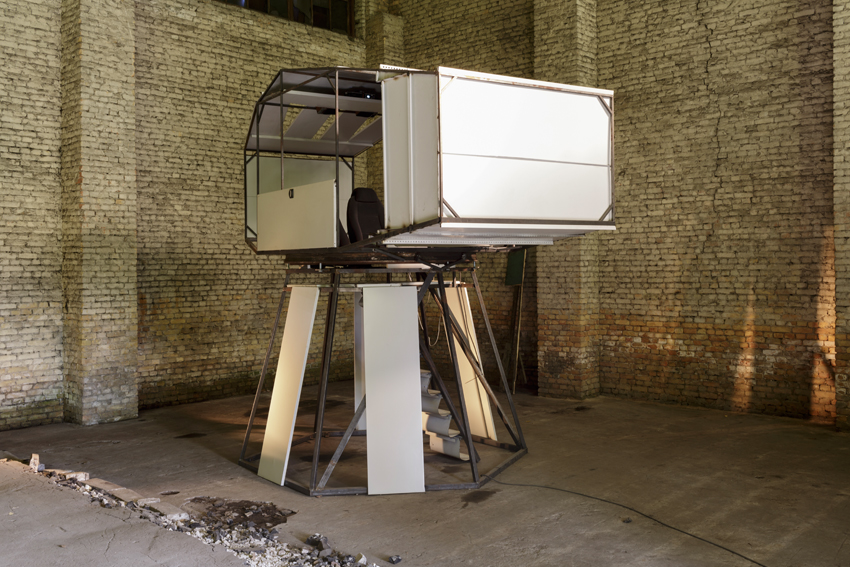
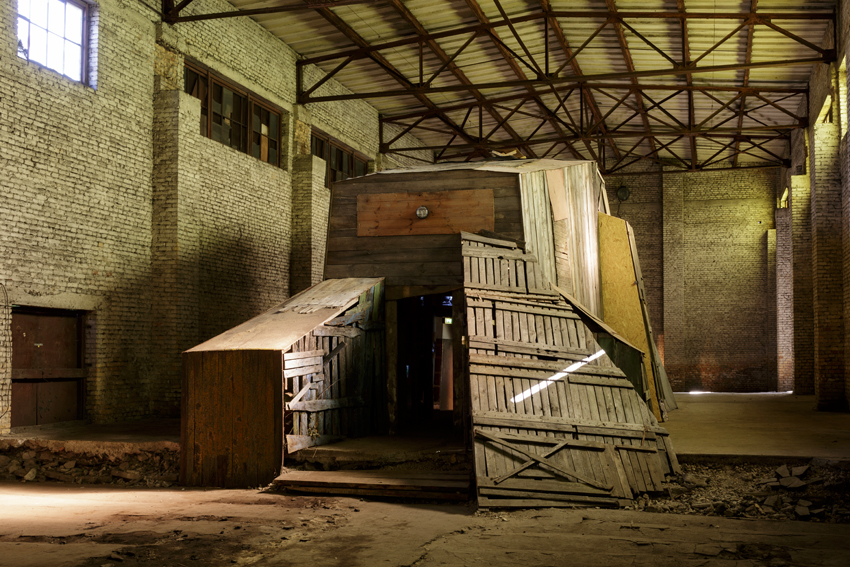
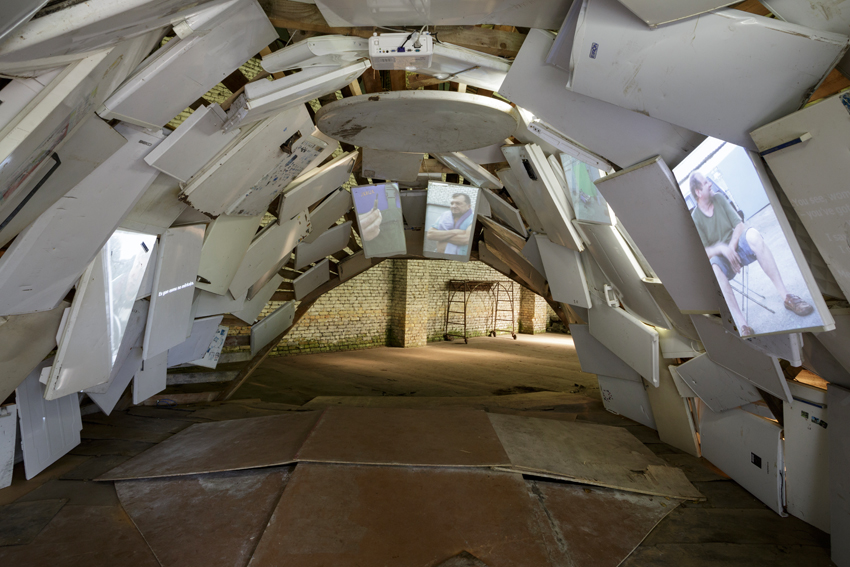
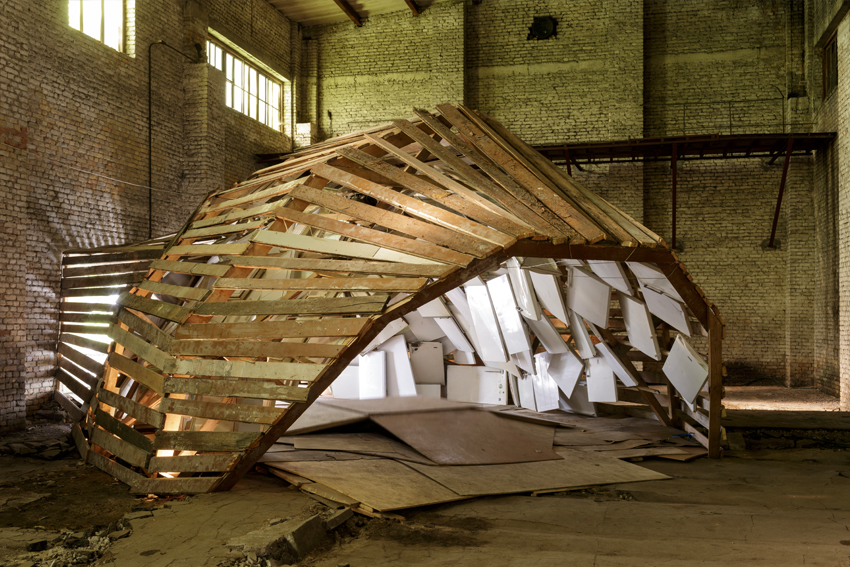
4–27 September 2014A house built from discarded refrigerators might sound improbable. In the world of UNTITLED, it becomes a perfectly serious proposition: a problem of insulation, construction, and finding the right combination of parts. Such inventive thinking opens a window onto the private worlds of men who turn their garages into workshops, laboratories, and places of retreat.
Created by Katrīna Neiburga and Andris Eglītis, the installation combines video, sound, and a spatial environment to explore the relationship between technical ingenuity and personal freedom. Filmed encounters reveal men absorbed in mechanisms, repairs, and their own elaborate ideas. Their workshops are places where practical knowledge meets imagination, and where making something can be both a means of survival and a source of pleasure.
Drawing on the visual language of sacred architecture, the installation gives these modest spaces an unexpected grandeur. The garage becomes a kind of temple to everyday invention, honouring the concentration, resourcefulness, and satisfaction of working with one’s hands.
Artists: Katrīna Neiburga and Andris Eglītis
In collaboration with: Andris Indāns
Assistant: Jānis JasinskisRecognition: Nominated by the Purvītis Prize expert panel for the third quarter of 2014.
-
BEFORE AND AFTER, 2014
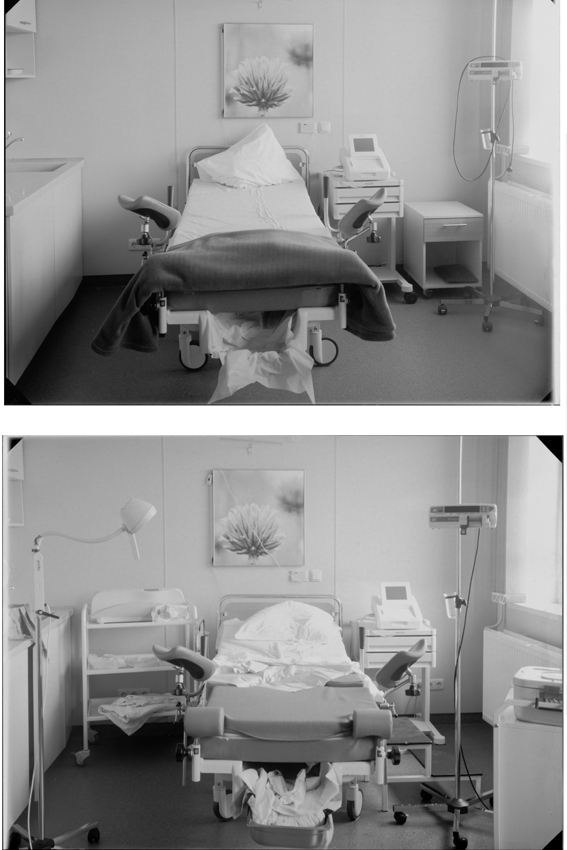
Before–After. Girl, 3850 g, 20:30; Girl, 3850 g, 09:54 / 2014
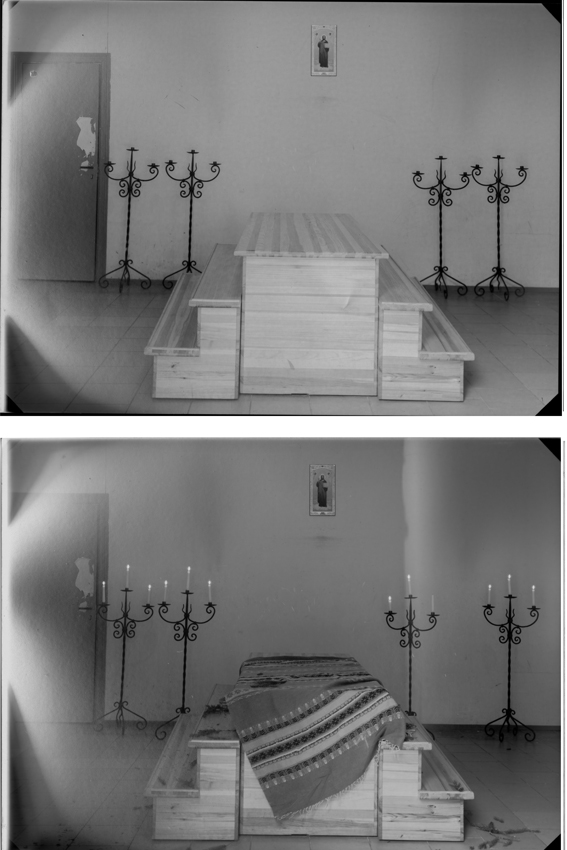
Before–After. Woman, 88 years, 13:00; Woman, 88 years, 13:25 / 2014
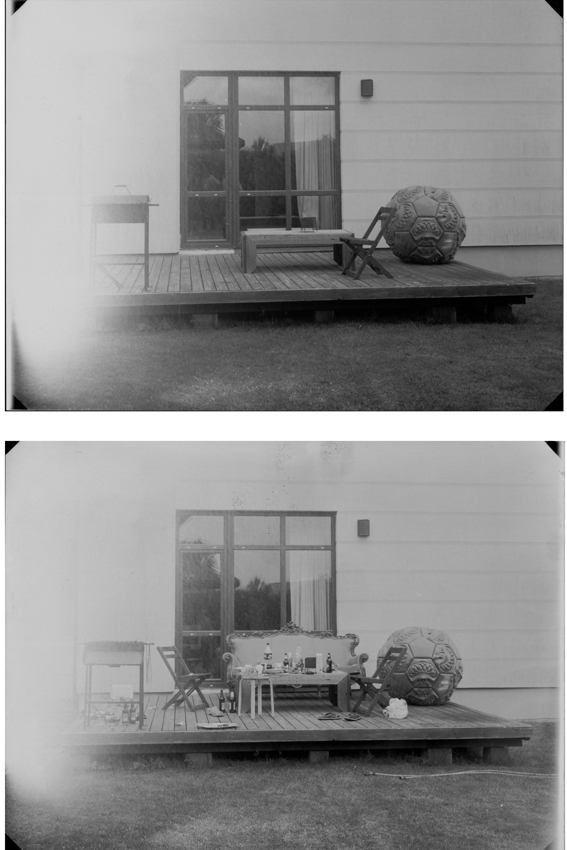
Before–After. Rest with Quarrel, t° 28, 12:00; Rest with Quarrel, t° 28, 14:00 / 2014
Before–After. Girl, 3850 g, 20:30; Girl, 3850 g, 09:54 / 2014
Before–After. Woman, 88 years, 13:00; Woman, 88 years, 13:25 / 2014
Before–After. Rest with Quarrel, t° 28, 12:00; Rest with Quarrel, t° 28, 14:00 / 2014
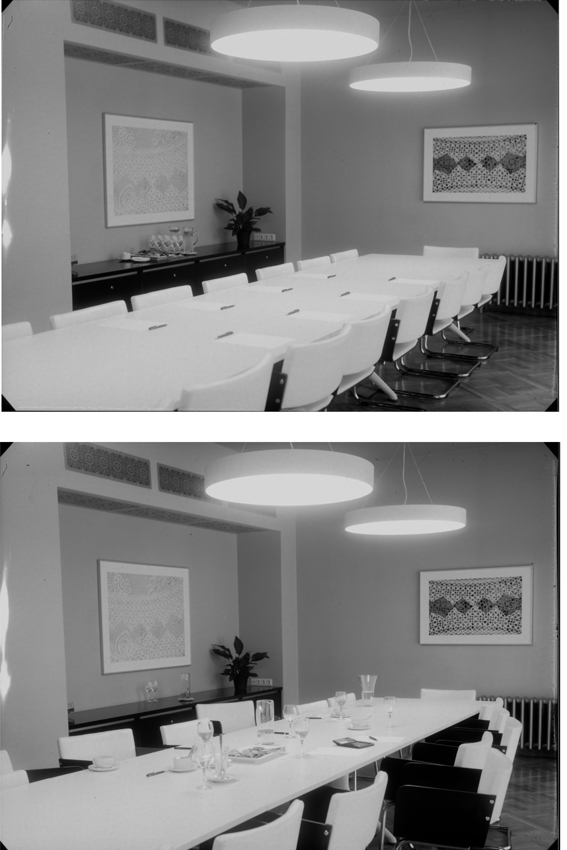
Before–After. Decision, 8 556 087 EUR, 11:30; Decision, 8 556 087 EUR, 14:00 / 2014
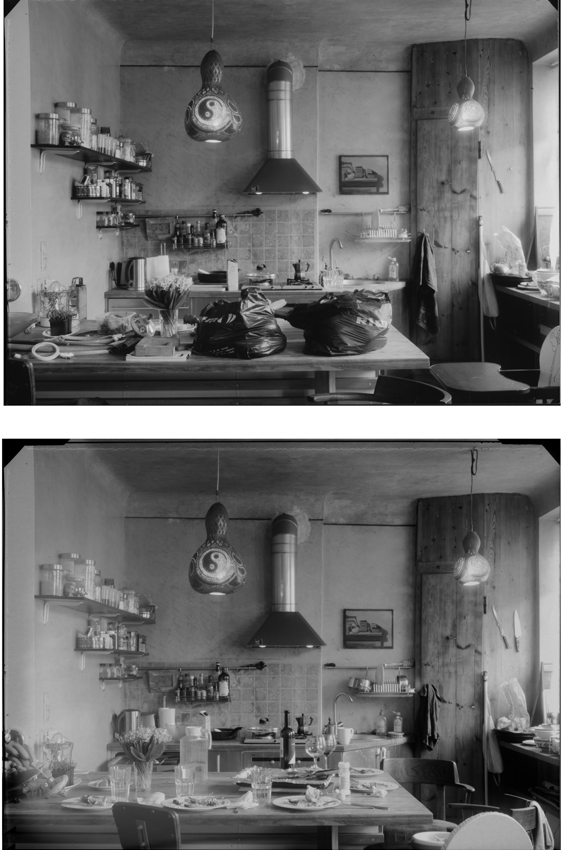
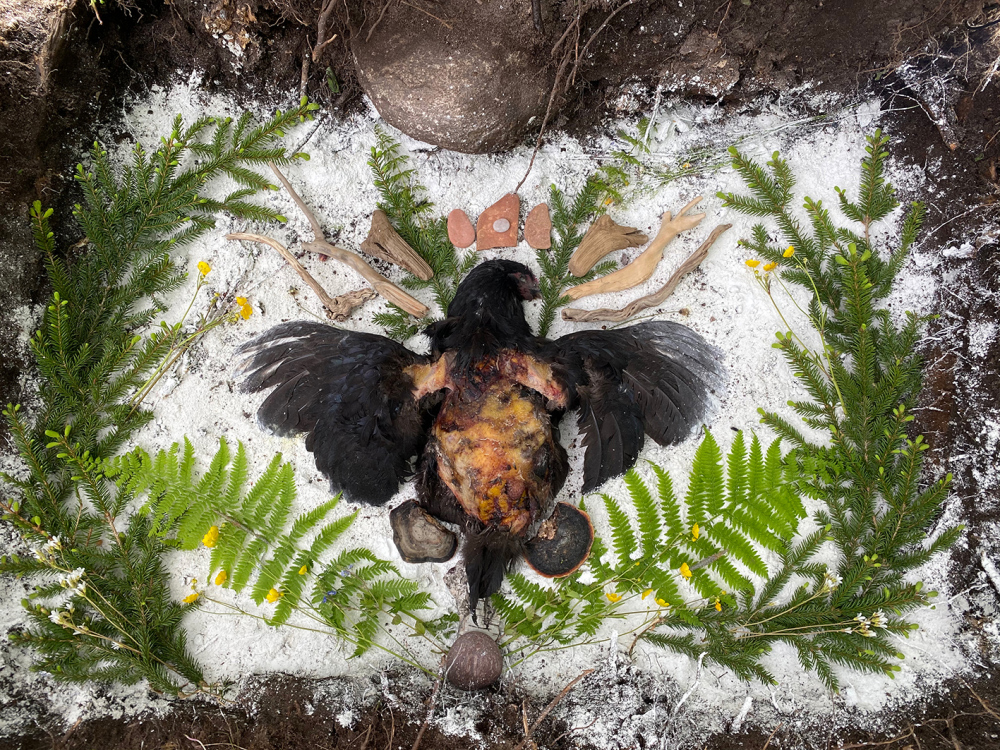
Before–After. Chicken, 1800 g, 14:00; Chicken, 1800 g, 16:15 / 2014
-
1
Before–After. Girl, 3850 g, 20:30; Girl, 3850 g, 09:54 / 2014
-
2
Before–After. Woman, 88 years, 13:00; Woman, 88 years, 13:25 / 2014
-
3
Before–After. Rest with Quarrel, t° 28, 12:00; Rest with Quarrel, t° 28, 14:00 / 2014
-
4
Before–After. Decision, 8 556 087 EUR, 11:30; Decision, 8 556 087 EUR, 14:00 / 2014
-
5
Before–After. Chicken, 1800 g, 14:00; Chicken, 1800 g, 16:15 / 2014
- 6
Photographic series
Large-format photography, 10 × 12-inch plates
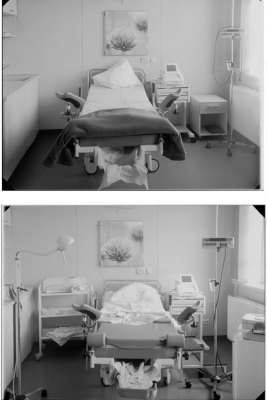
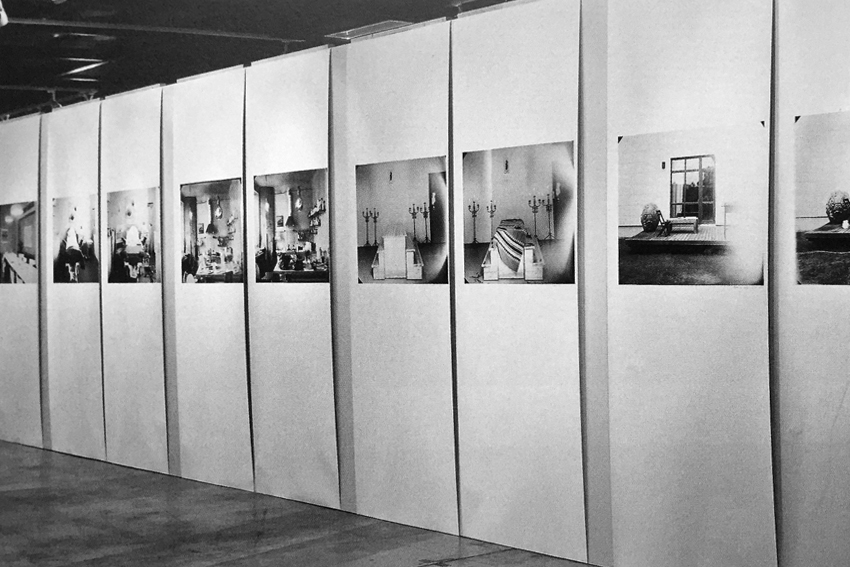
Riga Art Space, Riga, LatviaWhat does an event leave behind? BEFORE AND AFTER brings together pairs of photographs taken in the same place, separated by something that has happened there. The event itself remains outside the frame, held in the interval between the images.
A birth, an encounter, a decision, the preparation of a meal: moments of different significance are approached through the spaces and objects surrounding them. Titles record times, weights, ages, and sums of money, offering precise clues while leaving much of the story untold.
The viewer is invited to look for traces: a displaced object, a changed arrangement, a detail that suddenly seems meaningful. Yet visible differences cannot fully explain what has occurred. A room may look almost unchanged even when someone’s life has been transformed.
Working with large-format plate photography, Neiburga turns attention towards this uncertain relationship between appearance and experience. The photographs hold two moments still, leaving the viewer to imagine the time, actions, and emotions connecting them.
-
1
-
MEMORY OF THINGS, 2012
Multimedia installation
Video, sound, and objects
First presented as a solo exhibition at Kim? Contemporary Art Centre, Riga, Latvia
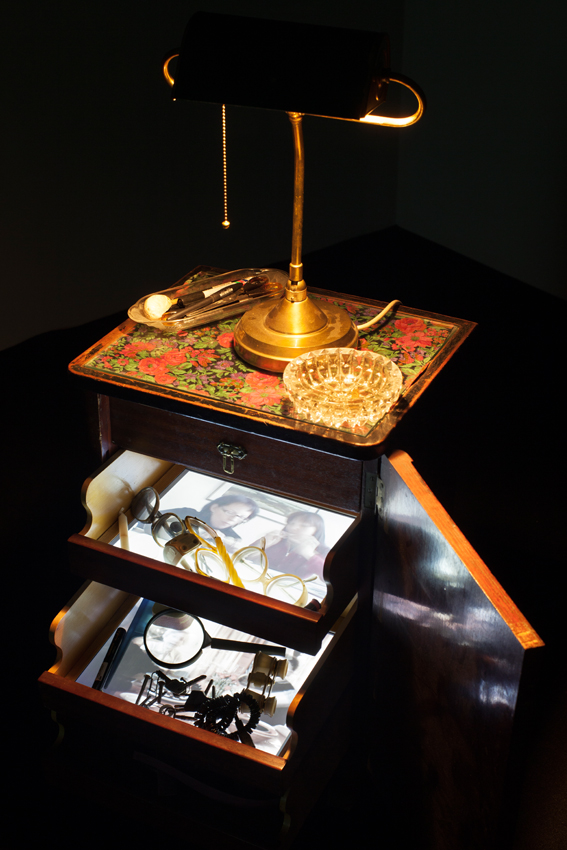
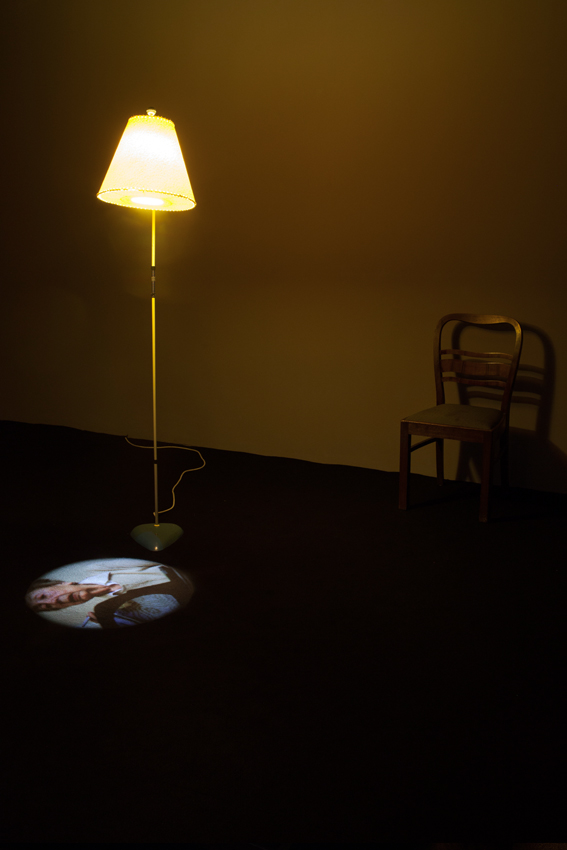
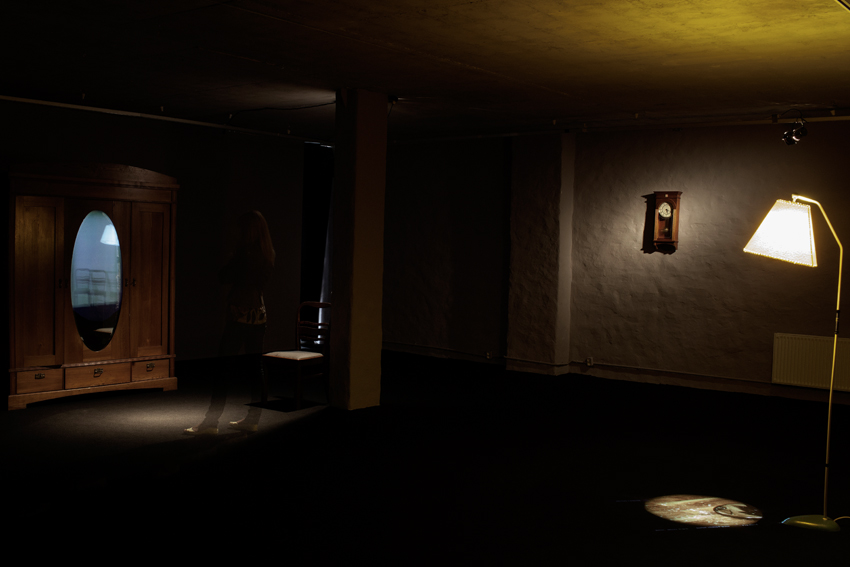
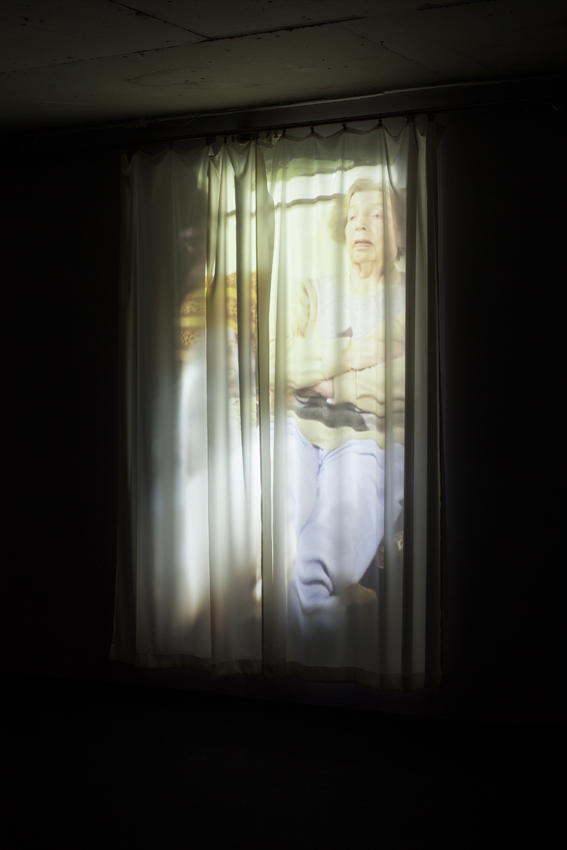
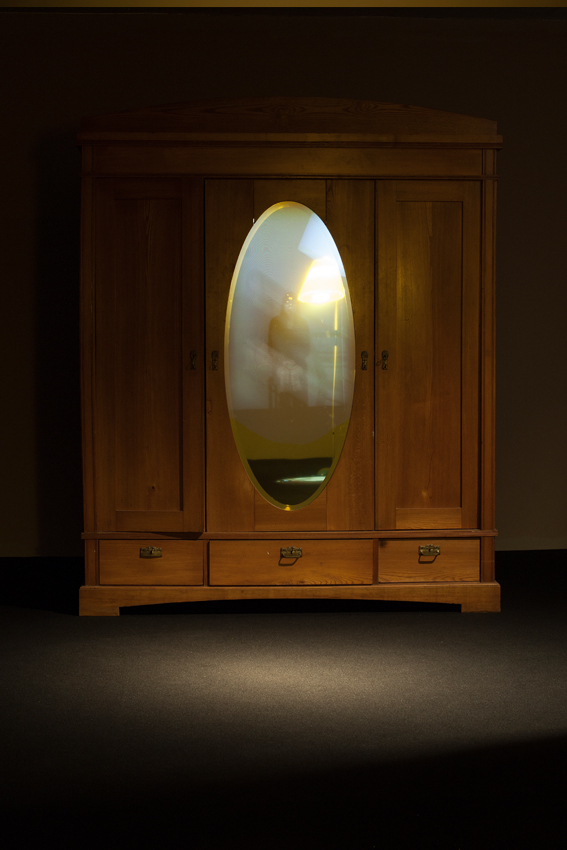
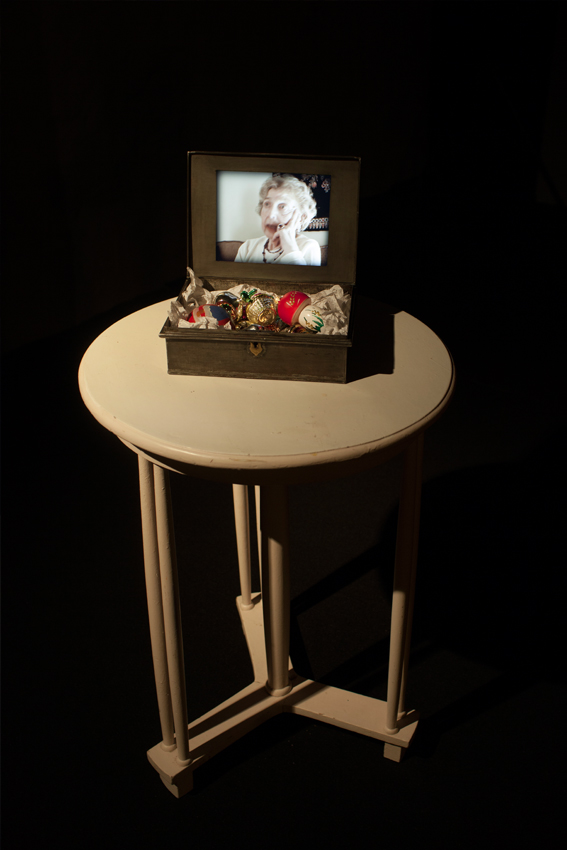
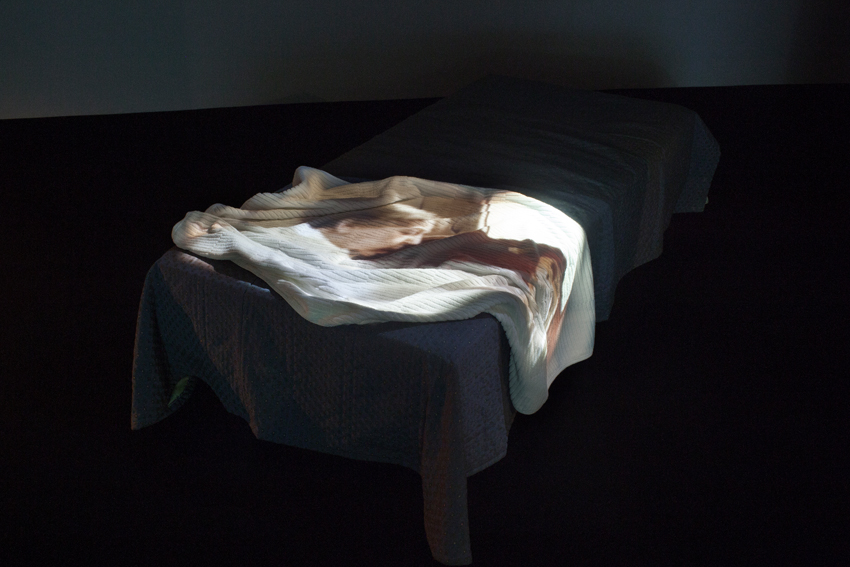
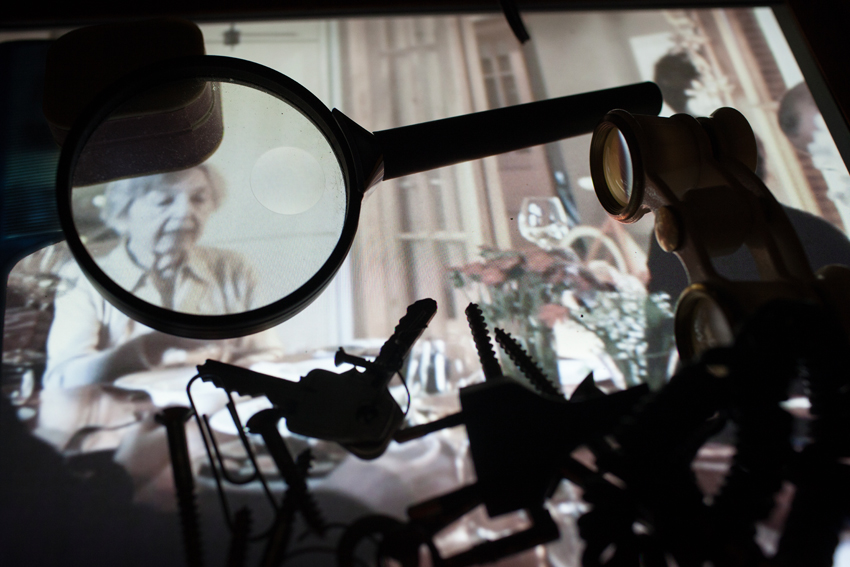
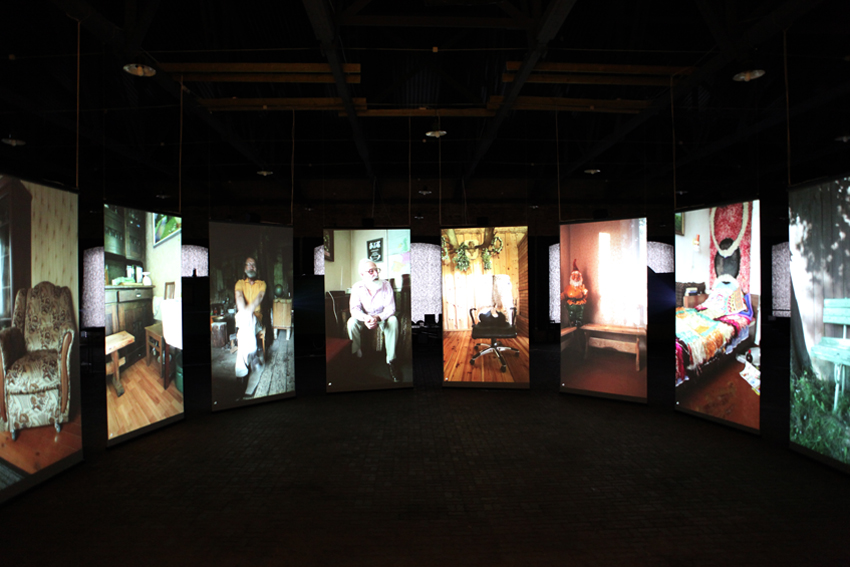
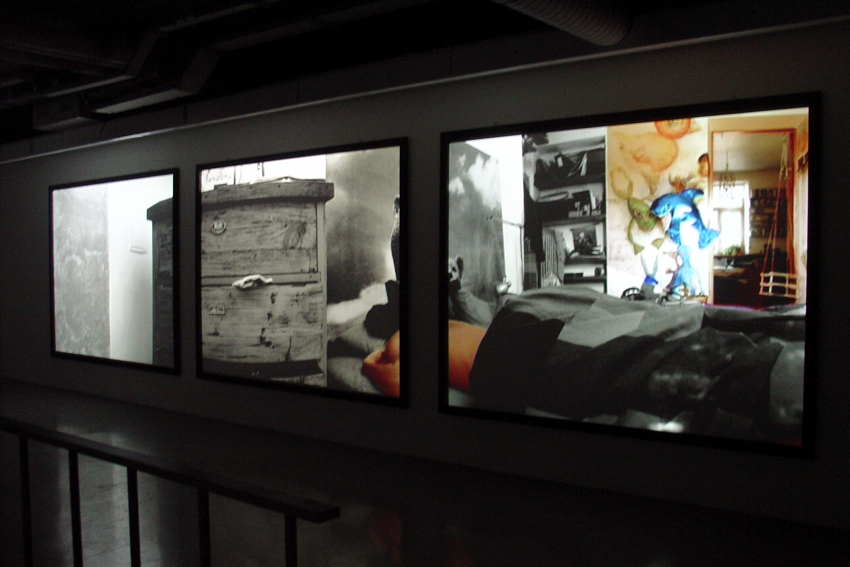
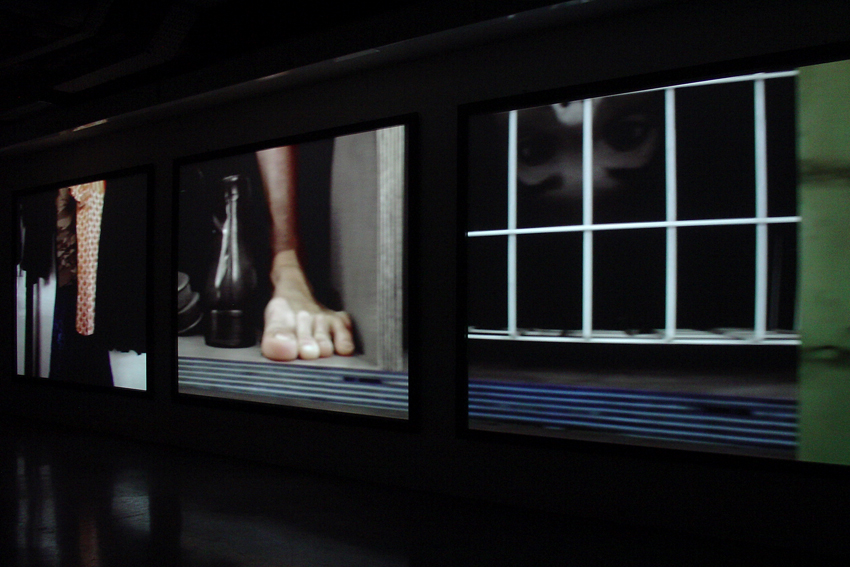
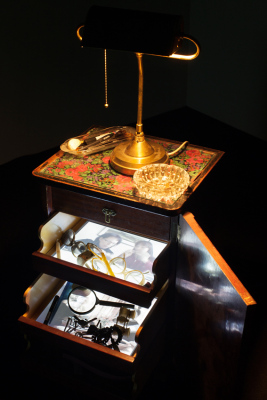
16 August–23 September 2012What might the objects around us remember? A wardrobe, a lamp, a bedside table, a small box, and curtains become witnesses to the lives unfolding in their presence. In MEMORY OF THINGS, familiar household objects carry moving images and voices, transforming a domestic interior into an intimate encounter with three generations of women.
Drawing on her own family life, Katrīna Neiburga brings together herself, her mother, the writer Andra Neiburga, and her grandmother, Astrīda Neiburga. Conversations, meals, moments spent looking in mirrors, and shared rituals of bodily care reveal the closeness, humour, and complexity of their relationships. Among these rituals is the monthly visit of a pedicurist who tends to all three women, connecting their different ages through touch, care, and the physical traces of their bodies.
Seven video works, accompanied by sound by Andris Indāns, inhabit the exhibition’s objects. Images appear on their surfaces, giving each an imagined viewpoint on the people who live alongside it. The viewer encounters a home through fragments, following gestures and voices between furniture, reflections, and darkness.
At the heart of the work is the difficulty of truly listening to those closest to us. Familiarity can make another person’s experiences seem secondary to our own. MEMORY OF THINGS asks us to pause and recognise the fullness of these neighbouring lives, each with its own desires, memories, and sense of the present.
The installation holds onto everyday moments whose significance can be difficult to recognise while they are happening. Through objects, images, and recorded voices, the passing life of a household becomes something we can return to and attend to again.
Following its first presentation in Riga, MEMORY OF THINGS was exhibited internationally, including in Moscow and in a collateral exhibition of the 56th Venice Biennale in 2015. The installation is held in the collection of the Latvian National Museum of Art.
Artist: Katrīna Neiburga
Sound: Andris Indāns
Featuring: Katrīna Neiburga, Andra Neiburga, and Astrīda Neiburga
Collection: Latvian National Museum of Art -
PRESS HOUSE, 2011
Three-channel video installation with surround sound
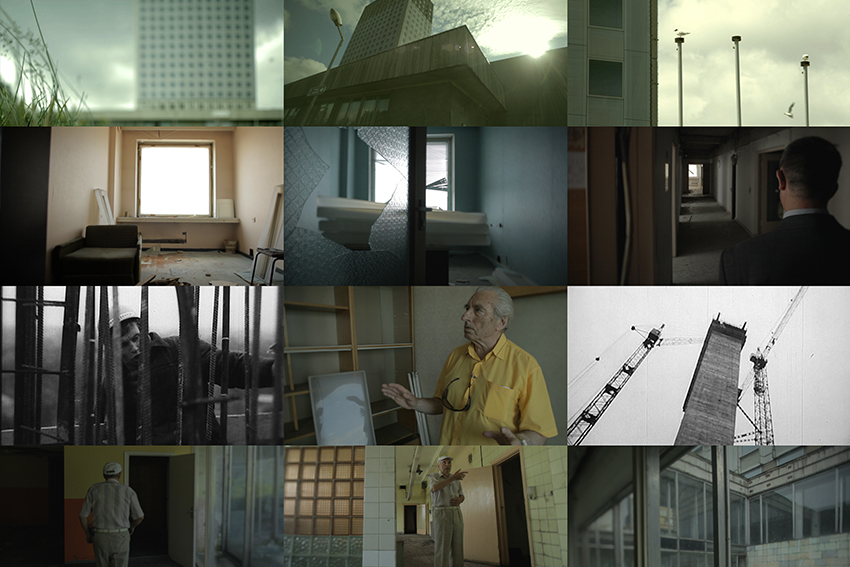
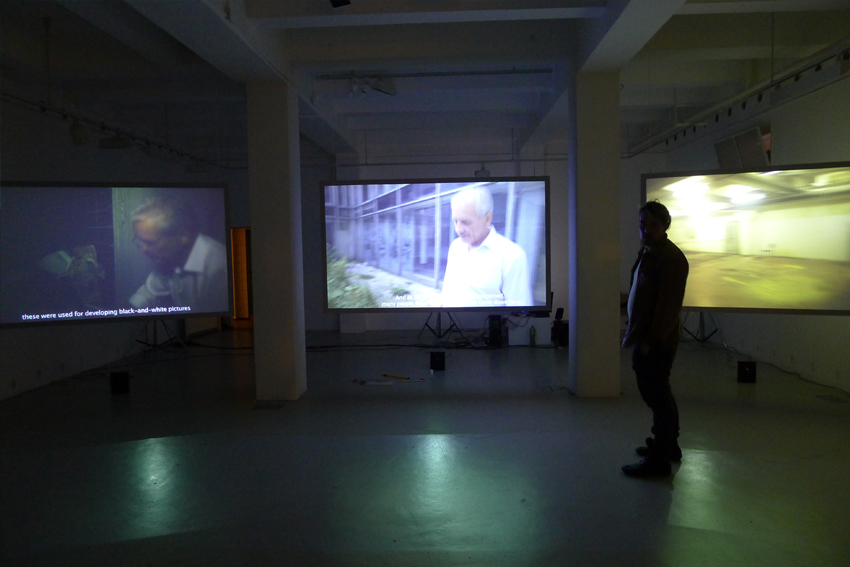
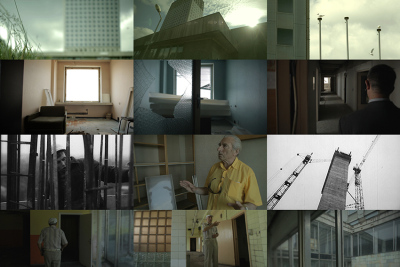
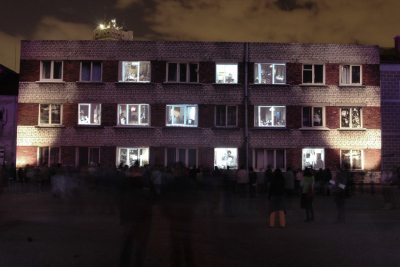
An abandoned building becomes the meeting place of personal memory and political history. PRESS HOUSE returns to Riga’s former publishing and printing complex, once filled with newspaper offices, editorial meetings, machinery, cigarette smoke, and the daily routines of the people who worked there.
Katrīna Neiburga invites former employees to revisit their workplaces. Editors, a photographer, a concierge, kitchen staff, and the building’s former director recall its rooms, relationships, and unwritten rules. Their accounts reveal the humour, ambition, compromises, and absurdities of working within the Soviet press, alongside experiences of censorship and political change.
For Neiburga, the building also holds childhood memories. Both her parents worked there, and her school newspaper was printed in its workshops with the help of poet and editor Inese Zandere. Its enormous lifts, staircases, corridors, and smoke-filled café formed a world she knew long before returning with a camera.
Across three synchronised screens, the camera moves through emptied interiors while voices restore fragments of their former life. Different spaces and recollections coexist, allowing the building to emerge as both a physical structure and a collective portrait.
PRESS HOUSE follows the uneasy relationship between what remains and what has disappeared. The architecture survives, but the world that gave it meaning has changed. Through encounters with its former inhabitants, the installation makes room for conflicting memories, affection, irony, and the unsettling awareness that even the busiest places can fall silent.
Artist: Katrīna Neiburga
Selected presentations:
Survival Kit 3, Riga, Latvia, 2011
HIAP Cable Gallery, Helsinki, Finland, 26 April–20 May 2012
Trafó Gallery, Budapest, Hungary, 11 May–17 June 2012 -
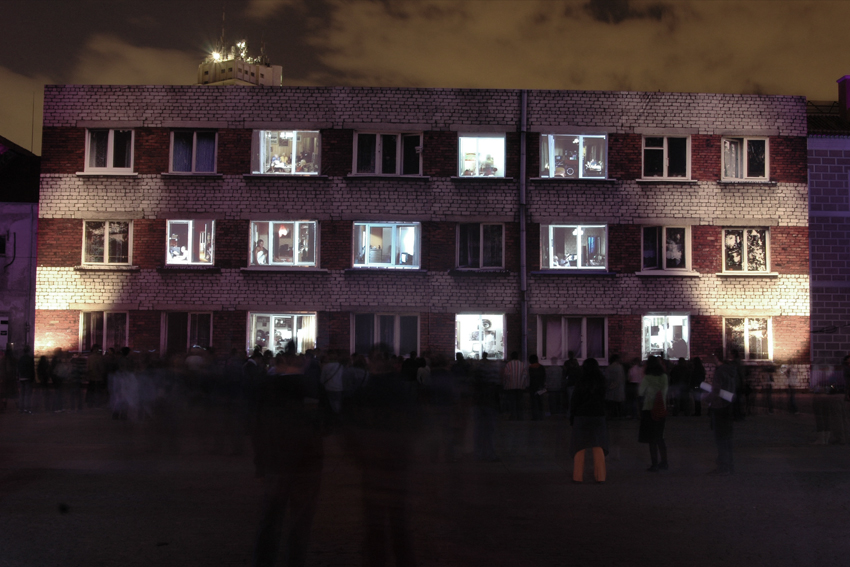
IN REALITY, 2010, video installation on 8 screens, Latvian Railway History Museum, Riga, Latvia
-
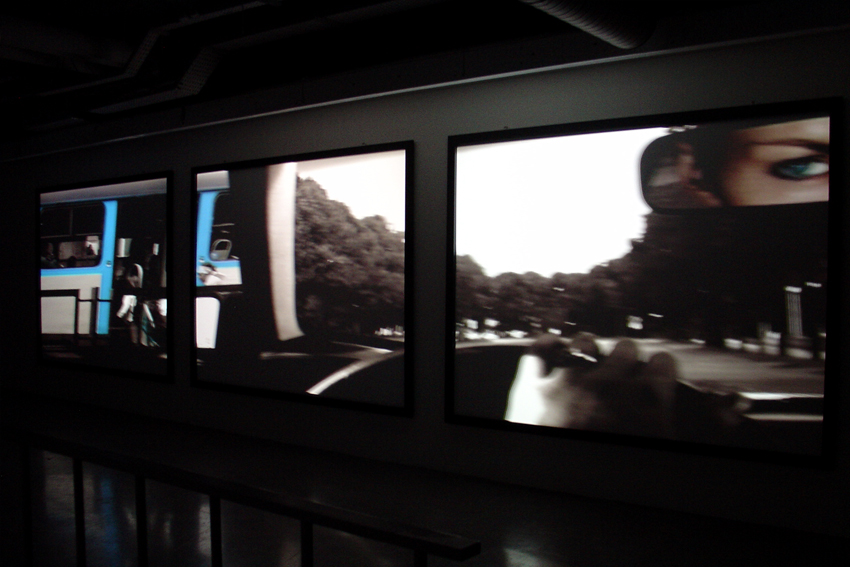
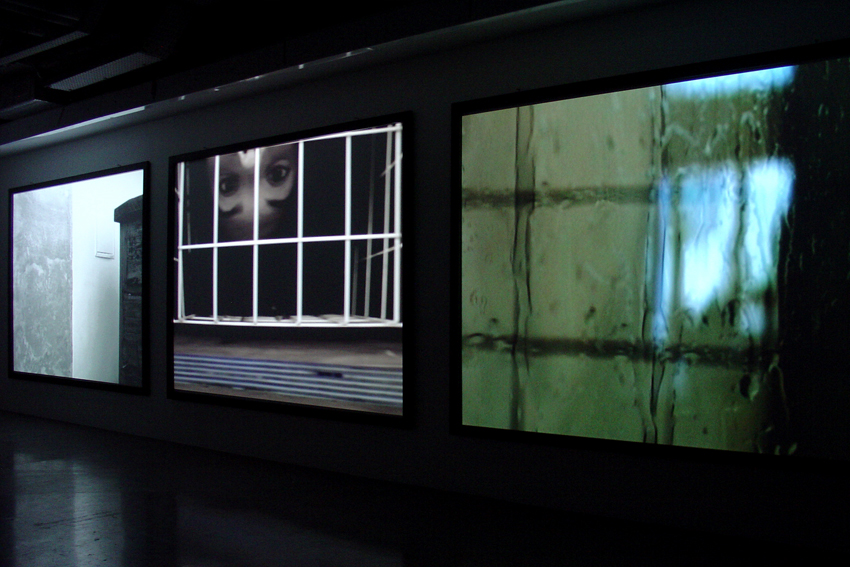
STRUCTOR STREET, video installation on 10 screens, digital print, 2006, Madrid, Spain
-
SOLITUDE, video installation on 3 screens, 2005, Gallery Le Plateau, Paris, France
What I have created this time is very intimate. It’s about universe of objects in which a person appears once in a while- a woman kept captive in the
order of the material world. The living woman sometimes seems more unreal than, say, a closet, a vase or a dish on a table to me, her essence as
impenetrable as that of an inanimate object. The film attempts to feel out any evidence of her existance and yet- what it does bear witness to most of all
is her loneliness, the secret of each and every human being, never ever reached by the sound of the world around. We are all of us alone- and always.
Even your own child needs you as long as it’s physically incaable to deal with the world. This is not a shocking ar a novel revelation- but it’s very important,
recognisable and as ancient as the world itself.Text by Katrīna Neiburga
-
SPAMATREX, 2005, Macedonian Museum of Contemporary Art, Thessaloniki, Greece
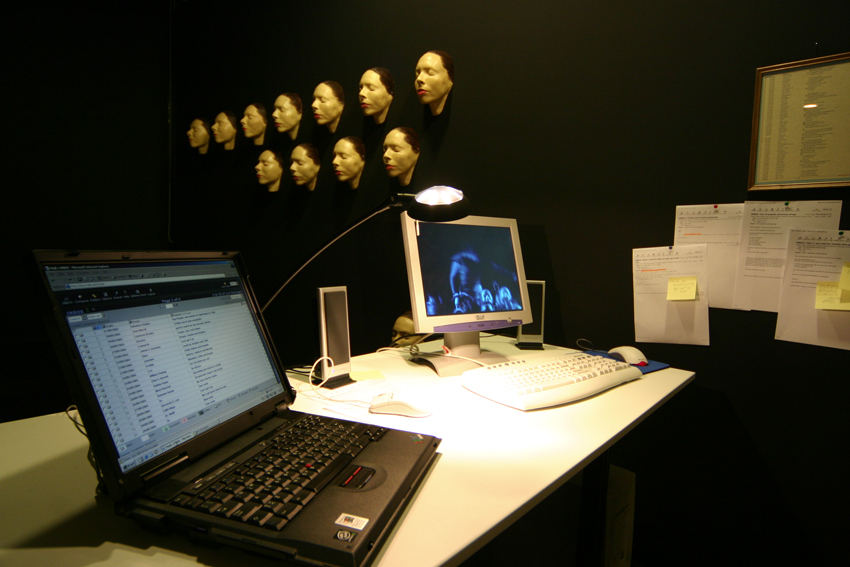
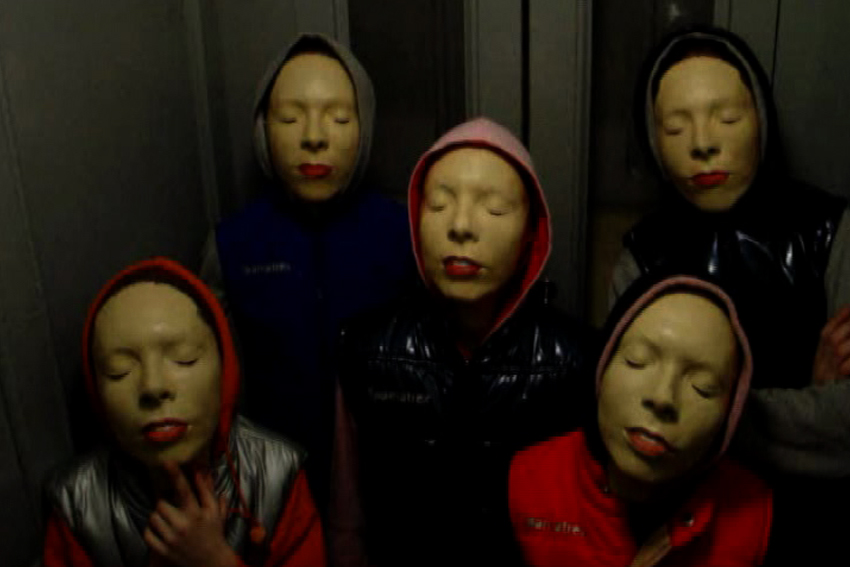
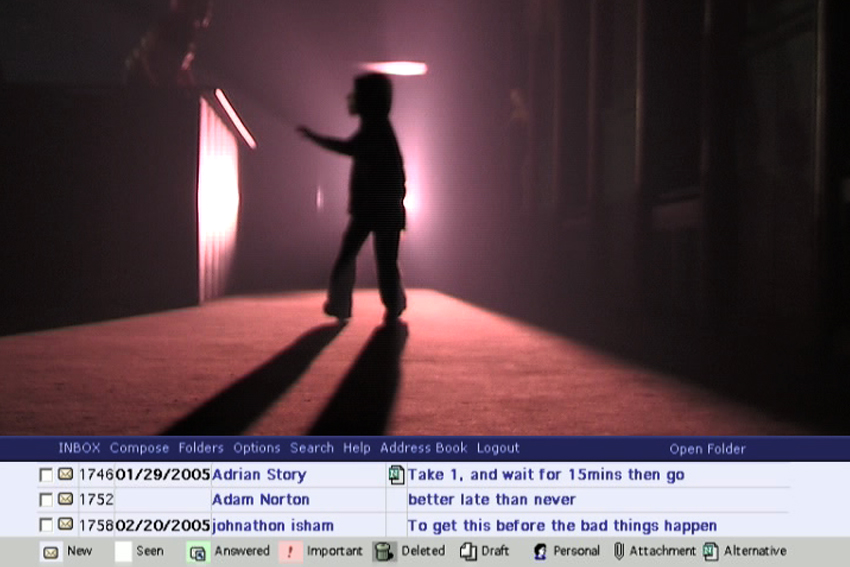
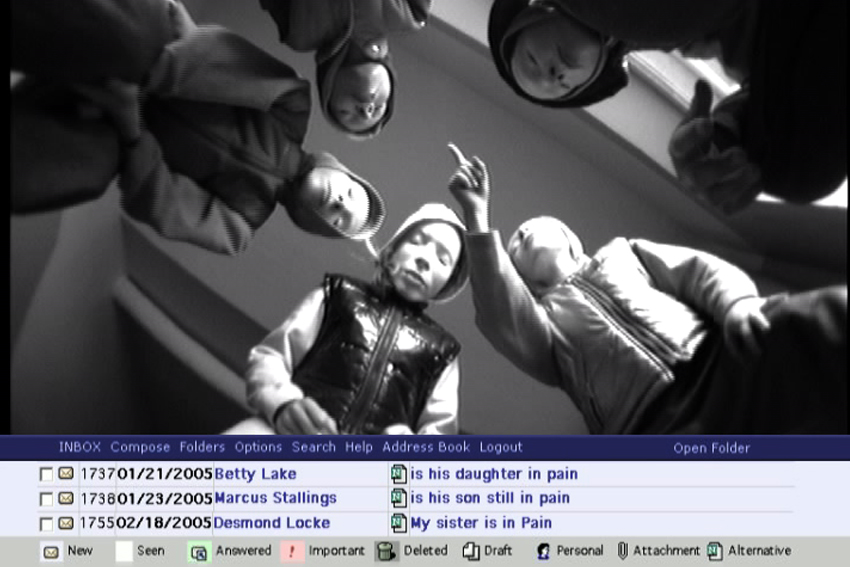
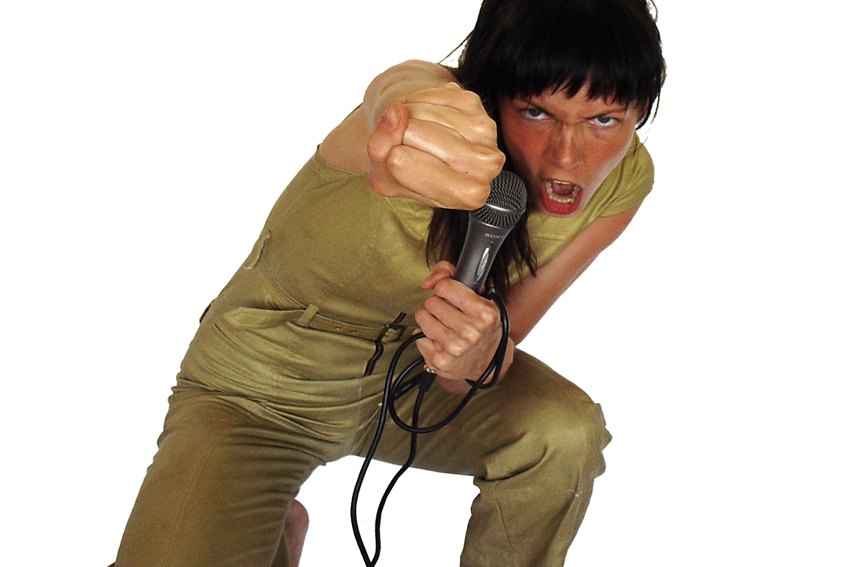
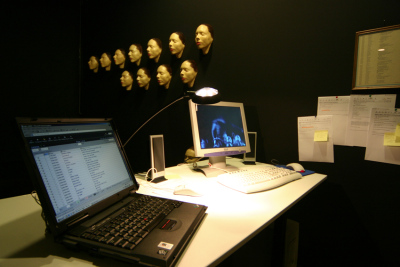
Katrīna's installation consists of two seemingly separate parts ― the active digital medium and the passive role played by the viewer. A loop of an endless song with lyrics put together from bits of spam mail texts, performed by the author, on the monitor; a printer connected to a computer producing printouts of fresh spam mail, a lit reading-lamp, frozen masks of the author's face ― exactly like the ones used by the characters in the video ― on the wall. There's a lot of everything. And yet these elements, including the viewer, are parts of a unified system, a single show.
The structure of the work is hinged on the juxtaposition of the active, living and efficient digital medium and the numb and "dead" real world, the viewer's space. His/hers is only to see and hear. Even the computer is completely non-interactive, it's a programme the viewer is unable to adjust in any way. The key actors are the video and the set... The video is a story within a story. Blind, dancing masks. Responses provoked by human actions. Things and processes that can't be changed anymore. Everything is completely irreversible. There is no way of going back and retracting what was once committed. The consequences of your actions ― you either live with them or... The spectator becomes the guilty party. The recurrent spam printouts are a constant reminder of that. The mute masks on the wall, the inability to exert any influence on anything. Except by destroying. The song and the video are like a promise of escape. You'll only have to watch. You'll only have to listen. And yet even that is but a futile illusion. Even though you have paid your entrance fee to this art show.
Text by Ojārs Pētersons
-
MAGIC THINGS, 2005, horror movie
Practically any work by Katrīna Neiburga can be treated as an aesthetically well-defined and documentally recorded action on at least two parallel levels. The first is the apparent one, the one commonly known as the visual dimension of a work of art. In The Magic Thingsit's a 14 minute video. The second level is the one in which the viewer's comprehension takes place. Ideally it relates to the artist's train of thought during the process of creation. However, it’s actually nothing like a seemingly endless process of reflection for the simple reason that, just like with Bertolt Brecht, there's an ongoing collision between the visible action registered by the camera and the instant response in our brain. This sort of temporarily limited trans-thinking doesn't leave an impression of a mystery, of something withheld. It’s a way of looking at things which is the basis of active and socially critical art and may be lacking in what is often referred to as metaphysics, but is free of clumsy kitsch and forced affectation. The viewer watches the goings-on with some amazement and realises with a sigh (and, if it's Katrīna Neiburga's works we're talking about, also with a smile) that, well, this is what the world has come to. The fascination with the work presents itself through the precise rhythm, fantasy, intense energy and a desire to watch similar projects again and again.
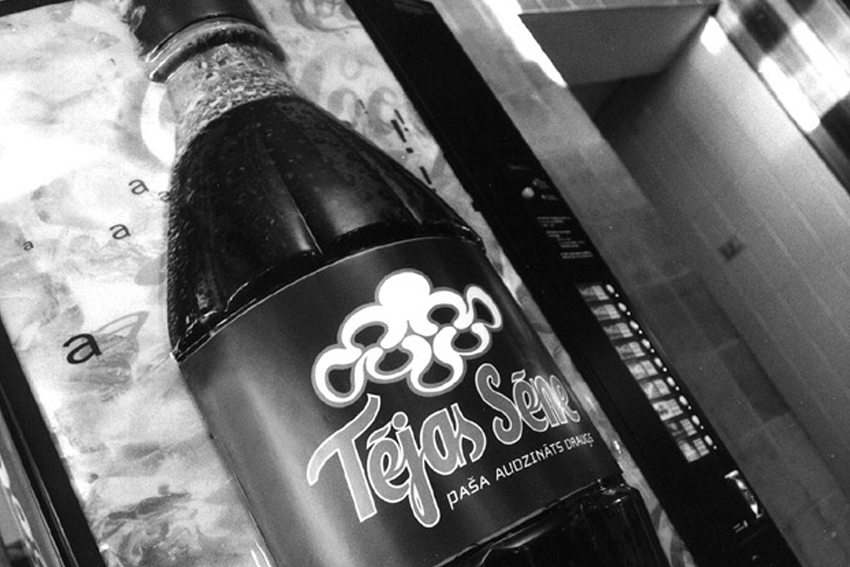
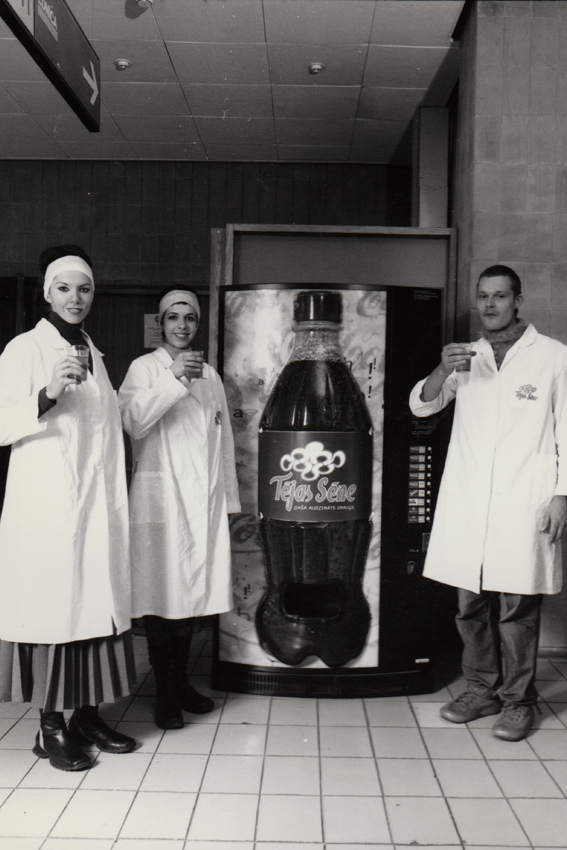
The Magic Thingscould become a textbook example of the way European critical thought demonstrates in a simple little production society's self-sufficient culmination in absurdity, namely, in consumption for consumption's sake, with all the rituals that stem from it. It's just like Coca-Cola ― no-one in the 19thcentury would have ever thought of demanding a soft drink it like that for the simple reason that it hadn't been invented yet. Nor had the Handy Homeconsumer goods sales catalogue, which Katrīna has made use in her witty and painstakingly produced video. Objects that come to life in this "theatre" are actually being manufactured, sold and delivered to a consumer who chooses them from the said catalogue.
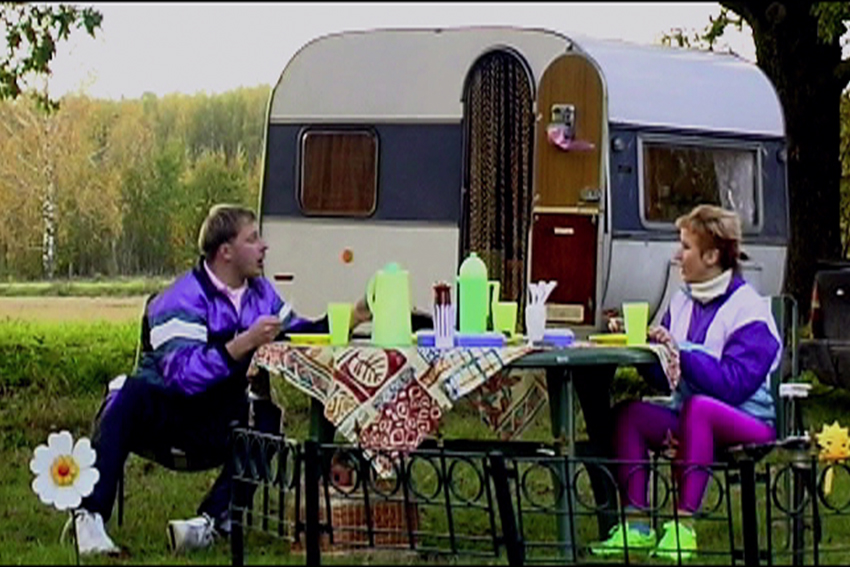
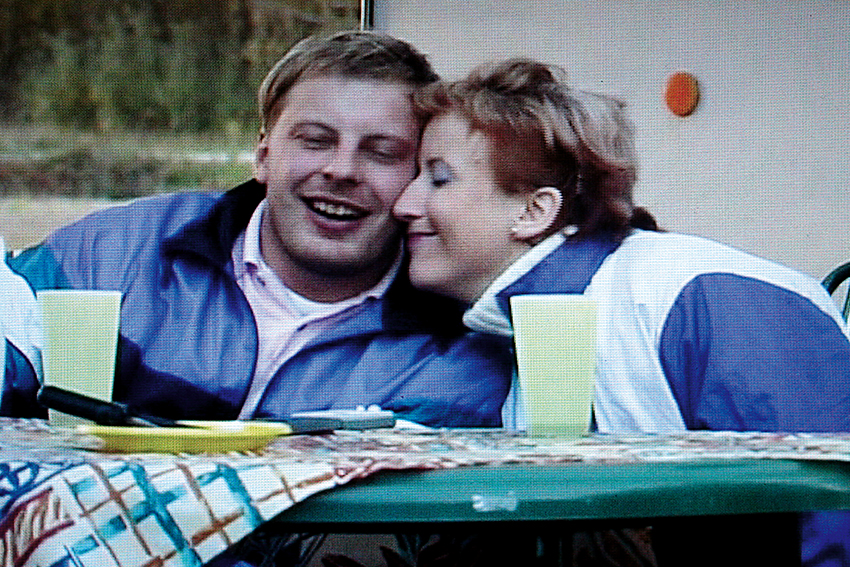
Nothing special about it, it would seem ― it's two actors playing a married couple out of town. But the family's ostensible time-out while picnicking is nevertheless nothing but a relentless fiddling with absolutely useless contraptions. In the dead of night when the owners are asleep the things carry on with their affairs like the protagonists of a modern fairy-tale, the promise of ladolce vita. They are not witches, Thumbelina and Little Red Riding Hoods but mass-produced consumer goods which to some people may possess a certain poesy. Katrīna Neiburga's magic things are not evil, neither are the people who use them. It's a slightly sad and funny but still endearingly ironic take on our times, the judgement of which should not be based on the domain of the apparent and the material.
Text by Helēna Demakova
-
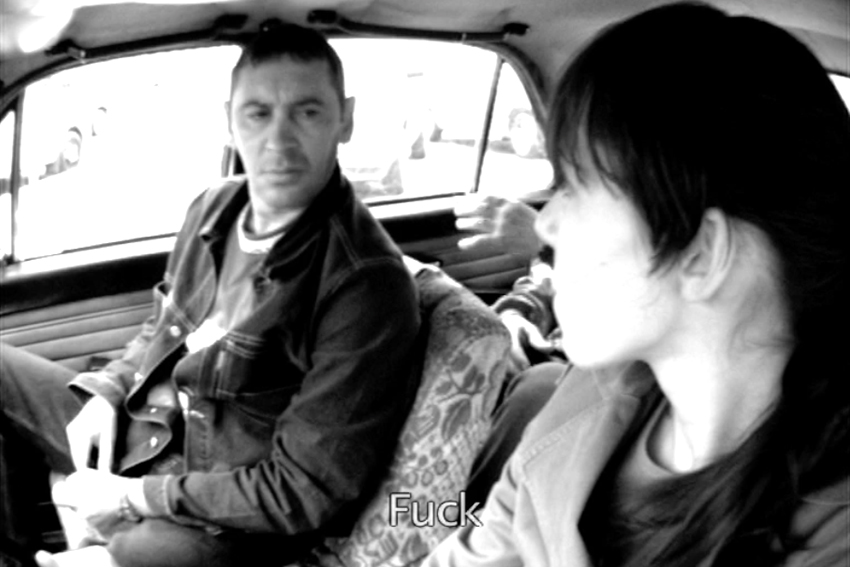
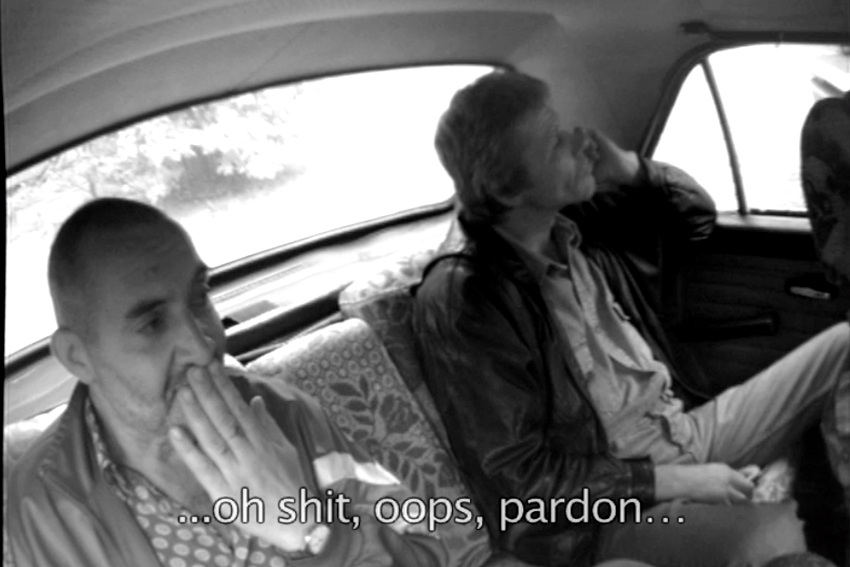
TRAFFIC, 2003, re:public, International Art and Culture Project in the suburbs of Riga, Latvia
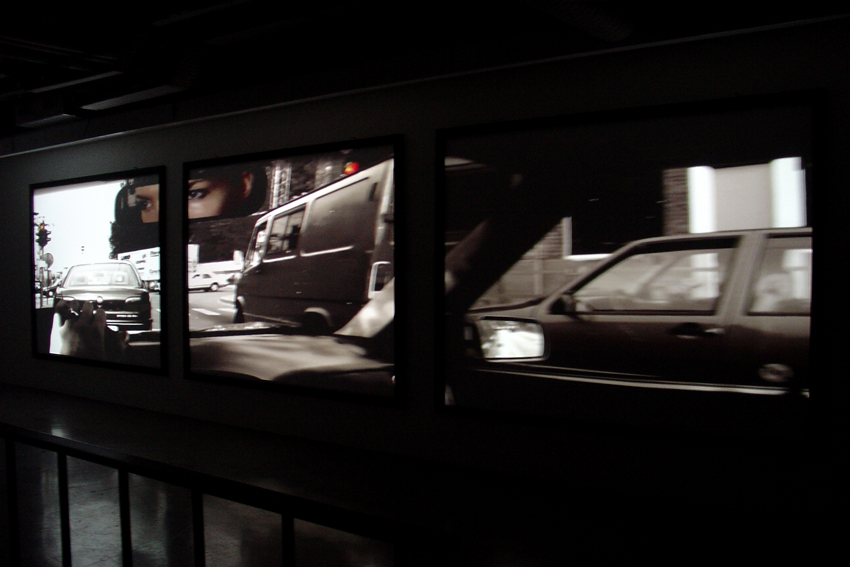
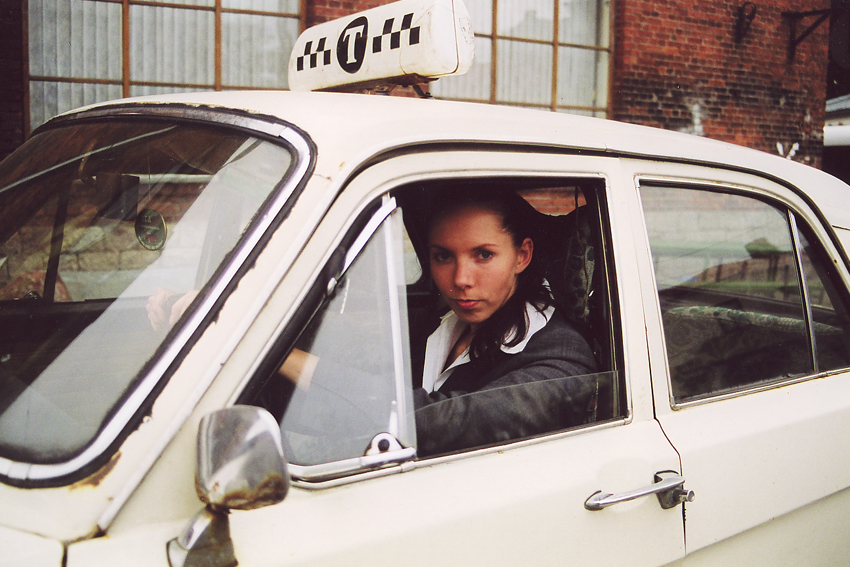
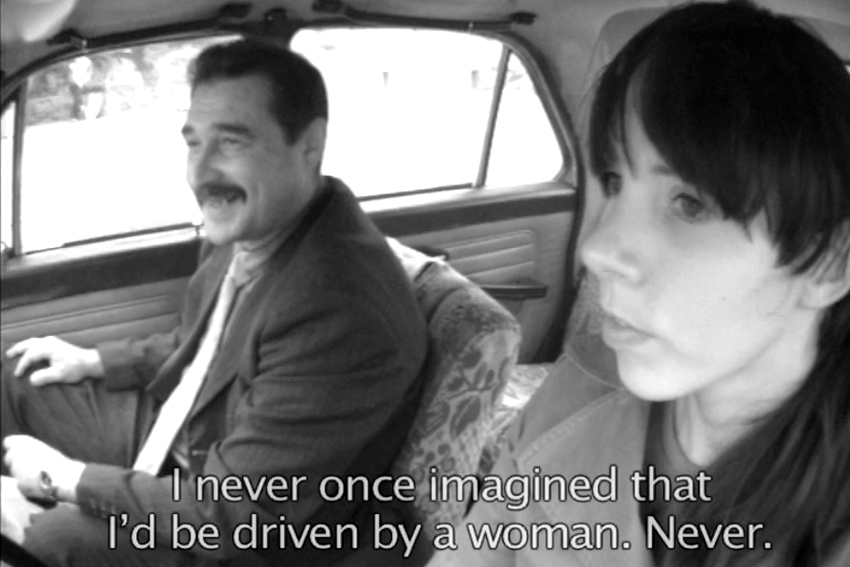
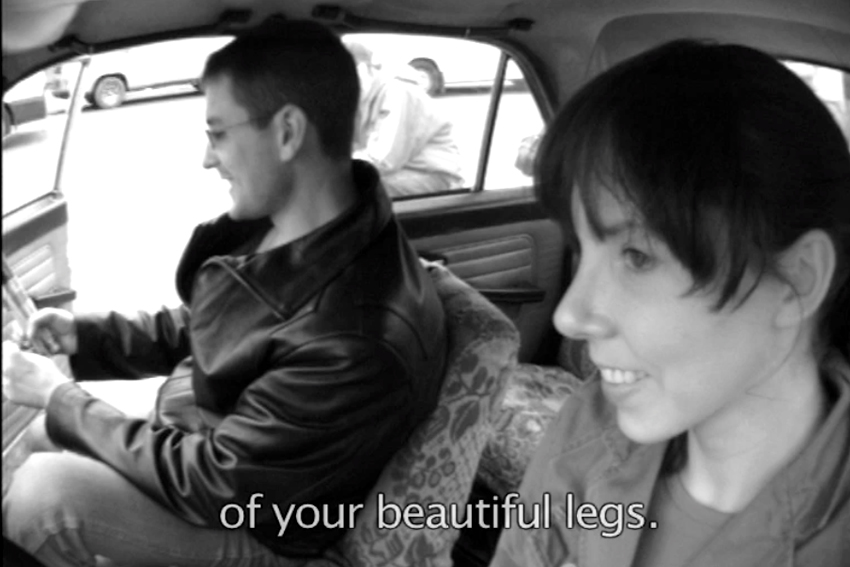
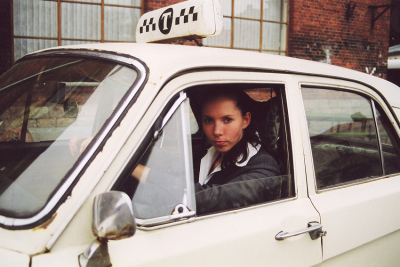
Few of us have ever had a heart-to-heart with a taxi driver. Not just about the rates or the route ― about the spots passing by the taxi window, the rising prices, politics: in short, about life in general. That sort of conversation may turn either into a confession and solace offered by a stranger, or a tour through city territories and mundaneness.
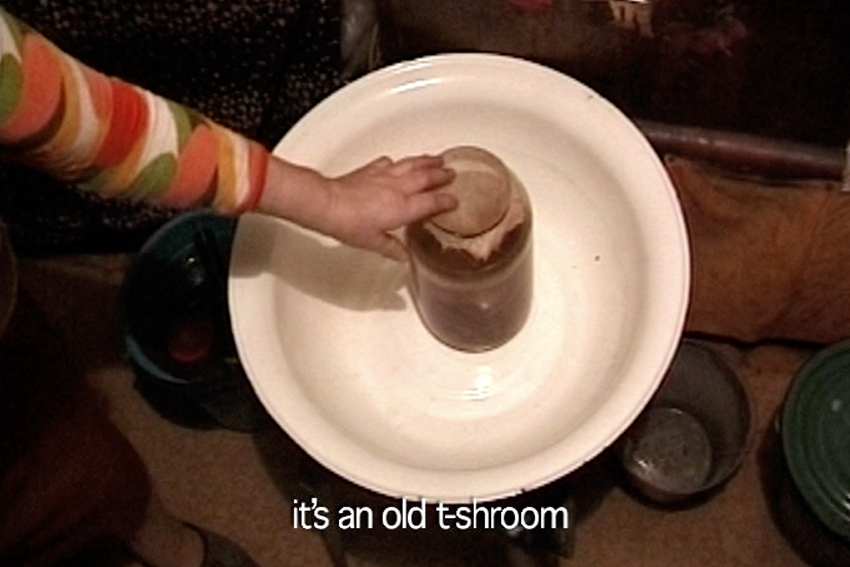
Likewise, few of us have ever come across certain collector types who go for other people's stories, extraneous experiences which intertwine with their own in a peculiar sort of fabric. Katrīna Neiburga is one of those people who collect stories ― on cultivating tea fungus, on what girls carry around in their handbags, on things normally told to no-one but a taxi driver or a random fellow-passenger in a train compartment. And yet Katrīna is not a true collector. It seems to be very important for her to be a part of the conversation, to spin a yarn and have a go at asking the person she’s talking to questions important to herself. The artist's vital curiosity channels anthropological "archaeology" into creating a contributor-orientated situation.
Switching from object to situation in her practice of art Katrīna performs a virtuoso balancing-act between documentality and fiction. Having decided to make a temporary change of occupation and become a cabbie she taxis around residents of the Pārdaugava suburbs, talks to her passengers, listens to their stories and registers them. And afterwards visitors of the re:publikaproject and chance passers-by who happen to take an interest are offered an opportunity to spend some time in the old Volga car and watch the taxi driver's dialogues with her passengers on a little monitor.
Accident combined with a staged situation, or rather an arbitrarily made-up set of rules, makes for ideal psycho-geographical premises. The unscheduled taxi routes and unpredictable people act almost like a drifting derivation method, allowing the revelation of a surprising urban texture and one to lose oneself in the stories told by random passengers.
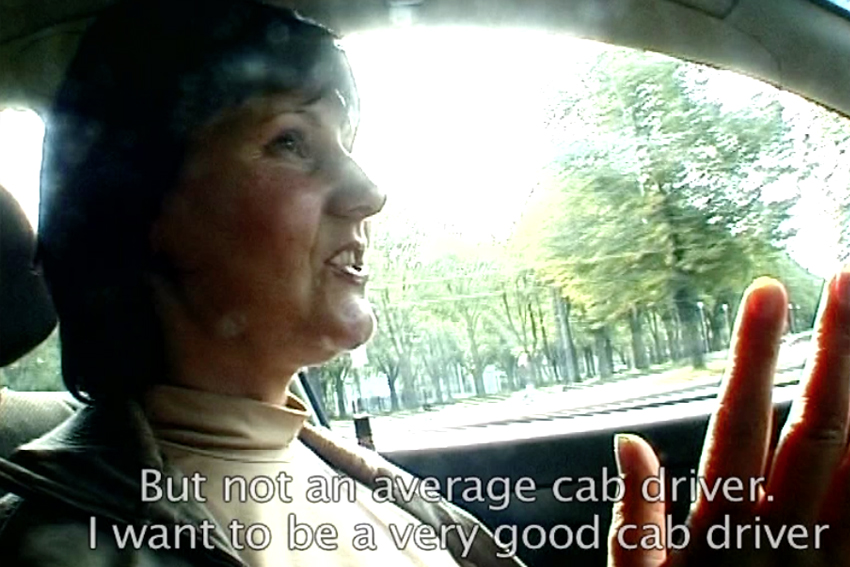
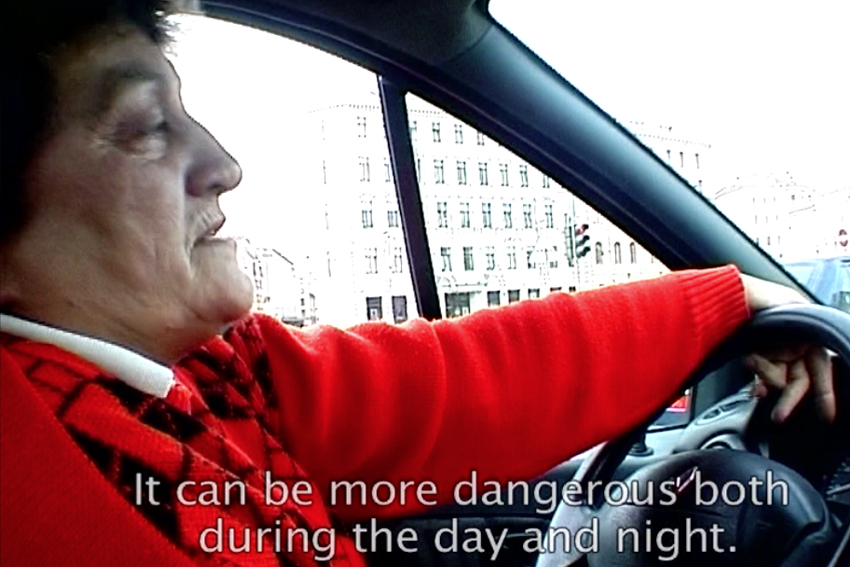
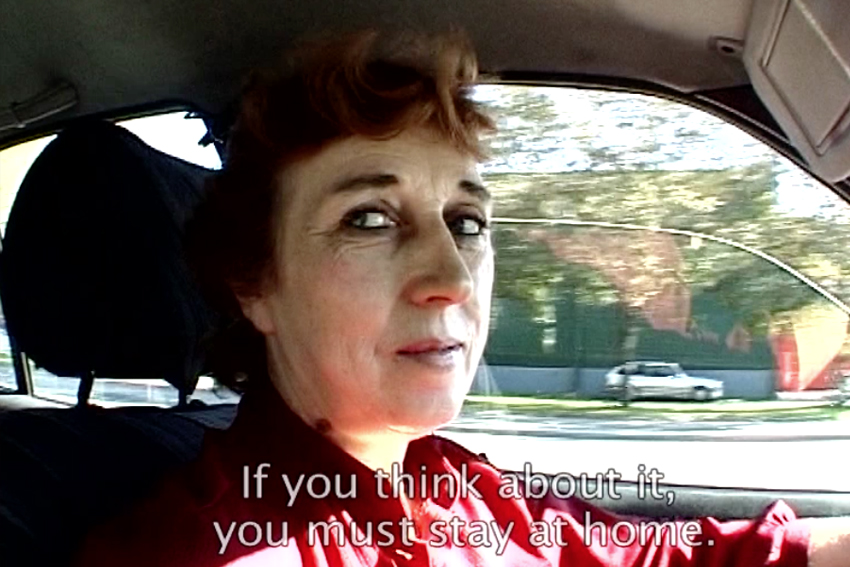
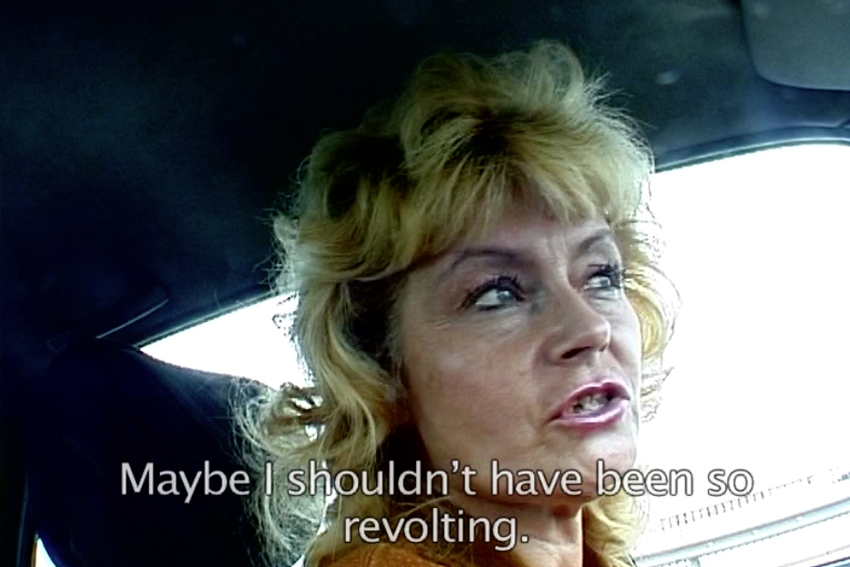
The second part of the project consists of Katrīna's interviews with female taxi drivers; this time it's not just an extension of situative context but also a materialisation of focused interest manifested in the Sestais elements(The Sixth Element) women's art project and in a study of interplay and succession in her own family’s female line. Women's position determined by social roles and traditions without explicit feminist articulation becomes the subject of the artist's analysis.
The grey-haired taxi driver's stories of curious incidents dating from the Soviet era, her family problems, adventures and worries about an insecure future create a portrait of a strong woman ― one it's so easy to identify with if you live in Latvia. Assembling assorted fragments of other people's experiences is Katrīna's way of making marginal notes of sorts and possibly of getting closer to eventually writing a body matter on herself.
Text by Solvita Krese
-
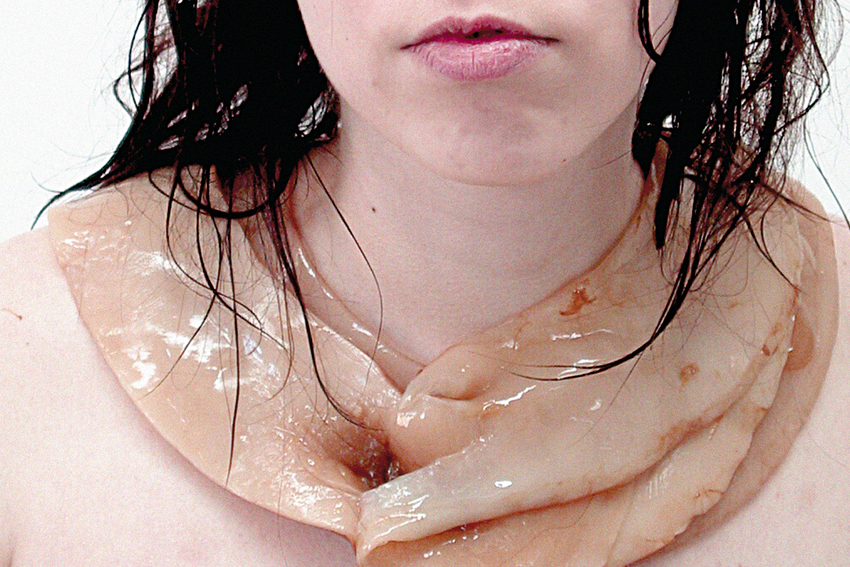
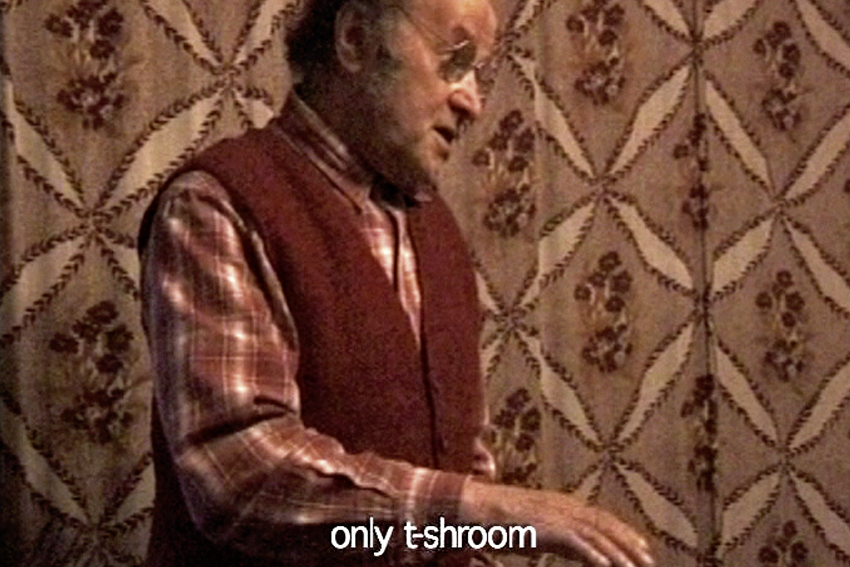
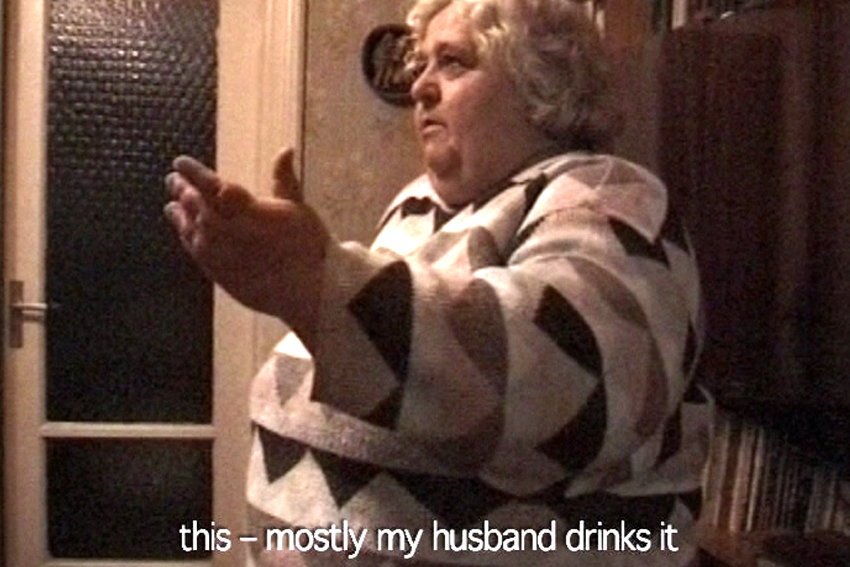
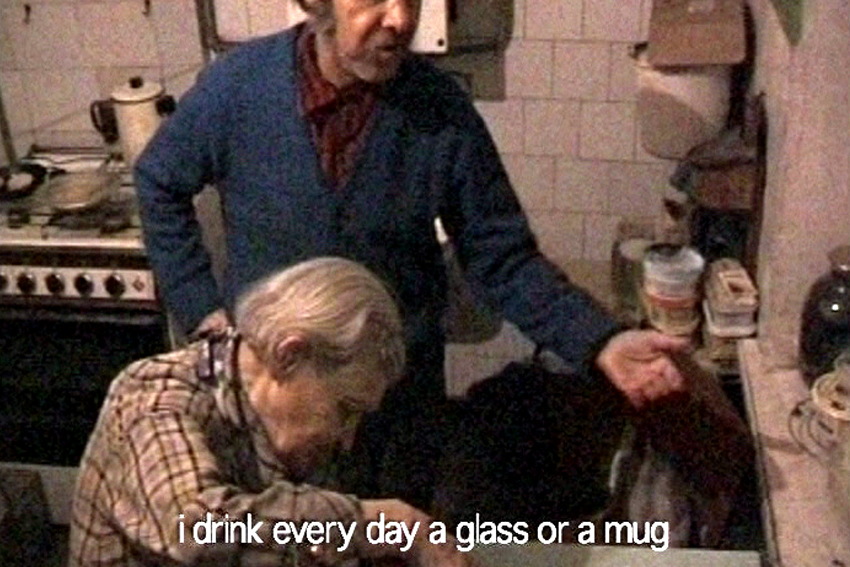
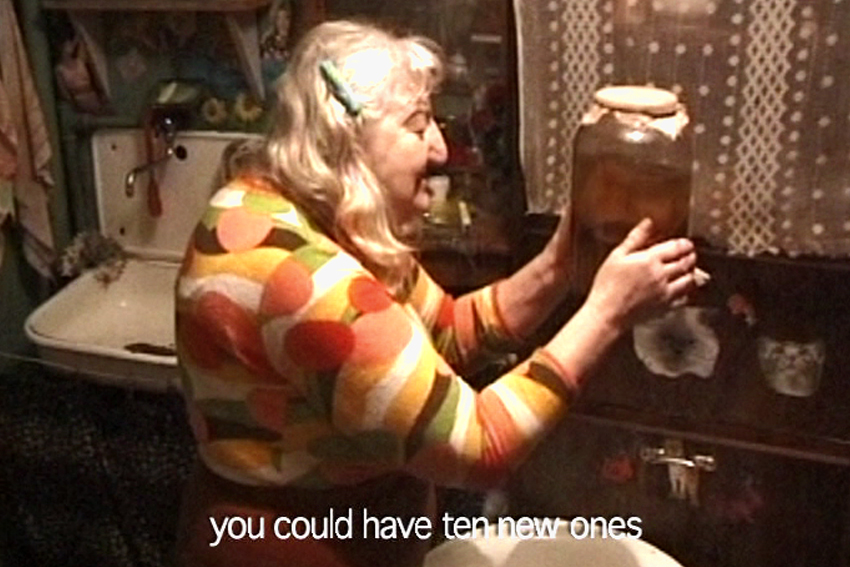
THE T-SHROOM, 2002, (with Pēteris Ķimelis), Malmo, Sweden and Gallery ibid.projects, London, UK
-
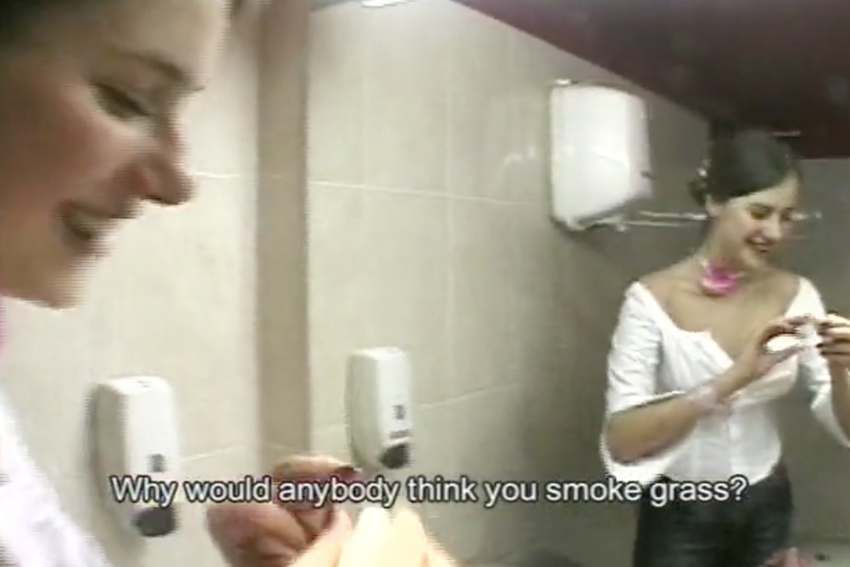
WHAT IS IN A GIRLS HANDBAG?, 2002, The 6th Element, International Women Art Exhibition, Riga, Latvia
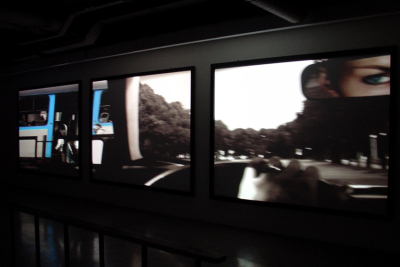
TheWhat Girls Have in their Handbagsvideo has always reminded me of an earlier project by Katrīna ― a study in which a camera follows through a car window an old man's progress along a muddy and wintry monochrome suburban street. Matching the electronic soundtrack, the digital picture rewinds the man’s steps, tangles them up in loops, before permitting the object of observation to continue on his way. The mischievous remix not only betrays the artist's affiliation to the late 90's phenomenon labelled the Scratch Generation by Estonian critics but also reveals methods and motives expanded in her later works, including the "handbags".
First off, the documentalism and "voyeurism" provoked by the artist's curiosity about the world around her. "Curiosity has become a compelling, irresistible passion" ― the motives of lack of experience, curiosity and looking for the transtemporary in mundane details in The Painter of ModernLifeby Charles Baudelaire could serve as an introduction to the imagery of a number of Katrīna's video works. The greedy perception of life characteristic of a child or a convalescing patient referred to by the poet is these days registered by the video camera. Katrīna's works are anthropocentric, it's herself or her contemporaries who are in the circle of her attention; true enough, the latter are more of a mirror that reflects the congruence of social roles, objects and signs of the Zeitgeist. Katrīna's projects may be seen as either anthropological and psychological, or egocentric; after all she is getting acquainted with herown time, herown living-space ― the city — and herpeers.
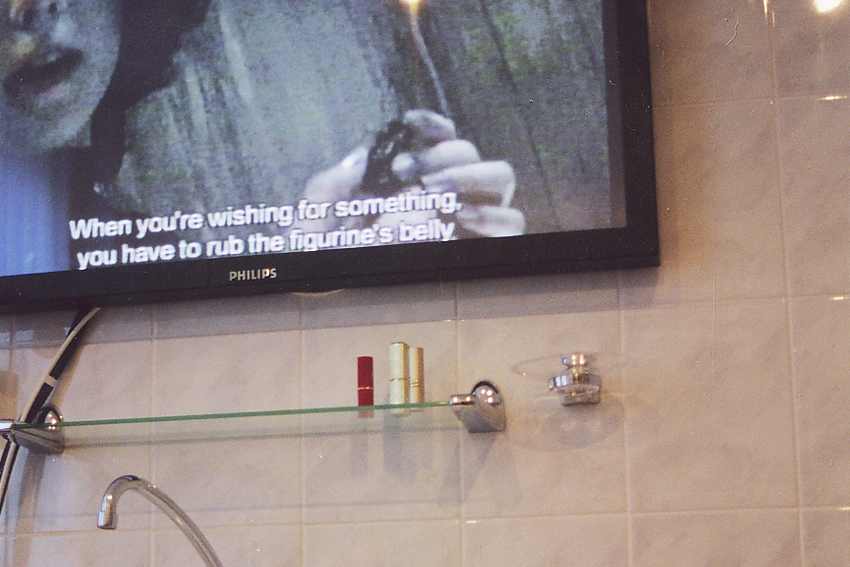
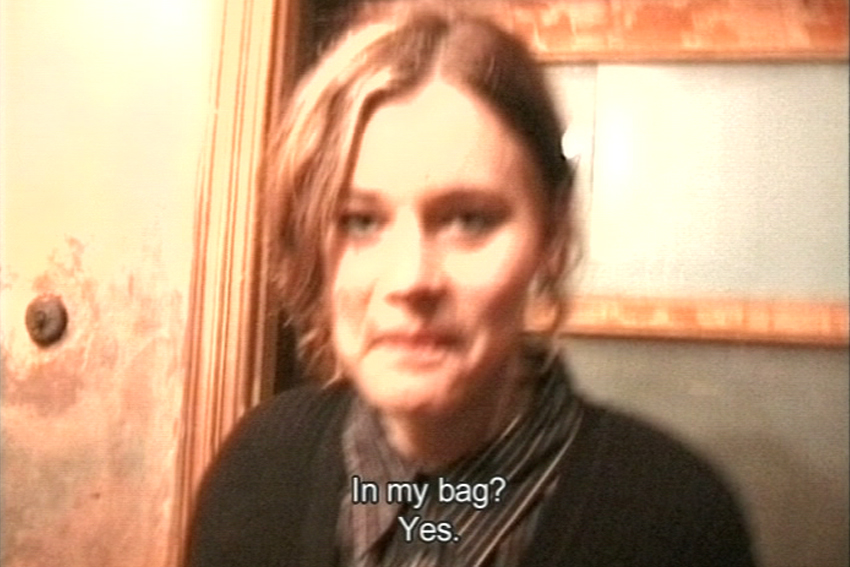
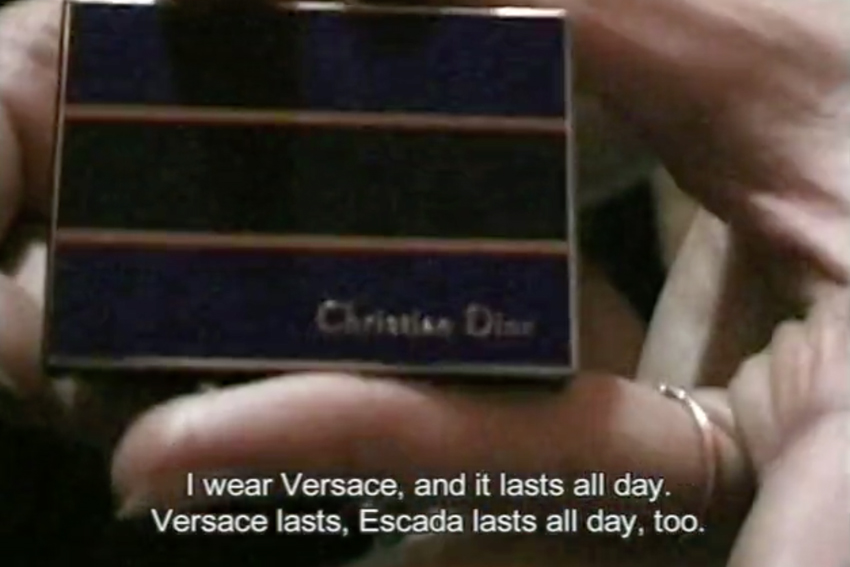
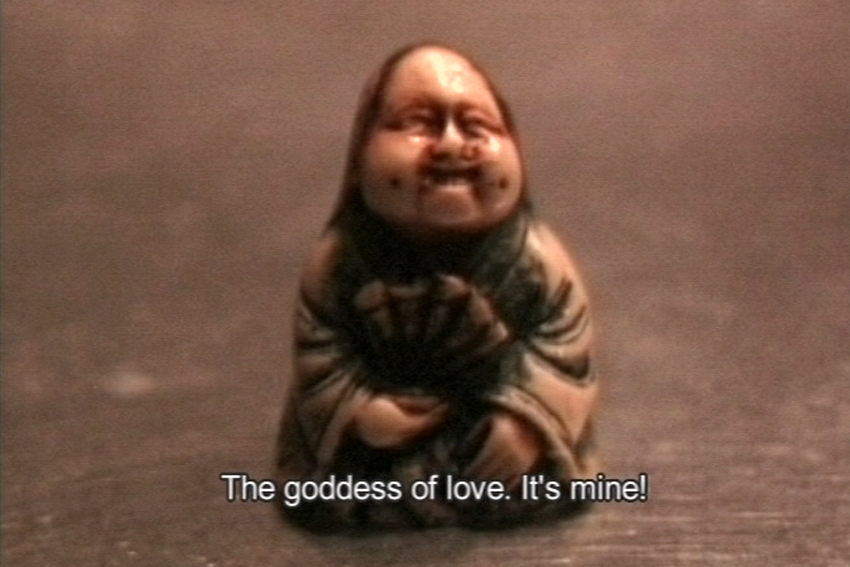
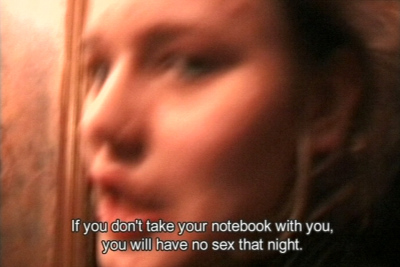
Another peculiarity of Katrīna's works ― they unravel lineally, like a journey. The narrative thread adheres itself to the back of an old man, the faces of her interlocutors or wanders off into the mirrors of ladies' rooms in nightclubs; the rest is the teamwork of the camera and reality. The question: ― What do girls have in their handbags? ― is nothing but a point of departure; it's just about as profound in itself as the psychological test in a woman's magazine treating the shape of a lipstick as a sign of its owner’s temperament. The video follows fragments of the beat of dance music, changes of lighting, increases in the pace of the answers. It switches from the general contents of the handbags to distinctive objects to all sorts of lucky charms, condoms and cosmetic brands to advice on carrying around a one-dollar note. Just like Georges Perec’s novels, the empire of ready-made objects and interior design sucks us into a vision of personal history, commentary, relationships and the times. The destination is variable, the video is roaming the space of experience.
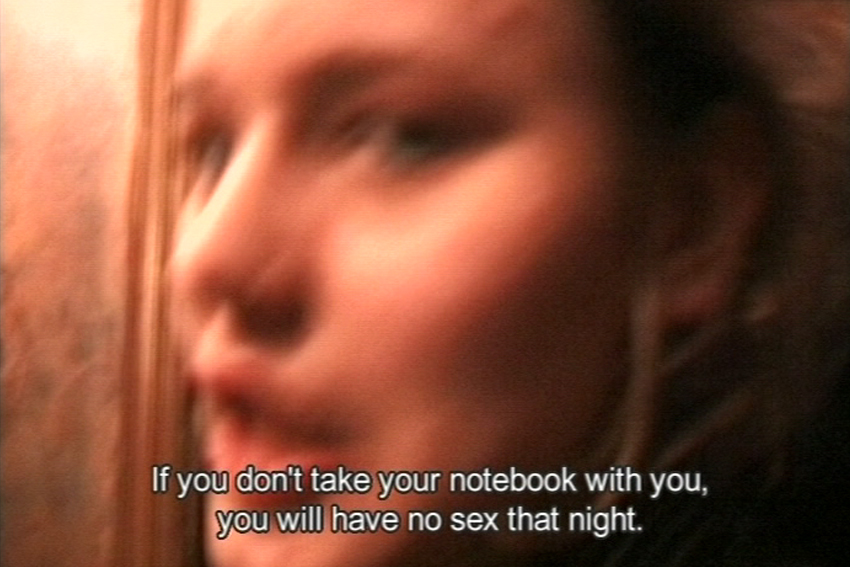
What Girls Have in their Handbagsconsists of two parts1: the fieldwork carried out in Riga nightclubs — or the process — and the summary: the film. The empirical experience takes place live. In spite of the camera taking special care to keep away from mirrors reflecting the artist during the film, the viewer still witnesses a very active conversational process ― an interview, some off-camera encouragement. Performer participation and process is characteristic of both Katrīna Neiburga's audiovisual performances and her work in other media. Self-exhibiting and performativeness are both recognised as strategies in gender theory: "...gender is an "act", as it were, that is open to splittings, self-parody, self-criticism, and those hyperbolic exhibitions of "the natural" that, in their very exaggeration, reveal its fundamentally phantasmic status".2The powerful and, once again, personal feminist rhetoric of Katrīna's works is particularly pronounced in the "handbags", a project on girls, filmed while polling ladies in nightclub loos and first exhibited in The Sixth Element, an interdisciplinary project by "lady artists" carried out with Katrīna's help.3
Delving further into the context of the Scratch Generation and club music it becomes apparent that the constant theme and variations of nuances and rhythm are reminiscent of the musical structures in minimalism or, perhaps the artist’s favourite genre, electronica. Repetition or developing a theme through variations adds integrity and poetry to Katrīna's works; translating it into a video story, a form unfamiliar to this technique, allows her to linger on the borderline between routine and the continuum of time in life. The rhythm of observation and self-identification knits together the changing characters, musical background, individual mental experience and the dark human shape trailed by a car.
Text by Māra Traumane